POSTEDITOR OFFICE

How does organic farming minimize the use of synthetic inputs?

synthetic inputs

By employing certain techniques and guiding principles that give natural and organic alternatives priority, organic farming reduces the usage of synthetic inputs. The following is how organic farming does this:

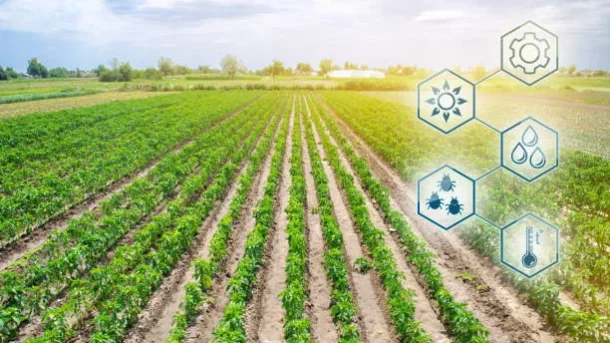
Natural pest and disease management: Rather than relying on synthetic chemical pesticides, organic farmers put their attention on naturally preventing and controlling pests and illnesses. Crop rotation, intercropping, biological management (using helpful insects or predators), physical barriers, and the choice of pest-resistant varieties are a few examples of these techniques. Organic farmers are able to effectively control pests and diseases without the use of synthetic chemicals by fostering biodiversity and implementing these integrated pest management (IPM) techniques.

Management of soil fertility: Organic farmers use natural sources of nutrients to feed the soil rather than manufactured fertilizers. They use organic matter like compost, manure, or green manure, as well as techniques like crop rotation and cover crops. These organic inputs replace the nutrients in the soil, increase the amount of organic matter in the soil, strengthen soil structure, and promote the growth of beneficial soil microbes. This method decreases the requirement for synthetic fertilizers while promoting long-term soil fertility.

Weed control: Organic farmers use a variety of techniques rather than synthetic chemicals to control weeds. These strategies include cover crops, mechanical weed management (such as hand weeding, hoeing, or mulching), and precise cultivation methods. 

Genetic diversity and crop choice: The utilization of various crop rotations and the choice of plant types that are innately adapted to local conditions and have built-in resistance to pests and diseases are key components of organic farming. Organic farmers lessen their reliance on synthetic inputs by fostering genetic diversity, which also helps them grow resilient crops that are more resistant to pests and illnesses.

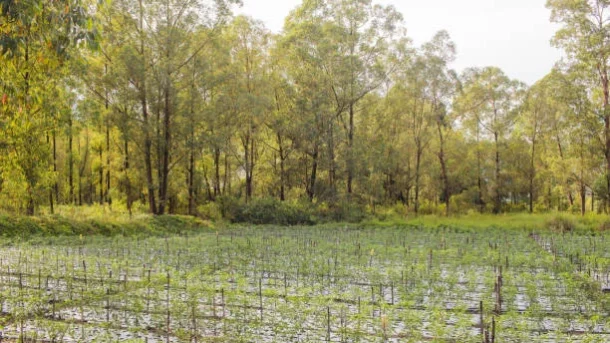
What is organic farming and its significance in sustainable agriculture?

sustainable agriculture

The cultivation of crops and the raising of livestock under organic farming emphasizes the use of natural and environmentally beneficial methods. It entails refraining from using synthetic chemicals like pesticides and fertilizers while fostering soil health, biodiversity, and ecological balance. There are several ways in which organic farming is important for sustainable agriculture:

Environmental stewardship: The maintenance and improvement of the health of the environment are given top priority in organic farming practices. Organic farming lessens soil, water, and air pollution by not using synthetic chemicals. It lessens the possibility of food contamination from pesticide residues and the detrimental effects of chemical runoff on ecosystems. Because it emphasizes the use of varied crop rotations, intercropping, and habitat protection, organic farming also supports biodiversity.

Organic farming places a strong emphasis on creating and maintaining fertile soils. It places a focus on using organic matter to enhance soil structure, moisture retention, and nutrient availability, such as compost and cover crops in sustainable agriculture. Organic farming increases long-term agricultural productivity and resilience by improving soil health, which also lessens the demand for synthetic fertilizers.

Nutrient management and cycling: Using techniques like composting, crop rotation, and the use of legume crops for nitrogen fixation, organic farming practices try to maximize nutrient management. By promoting natural nutrient cycling, these strategies help prevent nutrient runoff and leaching into aquatic bodies. A holistic approach to nutrient management that takes into account the entire agroecosystem is emphasized in organic farming.

What is the role of cover crops in regenerative agriculture?

regenerative agriculture

By offering a variety of advantages for soil health, nitrogen management, weed suppression, erosion control, and biodiversity restoration, cover crops play a critical role in regenerative agriculture. The main functions of cover crops in regenerative agriculture are as follows:

Improved soil health is a result of cover crops’ higher organic matter content and better soil structure. When cover crops are cultivated, their root systems aid in forming pores and channels in the soil, which improves root penetration, water infiltration, and aeration. As cover crops rot, they add organic matter to the soil, boosting microbial activity, soil fertility, and nutrient cycling.

Cycling and availability of nutrients: Cover crops serve as living mulches that draw nutrients from the soil profile and recycle them. They scavenge and absorb surplus nutrients, stopping leaching and releasing them for later income crops. When cover crops are removed, the nutrients are then made available to the subsequent crop. This nutrient cycle lessens the need for synthetic fertilizers, increases the effectiveness of nutrient utilization, and aids in preserving the soil’s balanced nutrient levels.

Suppression of weed development: By competing with weeds for nutrients, water, and light, cover crops can effectively stifle weed growth. By covering the ground with a thick layer of vegetation, they prevent weeds from emerging and growing as much. Herbicide use is decreased due to this natural weed suppression, and succeeding crops are subject to less weed pressure.

 How does regenerative agriculture promote soil health and biodiversity?

soil health and biodiversity

Regenerative agriculture is a method of farming that emphasizes improving ecosystem processes, such as soil health and biodiversity, and restoring them. It entails techniques that enhance soil organic matter, enhance soil structure, and support a variety of plant and animal life in harmony with natural systems. Here are some ways that regenerative agriculture encourages soil health and biodiversity:

Regenerative agriculture approaches place an emphasis on the use of cover crops, crop rotation, and little soil disturbance (such as no-till or reduced tillage). These techniques help to increase soil organic matter and carbon sequestration. By increasing the amount of plant leftovers that are introduced into the soil, these techniques improve soil organic matter buildup. Improved soil structure, water-holding capacity, nutrient retention, and microbial activity are all benefits of soil organic matter. A further benefit of increasing soil organic matter is the storage of carbon.

Cycling of nutrients and the soil microbiology are both supported by regenerative agriculture. A consistent source of organic matter and root exudates is provided through the use of cover crops and varied crop rotations, which in turn feed beneficial soil microbes. As a result of microbes decomposing organic materials and increasing the availability of nutrients to plants, this improves nutrient cycling. Improved soil fertility, disease prevention, and overall ecosystem resilience are all benefits of healthy soil microbiomes.

The maintenance of hedgerows, buffer strips, or diversified field edges, among other regenerative agricultural methods, creates homes for beneficial insects, pollinators, birds, and other species. These environments promote biodiversity and aid in environmental balance, pollination, and natural pest management. Agroecosystems that are more resilient and well-balanced are made possible by promoting natural biodiversity.

What are the benefits of using biochar in soil?

biochar in soil

Numerous advantages for soil health, crop productivity, and environmental sustainability come from using biochar in soil amendment. Some of the main advantages of applying biochar to soil are as follows:

Increased availability and retention of nutrients are two ways that biochar improves soil fertility. Because of the high cation exchange capacity (CEC) of its porous structure, it can draw in and store nutrients like nitrogen, phosphorus, and potassium. This encourages nitrogen retention in the root zone, which reduces nutrient leaching and increases nutrient availability to plants over time.

Enhanced soil water-holding capacity is made possible by biochar’s porous structure. It can hold onto moisture and release it gradually to plant roots, lowering the requirement for irrigation and increasing the amount of water accessible to plants during dry spells. 

Numerous advantages for soil health, crop productivity, and environmental sustainability come from using biochar as a soil amendment. Some of the main advantages of applying biochar to soil are as follows:

Increased availability and retention of nutrients are two ways that biochar improves soil fertility. Because of the high cation exchange capacity (CEC) of its porous structure, it can draw in and store nutrients like nitrogen, phosphorus, and potassium. This encourages nitrogen retention in the root zone, which reduces nutrient leaching and increases nutrient availability to plants over time.

Enhanced soil water-holding capacity is made possible by biochar’s porous structure. It can hold onto moisture and release it gradually to plant roots, lowering the requirement for irrigation and increasing the amount of water accessible to plants during dry spells. 

 What is biochar and how is it used in agriculture?

biochar

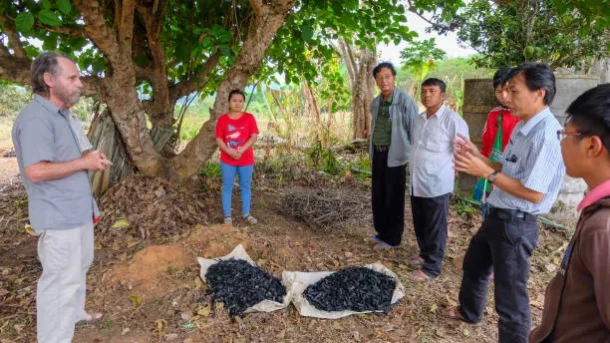
By heating biomass (such as wood, agricultural waste, or organic waste) in a low-oxygen environment via a technique known as pyrolysis, a porous, carbon-rich substance known as biochar is created. The biomass is transformed into a stable form of charcoal by this process. Both horticulture and agriculture can benefit from the addition of biochar to the soil.

Biochar is largely employed in agriculture due to its beneficial effects on the fertility and health of the soil. Using biochar in agriculture looks like this:

Biochar is used as a soil amendment to enhance the physical, chemical, and biological qualities of the soil. It improves the availability of nutrients, water retention, and soil structure. Biochar’s porous structure serves as a habitat for helpful microbes, enhancing soil fertility and fostering soil biodiversity.

Retention of nutrients: Due to its high cation exchange capacity (CEC), biochar is able to draw in and hold onto nutrients, avoiding leaching and nutrient runoff. As a result, agricultural systems may require less fertilizer and use nutrients more effectively.

Water management: Biochar’s has a high water-holding capacity, which enables it to keep moisture in the soil and lower evaporation rates. This can be especially helpful in desert or drought-prone areas since it promotes water conservation and increases plant survival during dry spells.

Regulation of pH: Biochar functions as a pH regulator by buffering the pH of the soil. It can assist in neutralizing acidic or alkaline soils, improving the environment for plant growth and nutrient availability.

 How can blockchain enhance traceability and transparency in the food supply chain?

traceability and transparency

Blockchain technology offers a decentralized, unchangeable, and secure mechanism for storing and exchanging data, which has the potential to improve traceability and transparency in the food supply chain. Here are a few ways blockchain might enhance traceability and transparency:

Supply chain visibility is made possible by blockchain, which enables the development of a digital ledger that tracks each transaction and movement of food supplies. Farmers, processors, distributors, retailers, and consumers are just a few of the parties who have access to and can verify this decentralized ledger. As a result, the entire supply chain is visible, enabling all parties to track and trace the location of food goods as well as their production, transit, and storage operations.

Product authentication: By providing a tamper-proof record of each product’s travel, blockchain can assist fight food fraud and counterfeiting. Customers and sellers may confirm the legitimacy and quality of the goods they buy by recording information about the product’s origin, certificates, quality testing, and other pertinent details on the blockchain. This strengthens the supply chain’s credibility.

Assurance of quality and safety: Blockchain can make it possible to monitor crucial variables in real-time, including temperature, humidity, and storage conditions. Blockchain technology allows for the immutable recording and storage of data related to these characteristics using IoT sensors and devices. At any stage in the supply chain, this information is accessible, ensuring that food products are transported and stored properly to maintain their quality and safety.

How can IoT improve farm management and efficiency?

farm management

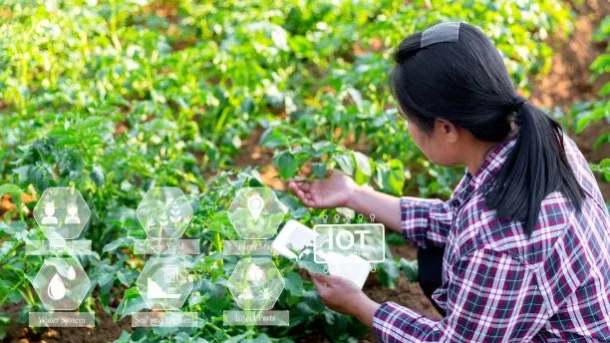
The Internet of Things (IoT), which offers real-time data, automation, and remote monitoring capabilities, has the potential to greatly increase farm management and efficiency. Several methods that IoT can improve agricultural management are listed below:

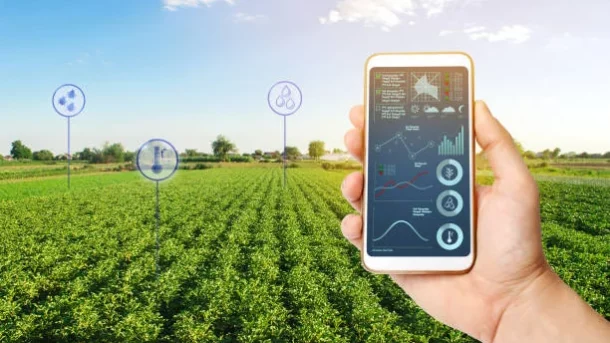
Precision farming: Real-time data collection on soil moisture, temperature, humidity, and nutrient levels is possible using IoT sensors and devices. To make irrigation schedules, nutrient treatments, and crop management procedures more effective, this data can be examined. With the help of precision agriculture, farmers can make informed decisions that maximize crop yields and ensure that resources are used effectively.

Remote management: Farmers can remotely monitor and manage their farms thanks to IoT. Farmers may obtain data regarding environmental conditions, crop health, and livestock status at any time, anywhere, thanks to connected equipment and sensors. 

Systems for automation and control: IoT technology makes it possible to automate and farm management a variety of farm operations. Connected devices can control greenhouse settings, irrigation systems, lighting cycles, and livestock feeding systems. Automation lessens the need for manual labor, boosts operational effectiveness, and provides precise and constant management of crucial activities.

Management of livestock: IoT devices can be used to track the whereabouts of livestock, track their health, and offer real-time information on their activity. Wearable sensors and other connected devices can track eating habits, look for disease symptoms, and offer information on the general health of the animals. Farmers may improve livestock management techniques, identify health issues early, and optimize feeding regimens with the use of this information.

How does CEA optimize resource utilization?

resource

Controlled environment agriculture (CEA) effectively manages inputs like water, energy, nutrients, and space to maximize resource usage. Here is how CEA systems optimize resource:

Efficiency in terms of water use: Compared to conventional agriculture, CEA systems use less water. Water is reused within the system through technologies like hydroponics and recirculating irrigation systems, lowering overall demand. Recirculating nutrient-rich water reduces surplus discharge. Furthermore, CEA permits precision irrigation management, providing water to the root zone directly, avoiding evaporation, and eliminating water waste.

Energy effectiveness: CEA systems put an emphasis on energy-efficient procedures to lower energy usage. It is usual to utilize LED lighting because it uses the least amount of energy while yet giving the right kind of light spectrum for plant growth. In order to maximize energy efficiency, climate control systems use insulation.

Management of nutrients: CEA systems, particularly hydroponic and aquaponic ones, maximize nutrient uptake by giving plants precisely the right amounts of nutrients. Plants are able to efficiently absorb the necessary nutrients thanks to the careful formulation of nutrient solutions and their delivery to the roots. This targeted distribution reduces nutrient loss and leaching, improves nutrient uptake, and has a smaller negative impact on the environment.

Space usage: CEA systems maximize space utilization, especially in cities or other places where there is a shortage of available land. High plant densities are possible with vertical farming, which grows plants in stacked layers or shelves to make efficient use of vertical space. By removing the need for soil and allowing plants to grow in a smaller area, hydroponic and aeroponic systems maximize available space. Increased space efficiency allows CEA systems to produce more food in a less amount of space.

What are the different types of CEA systems?

CEA systems

The term “controlled environment agriculture” (CEA) refers to a variety of structures and technologies that offer plants regulated settings for growth. Here are a few examples of the various CEA systems types:

Greenhouses: A controlled environment for plants is provided by enclosed structures made of glass or other transparent materials that enable sunlight to enter. In order to control temperature, humidity, and airflow, they use ventilation, heating, and cooling systems as well as natural light, supplemented when necessary by artificial lighting. A flexible and popular kind of CEA systems that can accommodate a variety of crops and production methods is provided by greenhouses.

Indoor vertical farms: Indoor vertical farms use artificial illumination to grow plants vertically in stacked layers or shelves. These farms frequently employ hydroponic or aeroponic systems, making effective use of available space in crowded cities.

Container farms indoors: Container farms are independent structures often housed inside of shipping containers. These small systems come complete with hydroponic or aeroponic systems, lighting, and climate control. Urban farming, rural farming, or farming in areas with limited space can all benefit from container farms’ mobility and adaptability.

Plant factories, also referred to as growth chambers, are completely regulated indoor spaces where plants are grown with the help of artificial lighting, temperature control, and exact nutrition supply. These systems, which offer the best conditions for plant growth, are frequently employed in research, seedling propagation, and the growth of crops with high market value.