POSTEDITOR OFFICE

Name a government program that provides financial assistance for the establishment of cold chains in horticulture.

horticulture

The “Scheme for Integrated Cold Chain and Value Addition Infrastructure” is one government initiative that offers financial support for the construction of cold chains in India’s horticulture industry. Common names for this program include “Cold Chain Scheme” and “Cold Chain Development Program.” The Government of India’s Ministry of Food Processing Industries is in charge of carrying it out.

The main goals of the Cold Chain Scheme typically consist of:

Infrastructure Development: The program intends to encourage the creation of an integrated cold chain and infrastructure for value addition in the horticulture industry. In order to handle, store, and transport horticultural goods effectively, it supports the construction of cold storage facilities, pre-cooling units, pack houses, ripening chambers, reefer trucks, and other infrastructure elements.

Preservation and Quality Maintenance: The plan’s main goals are to keep horticulture produce’s quality intact and increase its shelf life. In order to maintain the freshness, nutritional value, and marketability of horticulture commodities, it encourages the implementation of best practices and technologies for cold storage, controlled environment storage, temperature-controlled transportation, and other post-harvest interventions.

The Cold Chain Scheme places a strong emphasis on horticulture produce’s value addition and processing. In order to increase the market value and diversify the product line of horticulture commodities, it encourages the building of processing units, pack houses, grading and sorting units, and other value-added facilities.

What is the main objective of the Market Research and Information Network (MRIN)?

Information

The Market Research and Information Network (MRIN)’s major goal is to make it easier for farmers, dealers, policymakers, and other agricultural stakeholders to effectively disseminate market-related information. The Ministry of Agriculture and Farmers Welfare, Government of India, is responsible for implementing the MRIN.

The Market Research and Information Network’s primary goals and duties typically consist of:

Market Intelligence: The MRIN seeks to compile, examine, and make timely and reliable market intelligence available to stakeholders in the agriculture industry. This includes data on market prices, supply and demand patterns, new product introductions, necessary quality standards, export and import statistics, and other pertinent market-related data.

Price Prediction: For a number of agricultural commodities, the MRIN offers price predictions and outlooks. By offering information on prospective pricing trends, market volatility, and price outlooks for various commodities, it assists farmers and traders in making informed decisions about the production, storage, selling, and buying of agricultural output.

Market Access and Linkages: By giving farmers and traders information on potential customers, market channels, value chains, and marketing infrastructure, the MRIN facilitates market access and linkages for them. It enables enhanced market participation and better price realization by assisting in the connection of producers with potential markets and buyers, both domestically and globally.

Which scheme aims to promote the cultivation of bamboo and provide support for bamboo-based industries?

bamboo-based

The “National Bamboo Mission” (NBM) is one program that attempts to encourage bamboo-based enterprises in India and promote bamboo farming. The Government of India’s Ministry of Agriculture and Farmers Welfare is responsible for carrying out the National Bamboo Mission.

The National Bamboo Mission’s primary goals typically consist of:

The NBM is focused on encouraging bamboo cultivation by giving farmers and other stakeholders who are involved in bamboo cultivation financial aid, technical support, and training. It intends to expand the area planted with bamboo and raise the yield and caliber of bamboo crops.

Value Addition and Processing: The program’s goal is to encourage bamboo processing and value addition in order to raise farmers’ and stakeholders’ profits. It encourages the development of value-added bamboo items such handicrafts, furniture, construction materials, and composite products made of bamboo and supports the establishment of companies based on bamboo. It also offers help for the installation of bamboo processing facilities.

Research and Development: The NBM places a strong emphasis on initiatives that advance bamboo-based growing methods, create better bamboo varieties, and address problems with managing pests and diseases. It supports research organizations, offers funds for research initiatives, and fosters knowledge sharing and best practices in bamboo processing and cultivation.

What is the primary goal of the National Mission on Sustainable Himalayan Ecosystem (NMSHE)?

Himalayan

Initiatives for the sustainable Himalayan ecology strive to preserve the region’s fragile ecological balance as well as its distinctive biodiversity. The unique flora, fauna, and ecosystems of the Himalayas are the subject of their attention because they are essential to maintaining ecological stability and providing ecosystem services.

Sustainable Development: The Himalayan region is encouraged to adopt sustainable development methods by several programs. They seek to strike a balance between conservation initiatives and the local populations’ requirements for socioeconomic growth. This involves supporting ecotourism, renewable energy, organic farming, and other economically viable methods for living sustainably.

Adaptation to Climate Change: The programs take on the problems brought on by climate change in the Himalayas. They place a strong emphasis on increasing people’s capability for coping with the effects of climate change, such as melting glaciers, altered rainfall patterns, and greater susceptibility to natural disasters. As a result, it’s important to promote climate-resilient infrastructure, implement climate-smart behaviors, and create early warning systems.

Initiatives for the sustainable Himalayan ecosystem emphasize the need of including local populations in decision-making processes and giving them the tools they need to act as good stewards of their natural resources. They encourage community-based conservation and sustainable management techniques, ensuring that local communities actively participate in and are engaged in managing and maintaining their natural environment.

Name a government initiative that provides financial assistance for the development of organic input production units.

organic input

The “Paramparagat Krishi Vikas Yojana” (PKVY) is one government program that offers financial aid for the establishment of organic input producing units in India. The Ministry of Agriculture and Farmers Welfare, Government of India, is in charge of implementing the Paramparagat Krishi Vikas Yojana.

The Paramparagat Krishi Vikas Yojana’s main goal is to support farmers in adopting organic farming practices and to promote organic farming practices. By offering financial aid and technical help, the program encourages farmers to switch from traditional, chemical-based agricultural to organic farming.

The Paramparagat Krishi Vikas Yojana offers financial support for a number of organic farming-related initiatives, including the creation of organic input production facilities. These facilities concentrate on creating organic inputs needed for organic farming methods, such as compost, bio-fertilizers, bio-pesticides, organic manures, and other organic inputs.

The PKVY provides financial support for the construction of infrastructure, the purchase of equipment, training, and capacity building for farmers working in organic input production units. It attempts to increase the accessibility of high-quality organic inputs and lessen agriculture’s reliance on synthetic chemicals.

Which government program focuses on promoting the cultivation of saffron in India?

cultivation of saffron

The “National Saffron Mission” (NSM) is a government initiative that seeks to encourage saffron farming in India. The Department of Agriculture, Cooperation & Farmers Welfare, Ministry of Agriculture and Farmers Welfare, Government of India, is responsible for carrying out the National cultivation of saffron Mission.

The National Saffron Mission’s primary goals typically consist of:

Saffron Cultivation Promotion: The NSM seeks to advance cultivation of saffron and raise saffron output in India. It encourages farmers to use saffron production strategies, such as saffron-specific pest control techniques, seed selection, irrigation management, and management of nutrient levels.

Technology Transfer and Training: The goal of the mission is to teach farmers the most effective methods for growing saffron through technology transfer and training initiatives. It offers saffron training.

The NSM places a strong emphasis on research and development operations to improve saffron production methods and address the difficulties saffron producers encounter. It aids in the production of enhanced saffron types with greater yields and improved resistance to pests and diseases, as well as research projects and breeding programs.

Development of Infrastructure: The mission encourages the creation of the infrastructure required to enable of saffron. To assist the cultivation, processing, and sale of saffron, this includes the development of irrigation systems, saffron processing facilities, drying and grading facilities, and other relevant infrastructure elements.

What is the purpose of the National Mission on Agricultural Disaster Management (NMADM)?

Agricultural Disaster

Early Warning Systems and Preparedness: Agricultural disaster management efforts seek to improve early warning systems and disaster preparedness. This entails keeping an eye on the weather, climatic patterns, and other pertinent variables in order to forecast impending calamities that can affect agriculture and to offer prompt warnings.

Reducing risks and lessening the effects of disasters on agriculture are the main objectives of the programs. This entails putting strategies into place to increase farming systems’ resilience, such as encouraging crop diversification, water and soil conservation, the adoption of climate-resilient agricultural practices, and building infrastructure to resist calamities.

Initiatives for agricultural disaster management include provisions for emergency response and relief measures to assist impacted farmers and lessen the immediate effects of disasters. To aid farmers in recovering from the consequences of disasters, this may entail offering financial support, food supplies, seeds, fertilizer, support for livestock, and other essential inputs.

Agricultural disaster management initiatives place a high priority on the rehabilitation and recovery of the devastated agricultural sector. This include fixing broken infrastructure, assisting with the rebuilding of livelihoods, easing access to loans and insurance, and giving technical support to help farmers continue farming and reconstruct their lives.

Name a scheme that aims to promote the use of farm machinery rental services.

farm machinery

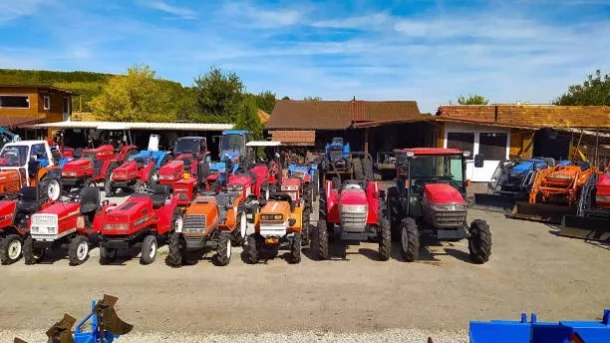
The “Custom Hiring Centers (CHC) Scheme” or “Farm Machinery Bank Scheme” is one program that tries to encourage the usage of farm equipment rental services in India. The Department of Agriculture, Cooperation & Farmers Welfare, Ministry of Agriculture and Farmers Welfare, Government of India, is responsible for implementing the Custom Hiring Centers Scheme.

The Custom Hiring Centers Scheme’s primary goals typically consist of:

Promoting Access to Farm Machinery: By establishing Custom Hiring Centers (CHCs), the program seeks to improve farmers’ access to contemporary farm machinery and equipment. These CHCs work as machinery banks where farmers can rent or borrow equipment for a variety of agricultural tasks, including threshing, harvesting, sowing, and other farm chores.

Efficiency and Cost Reduction: By enabling the renting or hiring of machinery, the program aims to lower agricultural operating expenses and boost productivity. Through CHCs, shared equipment is made available to farmers, allowing them to spend less on expensive equipment purchases, upkeep, and storage while still having timely access to equipment during the busiest agricultural seasons.

Adoption of new agricultural technologies and farm equipment is encouraged by the Custom Hiring Centers Scheme among small and marginal farmers who might lack the funds to purchase their own equipment. It promotes the employment of cutting-edge equipment to boost farm operations and increase production and resource efficiency.

Building Capacity and Developing Skills: The program places a strong emphasis on helping farmers and machine operators grow their capacities and develop their skills.

What is the main objective of the Market Intervention Scheme (MIS) for agricultural commodities?

Intervention Scheme

The Market Intervention Scheme (MIS) for agricultural commodities’ primary goal is to support farmers by stabilizing perishable agricultural commodities’ prices during periods of market glut and ensuring that their produce will fetch fair market value. The Ministry of Agriculture and Farmers Welfare, Government of India, is responsible for implementing the MIS.

The Market Intervention Scheme’s primary goals and duties typically consist of:

Price Stabilization: When there is an oversupply on the market, the MIS seeks to stabilize the prices of agricultural commodities, especially perishable crops. In order to intervene, it buys the produce directly from the farmers at a predetermined minimum support price (MSP) or pre-announced price, creating a guaranteed market and avoiding distress sales.

Market Support: During periods of market oversupply or abrupt price drops, the program offers market support to farmers. By providing a procurement process that guarantees farmers a fair price and lessens their exposure to market swings and abuse, it fosters a favorable market environment.

Creation of Buffer stockpiles: The Intervention Scheme supports the development of agricultural commodity buffer stockpiles. These buffer inventories serve as a reserve to control market turbulence and keep prices stable. When there is a shortage or prices rise above a particular point, the purchased goods are kept in storage before being reintroduced into the market.

Farmer Income Support: The MIS makes sure that farmers obtain fair prices for their goods by acquiring commodities at MSP or previously published prices. 

Which scheme provides financial assistance for the establishment of post-harvest infrastructure in rural areas?

post-harvest

The “Mukhyamantri Saur Krishi Yojana” (MSKY) is one program that offers financial aid for the construction of post-harvest infrastructure in rural parts of India.

A government program called the Mukhyamantri Saur Krishi Yojana is being carried out by the respective state governments with the goal of encouraging the use of solar energy in agricultural processes and offering financial support for various solar-powered structures and equipment in rural areas.

Financial support is given for the building of post-harvest infrastructure using solar-powered technologies under the Mukhyamantri Saur Krishi Yojana. This might include solar-powered grain mills, charkhas (spinning wheels), cold storage facilities, dryers, and other tools and systems that help with post-harvest management and processing.

The Mukhyamantri Saur Krishi Yojana’s goals are to make it easier to use solar energy for agricultural purposes, lessen reliance on traditional energy sources, and improve the effectiveness of post-harvest activities in rural regions. The program aims to increase agricultural produce storage, processing, and value addition, reduce post-harvest losses, and improve the income and way of life for rural farmers by providing financial support for solar-powered infrastructure.

It’s vital to keep in mind that the Mukhyamantri Saur Krishi Yojana’s particular guidelines, eligibility requirements, and implementation methods may differ throughout states. To receive precise and complete information regarding the financial assistance provided for post-harvest infrastructure in rural areas, it is therefore advisable to refer to the specific program implemented by the relevant state government.