POSTEDITOR OFFICE

Name a scheme that provides financial support for the establishment of agri-business incubation centers.

agri-business

The “Agri-Business Incubation (ABI) Scheme” is a program that provides financial assistance for the opening of agri-business incubation centers in India. The Ministry of Agriculture and Farmers Welfare, Government of India, oversees the Department of Agriculture, Cooperation & Farmers Welfare, which is responsible for implementing the ABI Scheme.

The Agri-Business Incubation Scheme’s salient elements are as follows:

Financial help: The program offers agri-business incubators financial support for operational costs, infrastructure development, and capacity building. For the purpose of facilitating the formation and operation of the incubation centers, the financial aid is generally provided in the form of grants or subsidies.

Infrastructure for incubation: The plan is focused on building top-notch infrastructure for incubation that will support and nurture agribusiness entrepreneurs. Incubation centers’ physical infrastructure must contain things like office spaces, labs, shared processing facilities, plant sets for pilot projects, and technology demonstration units.

The ABI Scheme places a strong emphasis on providing business mentorship and support services to agri-enterprise startups housed in the incubators. In order to promote the growth and success of the companies, this includes technical support, business consulting services, market connections, access to networks, and mentoring from industry professionals.
Which government program promotes the adoption of scientific practices and modern technologies in agriculture?

technologies

The “National Agricultural Technology Project (NATP)” is a government initiative that encourages the use of cutting-edge agricultural methods and technologies in India. The NATP is a government program run by the Indian Council of Agricultural Research (ICAR) with the aim of encouraging the use of cutting-edge agricultural technologies and cutting-edge scientific methods throughout the nation.

The National Agricultural Technology Project’s main goals are as follows:

Adoption of enhanced technologies: The NATP intends to make it easier for people to use improved agricultural technology, such as post-harvest technologies, crop varieties, and crop management techniques. The project’s main objective is to educate farmers on the most recent scientific techniques and technology.

The program places a strong emphasis on developing human resources and boosting capacities in the agriculture industry. In order to improve the knowledge and abilities of farmers, extension agents, scientists, and other stakeholders in implementing scientific agricultural methods, it offers training, skill development programs, and technical support.

Enhancing agricultural research and extension: The NATP seeks to improve the nation’s systems for agricultural research and extension. To close the gap between academic institutions and farmers, it supports research initiatives, infrastructural growth, and technology transfer initiatives. In order to assist the implementation of contemporary agricultural technologies, the program encourages effective networking and collaboration among scientists, extension specialists, and farmers.

What is the purpose of the National Mission on Oilseeds and Oil Palm (NMOOP)?

Oilseeds and Oil Palm

India’s government launched the National Mission on Oilseeds and Oil Palm (NMOOP) with the goal of encouraging the growth of oilseed and oil palm plantations to boost local oilseed production and lessen the nation’s reliance on imports. The objective is to improve India’s overall oilseed production situation while increasing the yield and profitability of oilseed crops.

The National Mission on Oilseeds and Oil Palm has several main goals, including:

An increase in oilseed production is one of the goals of the NMOOP, which includes peanut, soybean, rapeseed, mustard, sunflower, and sesame as examples of crops. The goal is to increase crop productivity by implementing better agricultural methods, offering high-quality seeds, encouraging balanced nutrient management, and embracing contemporary technologies.

Increasing oilseed production: The National Mission on Oilseeds and Oil Palm NMOOP places a strong emphasis on the use of best management methods to raise oilseed crop yield. The utilization of high-yielding varieties, effective irrigation systems, integrated fertilizer management, successful pest and disease management strategies, and post-harvest management approaches are some examples of this.

Promoting oil palm cultivation is another goal of the mission, which is targeted at areas with the right agroclimates in the nation. Palm oil, an important vegetable oil used in cooking, food processing, and a variety of industries, is produced by oil palm, a high-yielding crop. The NMOOP seeks to expand the area under oil palm cultivation and enhance oil palm plantation output.

Which scheme aims to provide affordable credit and loans to farmers in India?

credit and loans

The “Kisan Credit Card (KCC) Scheme” intends to offer farmers in India access to credit and loans at reasonable rates. The Government of India launched the Kisan Credit Card scheme in 1998 with the aim of giving farmers timely and substantial credit support for their agricultural and associated operations.

The Kisan Credit Card (KCC) Scheme’s main characteristics and goals are as follows:

Finance availability: The program’s goal is to give farmers simple access to affordable finance. As part of the KCC program, qualified farmers receive a credit card called the Kisan Credit Card, which they can use to apply for loans from banks and other financial organizations.

Flexible credit limit: Based on the size of their agricultural enterprises, the KCC system provides farmers with a flexible credit limit. The cropping pattern, cultivation costs, and projected agricultural income are some of the variables that affect credit limits.

With the Kisan Credit Card, farmers can access a variety of credit options, including term loans for farm-related investments as well as crop loans, working capital for agricultural activities, the purchase of agricultural inputs, farm machinery, and equipment.

Interest rate subsidy: To make financing more accessible to farmers, the KCC plan offers interest rate subsidies. Farmers receive interest rate breaks from the government, often through interest subvention programs where a portion of the credit’s interest.

Name a government initiative that focuses on skill development and training in the agricultural sector.

agricultural sector

The “Pradhan Mantri Kaushal Vikas Yojana (PMKVY)” is one government program that emphasizes skill development and training in India’s agricultural industry. The PMKVY includes skill development and training in the agricultural sector programs for a variety of businesses, including agriculture, even though it is not solely focused on that industry.

The PMKVY’s salient characteristics are:

Training for skill development: The program provides participants with programs for skill development with an emphasis on industry-relevant abilities. These training programs are designed to close the skills gap and give participants the skills and information they need to succeed in the agriculture industry.

Recognition of Prior Learning (RPL): Through the Recognition of Prior Learning (RPL) component, the PMKVY also acknowledges the pre-existing talents of persons in the agricultural sector. Through this, people with prior expertise in farming or related fields can certify their talents, increasing their employment and income potential.

Certification: After successfully completing the skill training programs, the PMKVY issues certificates that are recognized in the industry. Individuals’ talents are validated by the certifications, increasing their marketability and attractiveness to prospective employers in the agriculture industry.

Infrastructure for training: The plan encourages the construction of training facilities across the nation, including skill development centers and model training facilities. These facilities offer cutting-edge equipment and infrastructure for efficient skill training in agricultural sector and other industries.

What is the main objective of the Integrated Pest Management (IPM) scheme?

Pest Management

The primary goal of the Integrated Pest Management (IPM) program is to advance environmentally responsible and sustainable pest management techniques in agriculture. In order to achieve successful and long-term pest control, IPM focuses on reducing the usage of chemical pesticides and adopting a holistic approach to pest management.

The Integrated Pest Management (IPM) program’s primary goals are as follows:

Reduced use of chemical pesticides: The program promotes non-chemical pest control methods in an effort to lessen agriculture’s reliance on chemical pesticides. This aids in reducing the harmful effects of excessive pesticide use on the environment and human health.

IPM encourages the blending of several pest management techniques in order to achieve long-term pest control. It incorporates cultural customs, biological means of pest control, the use of resistant cultivars.

Monitoring and surveillance of pests: The plan places a strong emphasis on regularly keeping an eye on pest numbers in agricultural fields. This aids in the prompt detection of pest outbreaks, comprehension of their life cycles, and selection of effective management methods.

Dissemination of knowledge: The IPM program focuses on educating farmers, extension agents, and other agricultural stakeholders while also offering technical guidance. It encourages the sharing of information on IPM strategies, pest identification, monitoring systems, and effective pest management procedures.

Which scheme provides financial assistance to farmers for the establishment of polyhouses and shade net houses?

polyhouses

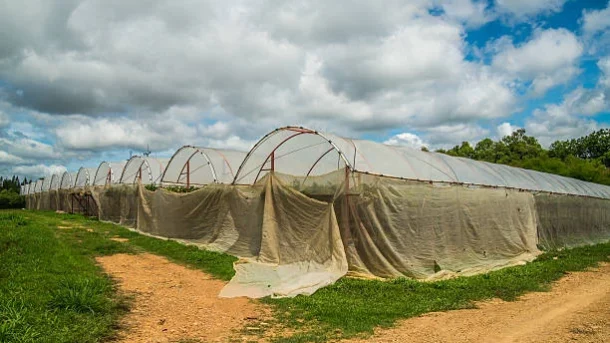
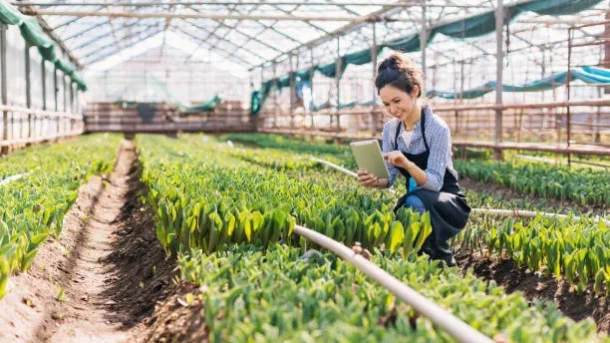
The “National Horticulture Board’s (NHB) Polyhouse and Shade Net Development Scheme” is the program that offers farmers financial support for the construction of polyhouses and shade net houses in India. This program is carried out by the National Horticulture Board, an agency of the Ministry of Agriculture and Farmers Welfare, to encourage protected farming methods in horticulture.

The Polyhouse and Shade Net Development Scheme’s salient characteristics are:

Financial support: The program offers financial assistance to farmers in the form of grants or subsidies to help them build polyhouses and shade net houses. Depending on the size of the building and the kind of horticultural crop that will be grown, different amounts of financial aid are provided.

Technical assistance and training: The program provides farmers with technical assistance and training on the building, running, and maintenance of polyhouses and shade net houses. This contains details on picking appropriate crops, watering techniques, managing pests and diseases, and making the best use of inputs like fertilizers and growth regulators.

Infrastructure development: The plan’s main objective is to build the infrastructure required to support protected agriculture. It involves the construction of shade net or cluster-based polyhouses, which offer shared services including electricity, water supply, storage, and marketing facilities to help farmers.

Building capacity: The plan places a focus on enhancing farmers’ knowledge and abilities in protected agriculture techniques by holding training sessions, workshops, and exposure tours. By doing this, farmers are able to adopt best practices and increase their yields and earnings.

Pradhan Mantri Kisan Samman Nidhi (PM-KISAN) scheme?Pradhan Mantri Kisan Samman Nidhi (PM-KISAN) scheme?

Kisan Samman

The Pradhan Mantri Kisan Samman Nidhi (PM-KISAN) scheme’s main objective is to give small and marginal farmers in India direct income support. The program provides farmers with a certain amount of cash support in an effort to address their financial needs and ease their income misery.

The PM-KISAN system has several primary goals, including:

Income support: The primary goal of the program is to directly assist farmers with their income by sending a set amount of money into their bank accounts. The money is intended to help farmers boost their income and support their agricultural endeavors.

Small and marginal farmers will benefit from the program because they may have limited resources and find it difficult to acquire finance and other financial services. It attempts to give them a dependable source of revenue to cover their agricultural costs and enhance their standard of living.

Increase agricultural productivity: By guaranteeing that farmers have a steady income, the Pradhan Mantri Kisan Samman Nidhi (PM-KISAN) scheme indirectly helps to increase agricultural productivity. It makes it possible for farmers to spend money on agricultural inputs like seeds, fertilizer, and equipment, enhancing their farming methods and crop yields.

Name a government program that aims to promote the cultivation of pulses and increase their production.

production

The “National Food Security Mission-Pulses” (NFSM-Pulses) is one government initiative that seeks to encourage the production of pulses in India. The Government of India established the NFSM-Pulses, a branch of the larger National Food Security Mission (NFSM), to increase the production of pulses, a significant source of protein in the Indian diet.

The NFSM-Pulses program’s primary areas of interest are as follows:

Improvement of varieties: The program aims to advance the production of high-yielding, disease-resistant pulse cultivars. It encourages farmers to use better tools and seeds to raise the yield and caliber of pulses.

Area expansion is the main goal of the NFSM-Pulses initiative, which helps farmers by offering them assistance and financial incentives. To address the rising demand for these products, it seeks to increase the cultivation of pulses in both rainfed and irrigated areas.

Increasing productivity: The program places a strong emphasis on using best practices and technologies to boost pulse productivity. This involves effective water use, suitable crop management practices, integrated nutrient management, adequate seed treatment, and pest and disease management.

What is the purpose of the National Food Security Mission (NFSM)?

National Food Security

India’s government has launched the National Food Security Mission (NFSM) with the aim of boosting food production and guaranteeing food security in the nation. The 2007-launched NFSM aims to increase production of rice, wheat, and pulses because they are crucial crops for the nation’s food security.

The following are the main goals of the National Food Security Mission:

Increasing food production: In order to fulfill the expanding food needs of the country’s population, the NFSM wants to boost the production of food crops, particularly rice, wheat, and pulses. By fostering improved agricultural practices, better crop management, and the use of cutting-edge technologies and farming methods, it focuses on closing the yield disparities.

production-boosting measures include promoting high-yielding varieties, better seed quality, balanced nutrition management, effective irrigation techniques, and integrated pest and disease control. The mission seeks to increase the production of food crops. By taking these steps, the output from each unit of land, water, and other resources should grow.

In order to maintain long-term food security, the NFSM places a strong emphasis on sustainable agricultural techniques. It encourages the use of resource-saving farming methods such integrated farming systems, organic farming, and conservation agriculture. These methods support resource conservation, environmental protection, and the sustainability of agricultural production systems.