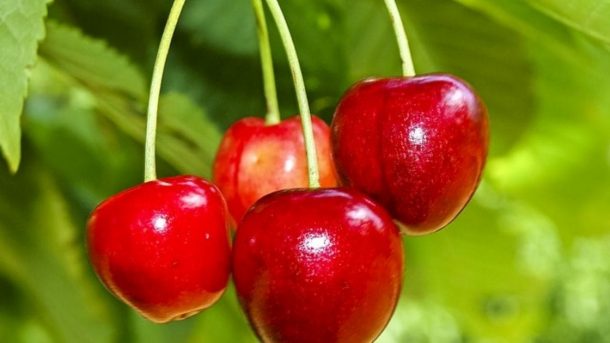
Dwarf North star pie cherry type of variety is resistant to diseases. It grows from 8 to 12 feet tall and its light red skin covers a red flesh.
ScientificFarmingWeb
What are the different Types of Dwarf Cherry Trees?
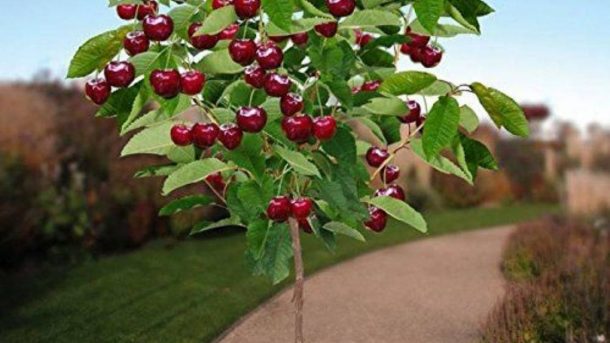
There are three different types of dwarf cherry trees. They are Dwarf North Star Pie cherry, Dwarf Bing cherry tree and meteor cherry tree.
What are the benefits of Growing Dwarf Cherry Trees?
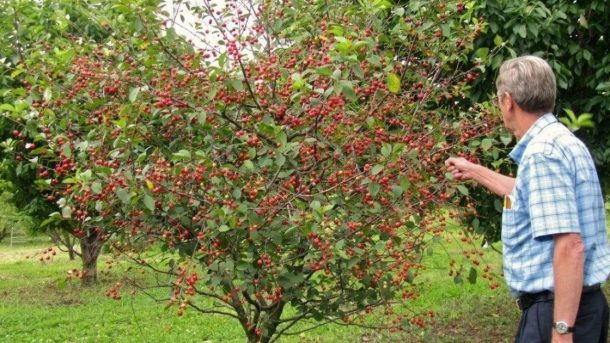
There are so many Benefits of Dwarf Fruit Trees. Here are a few which are Safety – Most, if not all of the maintenance the Dwarf tree requires can be performed from the safety of the ground. No need to use ladders to reach the top of the Dwarf tree for harvest or pruning, can be grown in containers – Dwarf fruit trees do great in containers. Space – Dwarf fruit trees can stay short and narrow. They don’t require much space to grow, Easy to care – Tree pruning takes a fraction of the time compared to a full-size tree. It’s also very easy to protect those trees during the winter season. If you end up planting your tree in a container, place the container on wheels and roll it indoors during the winter season. Most fruit trees are available in “Dwarf” ” form and reaching about 6 feet in size, these can also be grown in large planters with less space between them.
When harvesting is done in Cherry Fruit Cultivation?
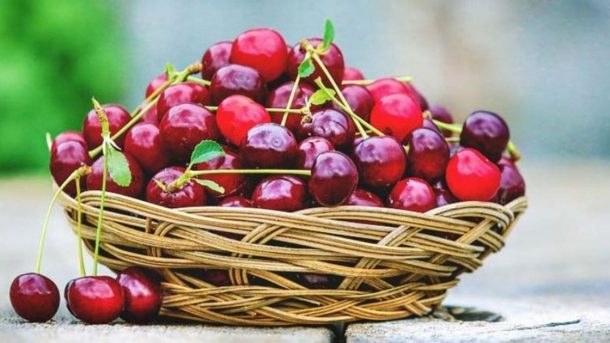
Determining the right harvesting time is crucial in cherry fruit cultivation. The yield and quality of fruits are highly affected by stage of maturity at fruits are harvested. Color and taste are the best method to pick the fruits in right time.
How Training and Pruning is done in Cherry Fruit Cultivation?
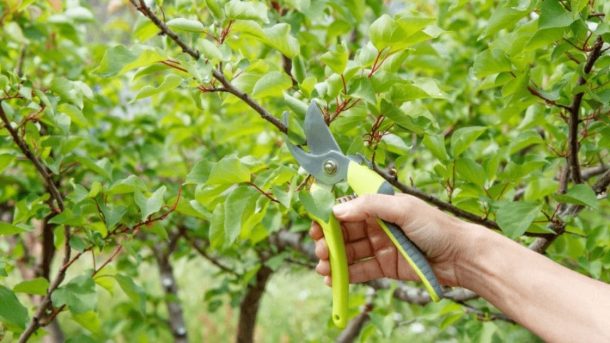
Generally, cherry tree requires “modified leader system” as training system. In this system, plants should be headed back to 70-80 cm at the time of planting. The central leader should be retained and 3 to 5 branches (wide angled), which are at 25 cm apart are selected for the first pruning. After 3 to 4 years, central leader should be headed back and allowed the lateral branches to grow. Cherry fruit bearing trees require some kind of pruning to keep the center of the tree open. Dead and diseased and intercrossing branches should be removed as part of the pruning.
How Weeds are Controlled in Cherry Fruit Cultivation?
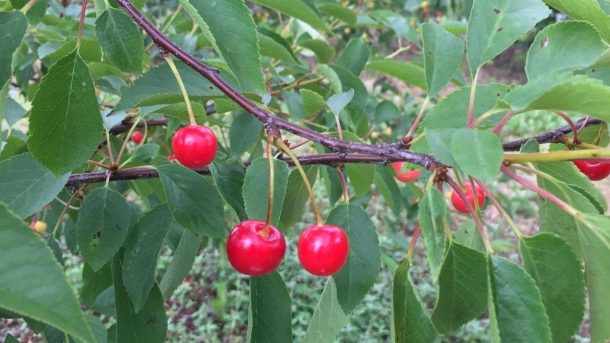
In cherry fruit cultivation, the basin should be kept clean by hand weeding or using chemical weedicides. Diuron 4 kg/ha can be applied pre-emergence controller and Paraquat (0.5%) can be applied to control the post-emergence growth of the weeds. It may need multiple applications to control the weed growth for 5 to 6 months. Mulching also effectively controls the weed growth. Any green manuring crops can be grown to improve the soil fertility.
How Irrigation is done in cherry Fruit Cultivation?
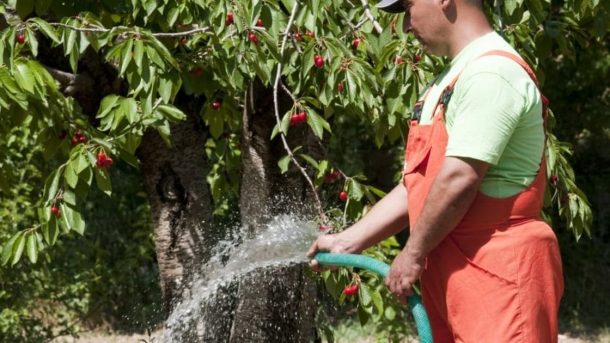
In India, cherries are grown under rain-fed conditions. However, in areas where annual rainfall is less and uneven distribution of rain is expected, cherry plants are required to irrigate frequently to maintain the moisture. Especially at the time fruit development, cherry trees need to be irrigated at weekly interval for better fruit quality and size. Irrigation should be carried in hot weather climatic conditions (Apr to May). Drip irrigation can be adopted as best water management practice.
How Land Preparation and Planting is done in Cherry Fruit Cultivation?
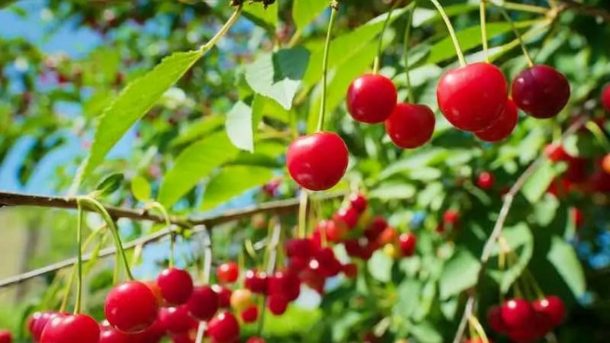
In India, the ideal planting time for cherry is Dec to Jan and this fruit cultivation carried mainly on hilly areas on sloppy lands. Usually contour or terrace system is practiced. However, square system is practiced in valley regions. The spacing of plants depends on the rootstock used. However, a spacing of 6 x 6 meter is preferred for plants raised in seedlings. Land should be given couple of ploughings to make the soil fine tilth and weed free.
Pits size of 1 x 1 x 1m should be dug and filled with a mixture of 45 kg of well rotten farm yard manure (FMY) and 1/2 kg of super phosphate just 4 weeks before planting. Pits should be filled 15 cm above the ground level.
How Clonal Rootstock is used for propagation in Cherry Fruit Cultivation?
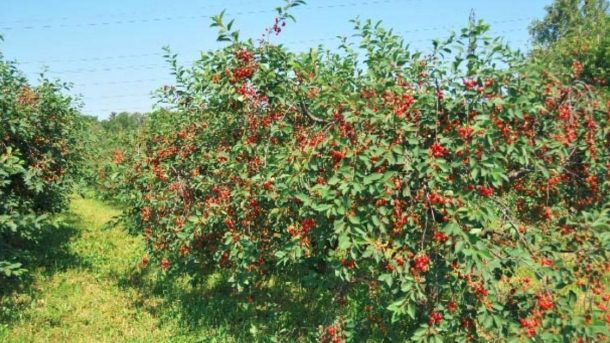
Colt and Mazzard F 12/1 clonal rootstocks are commercially preferred for raising the cherry trees in the state of Himachal Pradesh. Colt rootstock is easy-to root & can be multiplied through cuttings. 40 cm length of hardwood cuttings with pencil thickness should be taken in Feb. Pre treatment of cuttings should be done with IBA (2,550ppm) for 10-12 seconds. These cuttings should be planted in nursery beds for rooting. Rooted cuttings of cherry tree should be lined out in Dec & grafted with scion variety in Mar. Tongue grafting is recommended during Feb-Mar. For grafting, the scion wood should be collected during winter time when the cherry buds are dormant. Scion wood should be packed in moss grass & then should be wrapped in moist gunny bags. Scion wood bundles should be stored at 2°C – 4°C till the use.
Which Soil is suitable for Cherry Fruit Cultivation?
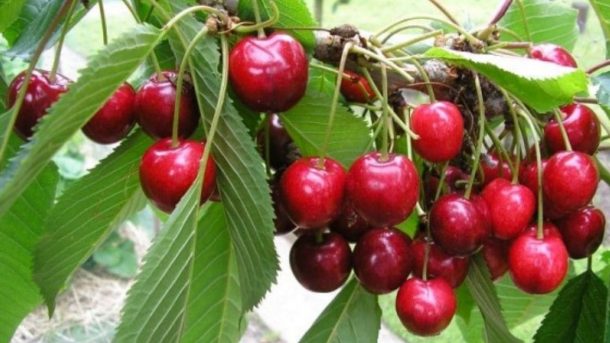
For better growth and high yield if cherries, Proper soil should be selected. The cherry tree requires the deep sandy loam soil with the pH range of 6.0 to 7.5. A well drained fertile soil with moisture holding capacity is best for cherry cultivation. As the cherry trees are sensitive to water stagnation, make sure to have internal well drainage in the soil. Avoid heavy soils in cherry fruit cultivation.