Beneficial organisms

What is the primary goal of the Pradhan Mantri Kisan Sampada Yojana (PMKSY)?

Kisan Sampada Yojana

The Pradhan Mantri Kisan Sampada Yojana (PMKSY)’s main objective is to enhance and modernize India’s whole food processing value chain, from the farm gate to the retail outlet, with an emphasis on lowering wastage, boosting value addition, and assuring higher returns for farmers. In order to generate money, create jobs, and encourage entrepreneurship in rural regions, PMKSY wants to revolutionize the agricultural industry.

The Pradhan Mantri Kisan Sampada Yojana’s primary goals typically include:

Construction of infrastructure, such as cold chains, integrated packhouses, processing facilities, and agro-processing clusters, is a key area of concentration for Pradhan Mantri Kisan Sampada Yojana. Establishing effective and integrated infrastructural facilities to lower post-harvest losses and increase the quality and shelf life of agricultural products is the main objective.

Employment Creation and Rural Entrepreneurship: PMKSY works to support rural entrepreneurship and employment prospects in the food processing industry. The program encourages the construction of food processing facilities, cold storage facilities, and agro-processing clusters, all of which help create both direct and indirect jobs in rural areas.

Market Access and Trade Promotion: The program places a strong emphasis on easing farmers’ and food processors’ access to markets. It encourages connections between domestic and foreign markets for processed agricultural products. To increase the competitiveness of Indian food products in domestic and international markets, PMKSY promotes branding, market development, and quality certification efforts.
Name a scheme that provides financial assistance for the development of cold storage facilities.

cold storage facilities

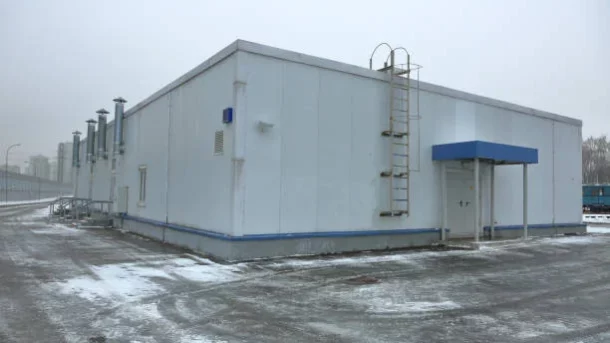
The “Pradhan Mantri Kisan SAMPADA Yojana” (PMKSY) is one program that offers financial support for the construction of cold storage facilities in India. The Government of India introduced the PMKSY, a comprehensive program, to assist the growth of the food processing industry, including the building of cold chain infrastructure.

The financial support provided under PMKSY for the construction of cold storage facilities includes a number of different features, such as:

Capital Investment Subsidy: The program offers qualifying applicants a capital investment subsidy for the construction of new cold storage facilitie or the extension or upgrading of existing ones. The project cost and other predetermined criteria are used to determine the subsidy amount.

Technical Assistance and Training: To ensure the efficient planning, design, and operation of cold storage facilitie, PMKSY provides technical assistance and training to the beneficiaries. This assistance aids in maintaining the quality of the perishable produce that is stored while also maximizing the use of the infrastructure.

Quality Certification and Standards: The program makes it easier for cold storage facilities to accept quality certification and standards. 

What is the main objective of the National Mission on Agricultural Extension and Technology (NMAET)?

Agricultural Extension and Technology

In order to increase the distribution of agricultural technologies and knowledge to farmers, the National Mission on Agricultural Extension and Technology (NMAET) in India seeks to strengthen and improve the agricultural extension system. NMAET strives to close the knowledge gap between agricultural research and farmers by facilitating the efficient dissemination of contemporary agricultural knowledge, methods, and technologies that will increase farm production and farmers’ standard of living.

The National Mission on Agricultural Extension and Technology primary goals typically consist of:

Enhancing Extension Services: NMAET focuses on enhancing the ability, expertise, and knowledge of extension employees in order to strengthen the agricultural extension system. It strives to improve their capacity to efficiently convey to farmers scientific knowledge, technical breakthroughs, and best practices.

Farmer Education and Training: To improve farmers’ knowledge and abilities in contemporary agricultural methods, the mission places a strong emphasis on programs that educate and teach farmers. It supports projects that encourage the use of better technology and methods, such as field demonstrations, training courses, workshops, and exposure tours.

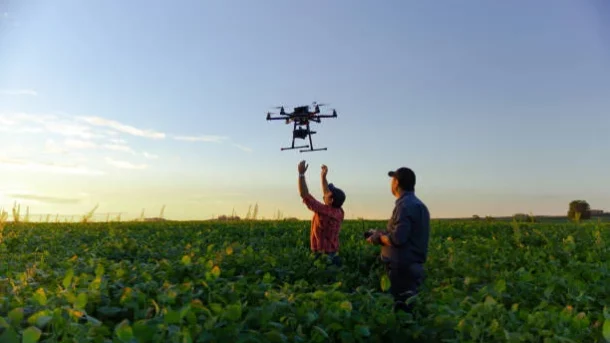
Agriculture and Information and Communication Technology (ICT): NMAET encourages the use of ICT tools in agriculture to enhance extension services. In order to give farmers timely and pertinent information on weather forecasts, market pricing, crop management techniques, and other agricultural services, it promotes the creation and usage of digital platforms, mobile applications, and other ICT-based solutions.

Which scheme provides financial assistance for the establishment of agriculture export zones in India?

Agriculture Export Policy

The “Agriculture Export Policy” is the program that offers financial aid for the creation of agricultural export zones in India. In order to double agricultural exports and include Indian farmers and their goods into global value chains, the Government of India introduced the Agriculture Export Policy in 2018.

According to the farm Export Policy, financial support is given in a variety of ways to create farm export zones, including:

Infrastructure Development: In farm export zones, the policy is focused on creating infrastructure facilities such cold chains, storage facilities, packaging facilities, and processing units. These infrastructural facilities are established with financial support in order to raise the caliber and value of agricultural products.

Export Promotion: Through financial assistance for activities including market expansion, participation in trade shows and exhibitions, branding and marketing initiatives, and export promotion campaigns, the scheme seeks to increase the export of agricultural products. Exporters are given financial support to widen their customer base and boost exports.

The Agriculture Export Policy places a strong emphasis on the value of capacity building and training for farmers, exporters, and other industry participants. To improve farmers’ and exporters’ ability to export, financial aid is given to run skill development programs, training seminars, and awareness campaigns.

Name a government initiative that aims to promote beekeeping and provide financial assistance to beekeepers.

promote beekeeping

The “National Beekeeping and Honey Mission” (NBHM) is one government program that tries to encourage beekeeping and give financial aid to beekeepers. The Government of India established the NBHM program to promote beekeeping in the nation and aid beekeepers in a variety of beekeeping endeavors.

The National Beekeeping and Honey Mission’s main goals are as follows:

Promote beekeeping: The goal strives to educate farmers and rural communities about the advantages of beekeeping and its potential for money production. It promotes the use of cutting-edge beekeeping techniques and the development of bee colonies.

Building capacity: NBHM offers beekeepers training programs and efforts to increase their capacity in beekeeping practices, honey production, colony management, and value-added honey products.

Financial support: The mission provides financial support to beekeepers for a range of beekeeping-related operations, including the acquisition of bee colonies, beehives, equipment, and machinery. Additionally, it offers assistance with the development of honey extraction and processing facilities.

Research and development: In order to improve bee health, increase honey output, and investigate the potential of honeybee byproducts, NBHM fosters research and development in the field of beekeeping. Research initiatives and partnerships with academic institutions and research organizations are supported.

What is the primary goal of the Pradhan Mantri Matsya Sampada Yojana (PMMSY)?

Matsya Sampada Yojana

The Pradhan Mantri Matsya Sampada Yojana (PMMSY)’s main objectives are to increase fish output, double fish farmers’ and fishermen’s incomes, and promote ethical and sustainable fisheries management in India. The PMMSY is a prominent program run by the Indian government’s Ministry of Fisheries, Animal Husbandry, and Dairy.

The Pradhan Mantri Matsya Sampada Yojana’s primary goals include:

Increasing fish productivity and production: The plan intends to increase fish production by creating infrastructure and using cutting-edge fishing methods. Its main objective is to promote ethical and sustainable fishing methods, including those that make use of cutting-edge fishing gear, fish aggregation devices, and fish-finding technologies.

Construction of infrastructure: The Pradhan Mantri Matsya Sampada Yojana (PMMSY) places a strong emphasis on building fisheries-related infrastructure, including as fishing harbors, fish landing stations, cold storage facilities, fish markets, and processing facilities. Building a strong infrastructure network that supports fishers, fish farmers, and the entire fisheries value chain is the goal.

Fishing fleet modernization: The program’s objective is to update and modernize India’s fishing fleet by offering financial support and incentives to fishermen who want to switch from traditional boats to mechanized and deep-sea fishing craft. Fishing can now take place in deeper seas, increasing the effectiveness of their catches.

Which scheme aims to provide affordable credit and loans to farmers in India?

credit and loans

The “Kisan Credit Card (KCC) Scheme” intends to offer farmers in India access to credit and loans at reasonable rates. The Government of India launched the Kisan Credit Card scheme in 1998 with the aim of giving farmers timely and substantial credit support for their agricultural and associated operations.

The Kisan Credit Card (KCC) Scheme’s main characteristics and goals are as follows:

Finance availability: The program’s goal is to give farmers simple access to affordable finance. As part of the KCC program, qualified farmers receive a credit card called the Kisan Credit Card, which they can use to apply for loans from banks and other financial organizations.

Flexible credit limit: Based on the size of their agricultural enterprises, the KCC system provides farmers with a flexible credit limit. The cropping pattern, cultivation costs, and projected agricultural income are some of the variables that affect credit limits.

With the Kisan Credit Card, farmers can access a variety of credit options, including term loans for farm-related investments as well as crop loans, working capital for agricultural activities, the purchase of agricultural inputs, farm machinery, and equipment.

Interest rate subsidy: To make financing more accessible to farmers, the KCC plan offers interest rate subsidies. Farmers receive interest rate breaks from the government, often through interest subvention programs where a portion of the credit’s interest.

Pradhan Mantri Kisan Samman Nidhi (PM-KISAN) scheme?Pradhan Mantri Kisan Samman Nidhi (PM-KISAN) scheme?

Kisan Samman

The Pradhan Mantri Kisan Samman Nidhi (PM-KISAN) scheme’s main objective is to give small and marginal farmers in India direct income support. The program provides farmers with a certain amount of cash support in an effort to address their financial needs and ease their income misery.

The PM-KISAN system has several primary goals, including:

Income support: The primary goal of the program is to directly assist farmers with their income by sending a set amount of money into their bank accounts. The money is intended to help farmers boost their income and support their agricultural endeavors.

Small and marginal farmers will benefit from the program because they may have limited resources and find it difficult to acquire finance and other financial services. It attempts to give them a dependable source of revenue to cover their agricultural costs and enhance their standard of living.

Increase agricultural productivity: By guaranteeing that farmers have a steady income, the Pradhan Mantri Kisan Samman Nidhi (PM-KISAN) scheme indirectly helps to increase agricultural productivity. It makes it possible for farmers to spend money on agricultural inputs like seeds, fertilizer, and equipment, enhancing their farming methods and crop yields.

What is the main objective of the Pradhan Mantri Krishi Sinchai Yojana (PMKSY)?

Krishi Sinchai Yojana

The Pradhan Mantri Krishi Sinchai Yojana (PMKSY)’s primary goal is to increase agricultural crop yield and boost water use effectiveness through the adoption of effective irrigation techniques. The government of India introduced the program in 2015 with the intention of delivering “Har Khet Ko Pani” (Water for Every Field).

The following are the main goals of the Pradhan Mantri Krishi Sinchai Yojana:

The PMKSY is focused on ensuring that there is water available for irrigation in every agricultural sector. To meet the irrigation needs of farmers, it strives to develop new water sources, improve existing water sources, and upgrade water storage and distribution facilities.

Increasing the number of irrigated areas: The program encourages the adoption of effective irrigation methods and technology in order to increase the number of irrigated areas throughout the nation. It focuses on maximizing water use effectiveness, decreasing water waste, and enhancing the irrigation system as a whole.

The PMKSY seeks to increase the effectiveness of water consumption in agriculture by promoting the use of micro-irrigation methods including drip irrigation and sprinkler irrigation. These methods aid in increasing agricultural water intake, minimizing water losses from evaporation and percolation, and supplying water directly to plant roots.

Name a government initiative that aims to promote the use of solar energy in agriculture.

solar energy

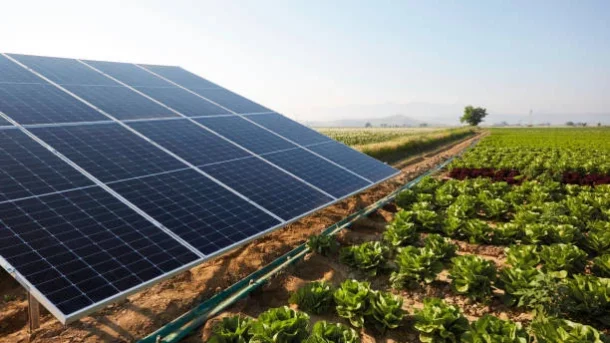
The “Solar Pumping Scheme for Irrigation” is one of the government programs in India that tries to increase the use of solar energy in agriculture. Under the auspices of the Jawaharlal Nehru National Solar Mission (JNNSM), the Ministry of New and Renewable Energy (MNRE) is carrying out this effort.

The Solar Pumping Scheme for Irrigation seeks to substitute solar-powered pumps for current diesel or grid-connected irrigation pumps. It promotes the use of solar energy for irrigation in agricultural activities, especially in off-grid and rural locations where access to or reliability of the electrical supply are issues.

In accordance with this plan, farmers receive financial support and incentives to install solar pumps for irrigation. The solar pumps don’t require expensive diesel fuel or the grid because they use photovoltaic panels to turn sunshine into electricity. This lessens reliance on traditional energy sources while promoting environmentally friendly and sustainable irrigation practices.

Depending on the farmer’s needs for irrigation and the size of his or her landholding, the program offers a variety of solar pump models. Farmers may more easily purchase solar pumps because the government partially covers their installation and upkeep costs through subsidies.

The Solar Pumping Scheme for Irrigation promotes the use in agriculture with the goal of lowering carbon emissions, increasing energy efficiency, and giving farmers dependable and affordable irrigation options.