Cropping patterns

What are the advantages of aeroponic systems?

systems

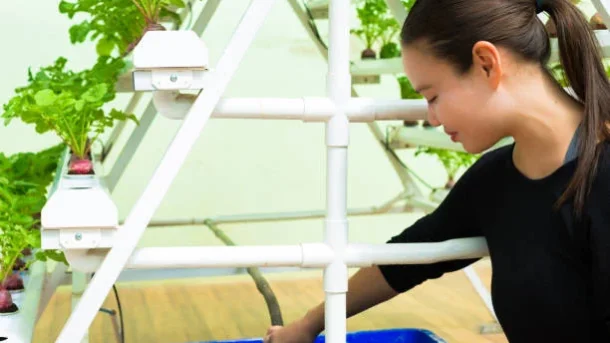
When compared to alternative growing techniques, aeroponic systems have a number of advantages that make them a desirable option in some situations. Some of the major benefits of aeroponic systems include the following:

Effective use of water: One of the most water-efficient growing techniques is aeroponics. Aeroponic systems distribute water directly to the plant roots in a highly targeted manner using a thin mist or spray. With this focused application, less water is wasted and water usage can be precisely managed. Aeroponics may conserve a lot of water as compared to hydroponics or conventional soil-based farming.

Maximum oxygen availability: Aeroponics suspends the roots in the air, which supplies them with a constant flow of oxygen. This encourages strong root growth and effective nutrient uptake.

Improved nutrient uptake: In aeroponics, the roots may acquire nutrients more quickly thanks to the misting or spraying of nutrient-rich water. Better interaction between the nutrient solution and the root surface is made possible by the small droplets penetrating the root zone. In comparison to other growing techniques, this makes it easier for nutrients to be absorbed quickly by plants. Aeroponic systems can therefore encourage quicker development and greater nutrient uptake effectiveness.

Disease risk is decreased thanks to aeroponic systems, which are more resistant to soil-borne infections and illnesses. Having no direct touch with soil or a growing media, the roots reduce the possibility of pathogen spread. Aeroponics’ intermittent misting or spraying of the nutrient solution also prevents pathogen growth and contributes to the development of an adverse environment.

How can drones be used for crop monitoring?

drones

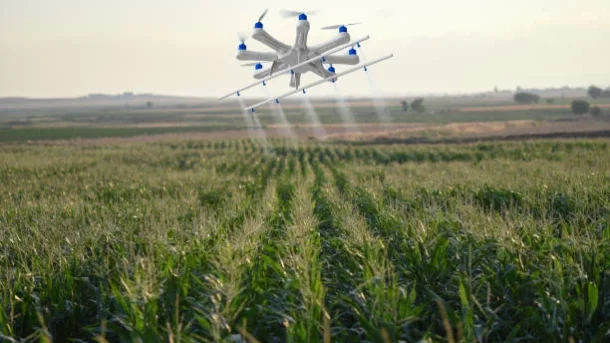
In crop monitoring, drones have proven to be an invaluable tool for giving farmers rapid access to accurate information about their farms. Drones are used in crop monitoring in the following ways:

Aerial imaging: Crop fields are captured in high-resolution by drones with cameras. By giving farmers a bird’s-eye view of the entire field, these photographs enable them to evaluate the health of their crops, spot anomalies, and spot patterns of variability. Crop stress, nutritional deficits, disease outbreaks, and insect infestations that may not be visible from the ground can be found via aerial imagery.

Vegetation indices: Drones can collect data to construct various vegetation indices, such as the Normalized Difference Vegetation Index (NDVI), by utilizing specialized cameras or sensors. These indexes offer numerical data on the health and vigor of plants. NDVI measurements show the density

Crop scouting: Drones with cameras or sensors can carry out focused reconnaissance missions to keep an eye on particular fields’ points of interest. A drone can be used to take precise pictures or thermal data, for instance, if a farmer fears a pest infestation in a particular area of the field. Drones can save farmers time and effort by promptly identifying agricultural problems and taking action.

Drones can be used to monitor agriculture fields for the first indications of disease or insect outbreaks. Drone can discover differences in plant health, find stress patterns, and locate infestation hotspots by taking high-resolution photos, thermal data, or multispectral data. This enables farmers to undertake timely pest control measures.

 What are the key technologies used in precision agriculture?

precision

A variety of technologies are used in precision agriculture to collect information, make defensible judgments, and implement site-specific management techniques. Here are some crucial technologies that are frequently applied in precision agriculture:

Global Positioning System (GPS): GPS technology enables precise and accurate location tracking, allowing farmers to pinpoint the specific coordinates of their machinery, sensors, and crop monitoring equipment. GPS enables accurate mapping and geolocation data, which forms the basis for many precision agriculture applications.

Geographic Information System (GIS): GIS technology combines other agricultural data with spatial data, such as soil mapping, topography, and field borders. It enables site-specific decision-making and precision management techniques by enabling farmers to visualize, analyze, and manage data in a spatial context.

Using sensors on satellites, drones, or aircraft, remote sensing involves gathering information about crops and fields. Remote sensing techniques including thermal imaging, multispectral and hyperspectral imaging, and Light Detection and Ranging (LiDAR) can gather useful data on a variety of factors, including crop health, biomass, water stress, and nutrient content. Making targeted management decisions and spotting crop variability are both made easier by this data.

Drones, also known as unmanned aerial vehicles (UAVs) or drones, are being employed in precision agriculture more and more often. They can gather information on crop health, plant population, and other characteristics as well as high-resolution aerial photography. Monitoring crops, spotting anomalies, and evaluating field conditions may all be done effectively and economically with drones.

Name a government program that aims to promote the cultivation of aromatic crops and essential oil extraction.

government

The “Aroma Mission” is one government initiative that seeks to encourage the growing of aromatic plants and the extraction of essential oils in India. The Government of India has established a program called the Aroma Mission with the goal of boosting the growing of fragrant crops including lavender, rose, lemongrass, vetiver, and other plants abundant in essential oils.

The following are the main objectives of the Aroma Mission:

Growing Aromatic Crops: The objective is to encourage the growth of aromatic crops by offering farmers technical advice, education, and financial help. To assure the production of high-quality aromatic crops, it promotes the adoption of sustainable farming techniques, including as organic farming.

Extraction of Essential Oils: By establishing essential oil extraction units and processing facilities, the Aroma Mission seeks to improve the extraction of essential oils from aromatic crops. This makes it easier to extract aromatic oils from plant matter, ensuring product value addition and improved marketability.

Research and Development: The mission promotes initiatives in the fields of essential oil extraction methods and aromatic crop research and development. This involves research on crop improvement, the creation of high-yielding cultivars, the improvement of extraction techniques, and the investigation of new opportunities and uses for aromatic oils.

Market Linkages and Promotion: The Aroma Mission helps farmers who grow aromatic crops and make essential oils connect with markets. It encourages the use of aromatic oils in a variety of fields, including aromatherapy, cosmetics, perfumery, and pharmaceuticals.

Name a scheme that aims to promote the cultivation of cashew and provide support for cashew processing units.

cashew processing

The “Mission for Integrated Development of Horticulture” (MIDH) is one program that attempts to support cashew processing facilities in India and encourage cashew processing farming. The Ministry of Agriculture and Farmers Welfare, Government of India, is responsible for carrying out the Mission for Integrated Development of Horticulture.

The Cashew Development Program’s main goals and initiatives typically consist of:

Promotion of Cashew Cultivation: The program’s main objective is to increase cashew production by giving farmers financial help, technical aid, and training. It involves assistance with the creation of fresh cashew orchards, the restoration of aged and underutilized orchards, the use of superior planting materials, and the adoption of best agricultural practices.

Training and Capacity Building: The initiative places a strong emphasis on training and capacity building programs for farmers growing cashews. It offers instruction on a variety of elements of cashew production, such as post-harvest management, irrigation management, planting methods, and pest and disease control.

Research and Development: The program funds initiatives for the production and processing of cashews. In order to create and spread better cashew varieties, crop management strategies, and processing methods, it encourages partnerships with research facilities, agricultural universities, and technology providers.

What is the main objective of the National Mission on Sustainable Forest Management (NMSFM)?

Sustainable Forest Management

Initiatives for sustainable forest management have as their goal the preservation and protection of forests, including natural forests, regions with a high biodiversity, and forest ecosystems. They place a strong emphasis on protecting the ecological stability, biological richness, and carbon stores of forests as well as the wildlife habitats found there.

The sustainable use of forest resources, such as timber, non-timber forest products, and ecosystem services, is encouraged by these programs. They place a strong emphasis on ethical harvesting methods, forest regeneration, and the preservation of natural harmony while assuring the socioeconomic progress of nearby people that depend on the forest’s resources.

Programs for forest restoration, afforestation, and reforestation are components of initiatives for sustainable forest management. To achieve environmental, economic, and social goals, they seek to increase the amount of forest cover, improve the productivity and health of damaged forests, and establish new forested regions.

Support for Community Participation and Livelihoods: These programs work to integrate local knowledge, customs, and traditional rights into forest governance while also fostering community involvement in forest management. They encourage sustainable livelihood options based on forestry resources, support community-based forest management strategies, and help communities that depend on forests for their way of life.

What is the purpose of the National Mission on Sustainable Coastal Zone (NMSCZ)?

Coastal Zone

Initiatives for sustainable coastal zone place a strong emphasis on the management and conservation of coastal resources, such as fisheries, coastal ecosystems, biodiversity, and other natural resources. They seek to limit the negative effects of human activity on coastal habitats, protect and restore delicate coastal ecosystems, and assure sustainable resource usage.

Climate Change Adaptation: The efforts deal with issues brought on by coastal regions’ heightened sensitivity to extreme weather events, rising sea levels, and coastal erosion. They place a strong emphasis on the creation and application of methods to improve coastal resilience, mitigate the risks associated with climate change, and adapt to its effects.

Initiatives for Integrated Coastal Zone Management bring together a variety of stakeholders, such as government agencies, regional communities, academic institutions, and non-governmental organizations, to promote integrated approaches to coastal zone management. They want to encourage participation in decision-making, collaboration, and coordination for sustainable coastal development.

Economic Development and Sustainable Livelihoods: The projects are geared toward encouraging coastal communities to develop economically and sustainably. They promote sustainable fisheries, aquaculture, eco-tourism, coastal agriculture, and other sources of alternative income that are in line with the preservation and wise use of coastal resources.

What is the purpose of the National Mission on Agricultural Disaster Management (NMADM)?

Agricultural Disaster

Early Warning Systems and Preparedness: Agricultural disaster management efforts seek to improve early warning systems and disaster preparedness. This entails keeping an eye on the weather, climatic patterns, and other pertinent variables in order to forecast impending calamities that can affect agriculture and to offer prompt warnings.

Reducing risks and lessening the effects of disasters on agriculture are the main objectives of the programs. This entails putting strategies into place to increase farming systems’ resilience, such as encouraging crop diversification, water and soil conservation, the adoption of climate-resilient agricultural practices, and building infrastructure to resist calamities.

Initiatives for agricultural disaster management include provisions for emergency response and relief measures to assist impacted farmers and lessen the immediate effects of disasters. To aid farmers in recovering from the consequences of disasters, this may entail offering financial support, food supplies, seeds, fertilizer, support for livestock, and other essential inputs.

Agricultural disaster management initiatives place a high priority on the rehabilitation and recovery of the devastated agricultural sector. This include fixing broken infrastructure, assisting with the rebuilding of livelihoods, easing access to loans and insurance, and giving technical support to help farmers continue farming and reconstruct their lives.

What is the main objective of the Paramparagat Krishi Vikas Yojana (PKVY)?

Krishi Vikas Yojana

The Paramparagat Krishi Vikas Yojana (PKVY)’s primary goal is to encourage organic farming in India. The Ministry of Agriculture and Farmers Welfare introduced the PKVY program as a government initiative in 2015. The English translation of “Paramparagat Krishi Vikas Yojana” is “Traditional Farming Development Scheme”.

The following are the main objectives of PKVY:

Promote organic farming: The program’s goal is to persuade farmers to switch to organic agricultural methods and lessen their reliance on synthetic pesticides and fertilizers. It aims to promote ecologically friendly, soil-health-supporting sustainable agricultural practices.

Boost farm productivity: PKVY seeks to do this by implementing organic farming methods. These methods emphasize increasing soil fertility through the use of organic manure and compost as well as crop rotation, mixed cropping, and biological pest control strategies.

Produce certification: The program also assists farmers in securing organic certification for their output. This certification guarantees the authenticity and high caliber of organic products while facilitating farmers’ access to premium markets.

Building capacities and providing training: To assist farmers in understanding organic farming methods, managing soil health, and utilizing conventional and local resources, PKVY offers training, capacity building, and technical assistance. The program seeks to equip farmers with the information and abilities they need to successfully implement organic farming.

Which scheme focuses on promoting sustainable water management in agriculture?

water management

The “Water Efficient Farming Scheme” is one program that promotes environmentally responsible water management use in agriculture. I can give you a general summary of what such a scheme normally entails, even if I am unaware of the most current advancements in this field because my knowledge cutoff date is September 2021.

The Water Efficient Farming Scheme is intended to assist and motivate farmers to implement strategies that reduce water use and increase water efficiency in agricultural operations. Various activities, rewards, and instructional initiatives that support sustainable water management are often included in the plan. Typical elements of such a plan could be the following:

Irrigation management is the practice of encouraging farmers to use irrigation techniques that supply water directly to plant roots while reducing runoff and evaporation losses, such as drip irrigation or precision irrigation systems.

Encourage the adoption of water-saving methods like mulching, which keeps soil moist and lowers evaporation, and good soil management techniques, which increase soil’s capacity to hold water.

Crop Rotation: Promoting crop rotation practices that assist preserve soil health and lower water demand, as well as giving farmers advice on choosing crops that are suited to the local climate and require less water.