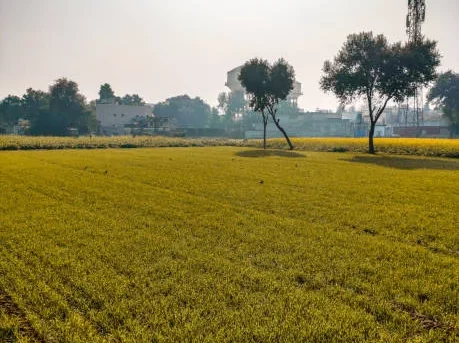
Farm equipments

Name a government program that focuses on the development of sericulture in India.

sericulture in India

The “Central Silk Board’s Sericulture Development Program” is one government initiative that aims to advance sericulture in India. The development and promotion of sericulture in India are carried out by the Central Silk Board (CSB), an agency of the Ministry of Textiles.

The Sericulture Development Program of the Central Silk Board has the following primary goals:

Development of Mulberry Sericulture: The program intends to advance mulberry sericulture, which entails cultivating mulberry plants as a source of food for silkworms. It focuses on increasing mulberry cultivation areas, raising mulberry yield, and giving farmers who are growing mulberries technical support.

Production of cocoons and the development of silkworm rearing: These activities are supported by the program. It offers sericulturists education, technical support, and financial aid for the creation of silkworm rearing facilities, cocoon production, and cocoon quality improvement.

Technology Adoption and Research: The initiative encourages the use of cutting-edge sericulture tools and gear to boost output and efficiency. It promotes sericulture-related research and development initiatives, such as the creation of disease-resistant silkworm kinds, enhanced rearing procedures, and the creation of silk of the highest caliber.
Which scheme aims to provide affordable credit and loans to farmers in India?

credit and loans

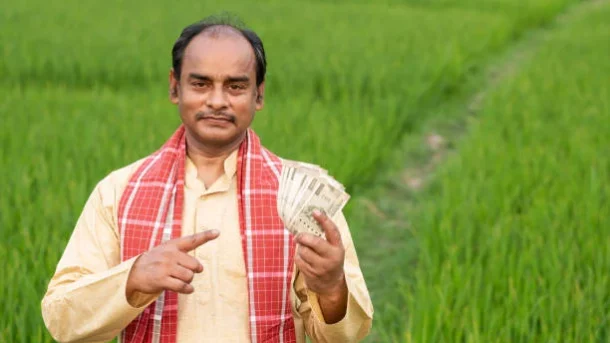
The “Kisan Credit Card (KCC) Scheme” intends to offer farmers in India access to credit and loans at reasonable rates. The Government of India launched the Kisan Credit Card scheme in 1998 with the aim of giving farmers timely and substantial credit support for their agricultural and associated operations.

The Kisan Credit Card (KCC) Scheme’s main characteristics and goals are as follows:

Finance availability: The program’s goal is to give farmers simple access to affordable finance. As part of the KCC program, qualified farmers receive a credit card called the Kisan Credit Card, which they can use to apply for loans from banks and other financial organizations.

Flexible credit limit: Based on the size of their agricultural enterprises, the KCC system provides farmers with a flexible credit limit. The cropping pattern, cultivation costs, and projected agricultural income are some of the variables that affect credit limits.

With the Kisan Credit Card, farmers can access a variety of credit options, including term loans for farm-related investments as well as crop loans, working capital for agricultural activities, the purchase of agricultural inputs, farm machinery, and equipment.

Interest rate subsidy: To make financing more accessible to farmers, the KCC plan offers interest rate subsidies. Farmers receive interest rate breaks from the government, often through interest subvention programs where a portion of the credit’s interest.

Name a government initiative that focuses on skill development and training in the agricultural sector.

agricultural sector

The “Pradhan Mantri Kaushal Vikas Yojana (PMKVY)” is one government program that emphasizes skill development and training in India’s agricultural industry. The PMKVY includes skill development and training in the agricultural sector programs for a variety of businesses, including agriculture, even though it is not solely focused on that industry.

The PMKVY’s salient characteristics are:

Training for skill development: The program provides participants with programs for skill development with an emphasis on industry-relevant abilities. These training programs are designed to close the skills gap and give participants the skills and information they need to succeed in the agriculture industry.

Recognition of Prior Learning (RPL): Through the Recognition of Prior Learning (RPL) component, the PMKVY also acknowledges the pre-existing talents of persons in the agricultural sector. Through this, people with prior expertise in farming or related fields can certify their talents, increasing their employment and income potential.

Certification: After successfully completing the skill training programs, the PMKVY issues certificates that are recognized in the industry. Individuals’ talents are validated by the certifications, increasing their marketability and attractiveness to prospective employers in the agriculture industry.

Infrastructure for training: The plan encourages the construction of training facilities across the nation, including skill development centers and model training facilities. These facilities offer cutting-edge equipment and infrastructure for efficient skill training in agricultural sector and other industries.

Pradhan Mantri Kisan Samman Nidhi (PM-KISAN) scheme?Pradhan Mantri Kisan Samman Nidhi (PM-KISAN) scheme?

Kisan Samman

The Pradhan Mantri Kisan Samman Nidhi (PM-KISAN) scheme’s main objective is to give small and marginal farmers in India direct income support. The program provides farmers with a certain amount of cash support in an effort to address their financial needs and ease their income misery.

The PM-KISAN system has several primary goals, including:

Income support: The primary goal of the program is to directly assist farmers with their income by sending a set amount of money into their bank accounts. The money is intended to help farmers boost their income and support their agricultural endeavors.

Small and marginal farmers will benefit from the program because they may have limited resources and find it difficult to acquire finance and other financial services. It attempts to give them a dependable source of revenue to cover their agricultural costs and enhance their standard of living.

Increase agricultural productivity: By guaranteeing that farmers have a steady income, the Pradhan Mantri Kisan Samman Nidhi (PM-KISAN) scheme indirectly helps to increase agricultural productivity. It makes it possible for farmers to spend money on agricultural inputs like seeds, fertilizer, and equipment, enhancing their farming methods and crop yields.

What is the purpose of the National Food Security Mission (NFSM)?

National Food Security

India’s government has launched the National Food Security Mission (NFSM) with the aim of boosting food production and guaranteeing food security in the nation. The 2007-launched NFSM aims to increase production of rice, wheat, and pulses because they are crucial crops for the nation’s food security.

The following are the main goals of the National Food Security Mission:

Increasing food production: In order to fulfill the expanding food needs of the country’s population, the NFSM wants to boost the production of food crops, particularly rice, wheat, and pulses. By fostering improved agricultural practices, better crop management, and the use of cutting-edge technologies and farming methods, it focuses on closing the yield disparities.

production-boosting measures include promoting high-yielding varieties, better seed quality, balanced nutrition management, effective irrigation techniques, and integrated pest and disease control. The mission seeks to increase the production of food crops. By taking these steps, the output from each unit of land, water, and other resources should grow.

In order to maintain long-term food security, the NFSM places a strong emphasis on sustainable agricultural techniques. It encourages the use of resource-saving farming methods such integrated farming systems, organic farming, and conservation agriculture. These methods support resource conservation, environmental protection, and the sustainability of agricultural production systems.

Name a government initiative that provides financial support for setting up agro-processing clusters in India.

agro-processing clusters

The “Scheme for Agro-Marine Processing and Development of Agro-Processing Clusters” (SAMPADA) is one government program that offers financial support for the establishment of agro-processing clusters in India. The Government of India’s Ministry of Food Processing Industries (MoFPI) has put into place the comprehensive program known as SAMPADA.

The SAMPADA scheme’s primary goal is to encourage the creation of contemporary infrastructure and agro-processing clusters to support the expansion of India’s food processing industry. Its objectives include lowering post-harvest losses, boosting value addition, raising incomes and opening up new employment opportunities, and ensuring that farmers are paid more.

The SAMPADA program’s main characteristics and advantages include:

Construction of modern infrastructure facilities, such as cold storage, cold chains, food parks, integrated units, and agro-processing clusters, is aided financially by the program. In order to reduce waste and increase value addition, it places a strong emphasis on creating effective, integrated supply chains.

Building capacity and developing skills: SAMPADA encourages training programs and other initiatives to develop the skills of farmers, business owners, and other parties involved in the food processing industry. To assist the expansion of agro-processing industries, it aims to enhance technical knowledge, quality management, and entrepreneurial skills.

Financial assistance: The program provides qualifying entities with financial assistance for establishing agroprocessing clusters and infrastructure facilities in the form of grants, loans, and subsidies. The financial aid covers a variety of topics, including capital investment, technology advancement.

Name a government program that aims to enhance the productivity of small and marginal farmers in India.

small and marginal farmers

The “National Agriculture Market” (e-NAM) initiative is one government program that tries to increase the productivity of small and marginal farmers in India. The Government of India introduced the e-NAM program in 2016 to establish a single national market for agricultural products.

The main goal of the e-NAM program is to make it possible for small and marginal farmers to sell their goods directly to consumers in various states and regions. By encouraging open price discovery and effective market procedures, it aims to do away with middlemen and secure fair pricing for farmers.

The e-NAM program’s main benefits and characteristics are as follows:

The program offers an online platform (e-NAM portal) that links several agricultural produce market committees (APMCs) around the nation. It promotes an open dialogue.

Single license: Under the e-NAM program, farmers may use a single trading license that is accepted at all national e-NAM markets. For farmers, this eliminates the requirement for various licenses and streamlines the selling procedure.

Information that is current: The e-NAM portal offers current data on the cost, demand, and availability of agricultural products in various markets. Farmers can use this data to inform their decisions on how to sell their produce.

Which government scheme aims to provide financial assistance to farmers for the purchase of agricultural machinery?

agricultural machinery

The “Subsidy on Agricultural Machinery” program is the name of a government initiative in India that intends to give farmers financial aid for the purchase of agricultural equipment. The Ministry of Agriculture and Farmers Welfare’s Department of Agriculture, Cooperation, and Farmers Welfare is responsible for carrying out this program.

The Subsidy on Agricultural gear Scheme provides farmers with financial aid or subsidies to help them purchase various pieces of agricultural gear and equipment. The goal is to advance mechanization in agriculture, increase production, and raise overall farm operation effectiveness. The program attempts to increase farmers’ access to and affordability of agricultural gear by offering financial help.

According to the terms of this program, qualified farmers can get subsidies that range from 25% to 50% of the cost of machinery or equipment.

Through specific government agencies, agricultural extension offices, or online application portals, farmers can apply for this program. As the federal government just gives guidelines, and the individual state governments carry out the program at the local level, the implementation of the scheme and the distribution of subsidies may differ from state to state.

While the “Subsidy on Agricultural Machinery” is a well-known government program in India, it’s important to keep in mind that there may be other state-specific or regional programs that offer comparable financial help for the purchase of agricultural machinery. Farmers are advised to inquire about specific programs offered in their region with the relevant authorities or their local agricultural department.

What are the main climate factors that influence agricultural productivity?

influence

Temperature: Crop growth and development are greatly influence by temperature. The ideal temperature for germination, vegetative growth, blooming, and fruiting varies depending on the crop. Crop yields and quality can be significantly impacted by extreme temperatures, such as heatwaves or frost occurrences. The time of planting and harvesting activities is also impacted by temperature.

Precipitation: For crops to develop, there must be sufficient and timely precipitation. Reduced crop yields, drought conditions, and plant water stress can all result from insufficient precipitation. On the other hand, an abundance of rain can cause nutrient leaching, soil erosion, and waterlogging. Crop choices, the requirement for irrigation, and water management measures are all influence by the quantity, distribution, and timing of precipitation.

Seasonality: The length and timing of the seasons play a significant role on the productivity of the agricultural sector. The amount of time available for crop growth and yield formation depends on the length of the growing season. Crop rotation techniques, planting dates, and crop choice are all impacted by seasonality. Decisions on agricultural planning and management may be impacted by changes in seasonality patterns.

Solar Radiation: The energy required for photosynthesis, which fuels crop growth and production, is provided by solar radiation, notably in the form of sunshine. Crop yields and the buildup of biomass are influenced by the length and intensity of sunshine. The effectiveness of plants’ photosynthetic processes and the production of plant sugars are both impacted by solar radiation.

How do hybrid seeds differ from open-pollinated seeds, and what are the advantages and disadvantages of each?

open-pollinated

Hybrid seeds are created by open-pollinated two separate parent plants that have desirable characteristics. The resulting hybrid seeds have unique traits that come from both parents. To obtain desirable features like increased yield, disease resistance, or uniformity, the hybridization process is meticulously managed.

Benefits of hybrid seeds include:

Increased productivity: Compared to open-pollinated seeds, hybrid seeds frequently display hybrid vigor or heterosis, which leads to larger yields.
Improved characteristics: Hybrids are produced to have particular characteristics like disease resistance, consistency in size, shape, or color, and higher environmental tolerance.
Hybrid plants typically exhibit more consistent development, maturity, and other traits, which can be helpful for farming and harvesting with machinery.
Hybrids typically perform better than open-pollinated seeds in terms of consistency.
Hybrid seed disadvantages include:

Dependence on seed suppliers: Because hybrid seeds do not produce true-to-type progeny, they cannot be kept and sown for consecutive seasons. Each planting season, farmers must buy hybrid seeds, which can raise output expenses.
Limited genetic diversity: The particular parent lines employed in the creation of hybrid seeds frequently determine the genetic make-up of those seeds. They may be more susceptible to specific pests, illnesses, or environmental changes as a result of their decreased genetic variety.
Less adaptability: Hybrid seeds are frequently developed for certain growing conditions or habitats. If the circumstances are drastically different from the target setting, they could not perform as well.
Breeding complexity: Creating hybrid seeds involves specialized breeding methods and knowledge, which may restrict their availability and raise their price in comparison to other types of seeds.