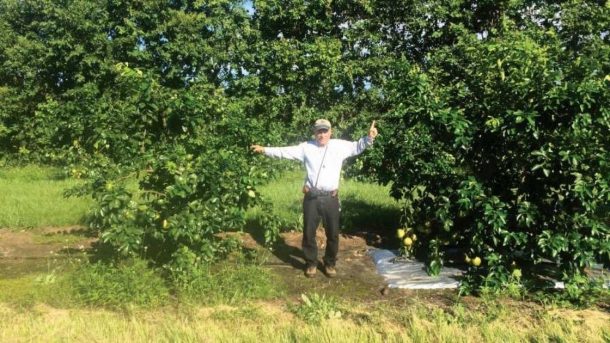
Crop residues like straw, cotton stalks, leaves, saw dust, pine needles, coir dust and other materials like polythene films or certain special kinds of paper are spread in the tree basins and in inter spaces between trees to conserve soil moisture and to control the weed growth. Mulching keeps the soil cool in day; warm at night hours, reduces surface run-off, adds humus to the soil and prevents soil erosion. Fruits are protected and kept clean since they fall on the mulches. It allows the absorption of more rain water and reduces irrigation frequency. However, dry materials used as mulches encourage the risk of fire and consequent damage to trees. Thick mulches may act as places for mice and rodents to live and multiply causing damage to tree trunks and roots by eating the bark and burrowing. The mulching materials should be placed too close to the tree trunk and it should be spread in such a way that they give a good cover to the root system of the trees.
farming practices
How trees are planted in contour system for orange cultivation?
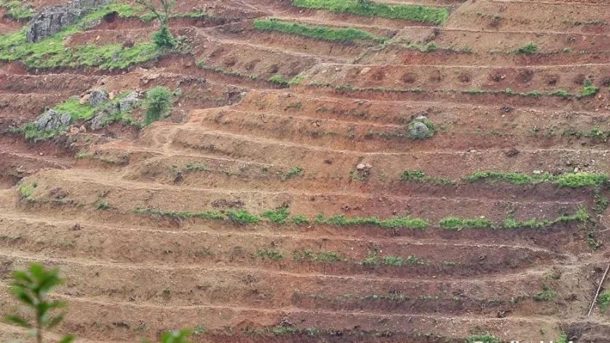
It is generally followed on the hills with undulated topography to minimize land erosion and to conserve soil moisture. In this system, plants are planted along the contour across the slope. The contour line is so designed and graded in such a way that the flow of water in the irrigation channel becomes slow and thus finds time to penetrate into the soil without causing erosion. In terrace system planting is done on flat strip of land formed along the contours. Terraced fields rise in steps one above the other and help to bring more area into productive use and also to prevent soil erosion. The width of the contour terrace varies according to the nature of the slope. The planting distance under the contour system may not be uniform.
How trees are planted in triangular system for orange cultivation?
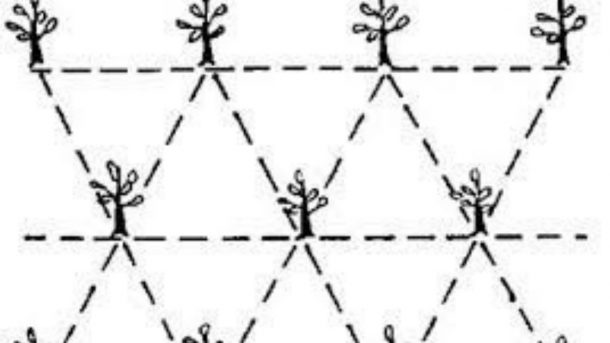
Triangular system is based on the principle of isolateral triangle. The distance between any two adjacent trees in a row is equal to the perpendicular distance between any two adjacent rows. When compared to square system, each tree occupies more area and hence it accommodates few trees per hectare than the square system.
How trees are planted in Diagonal or quincunx system for orange cultivation?
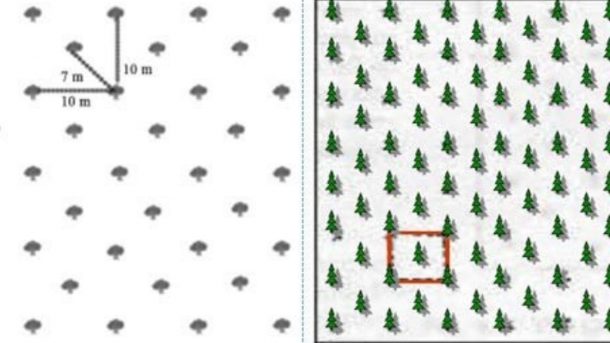
This is the square method but with one more plant in the centre of the square. This will accommodate double the number of plants, but does not provide equal spacing. The central filler tree chosen should be a short lived one and should be removed after a few years when main trees come to bearing. This system can be followed when the distance between the permanent trees is more than 10m.
How trees are planted in hexagonal system for orange cultivation?
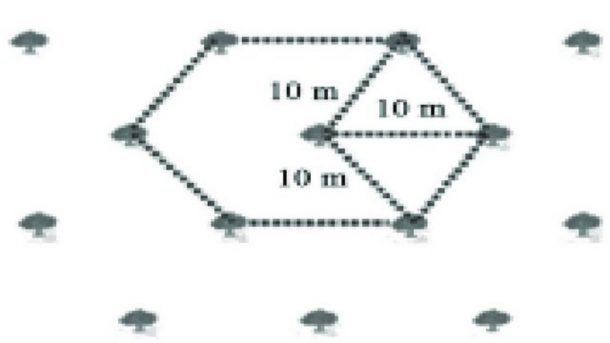
In this method, the trees are planted in each comer of an equilateral triangle. This way six trees form a hexagon with the seventh tree in the centre. Therefore, this system is also called as ‘septule’ as a seventh tree is accommodated in the centre of hexagon. This system is difficult to layout and for doing cultural operations. This system accommodates 15% more trees than the square system.
How trees are planted in rectangular system for orange cultivation?
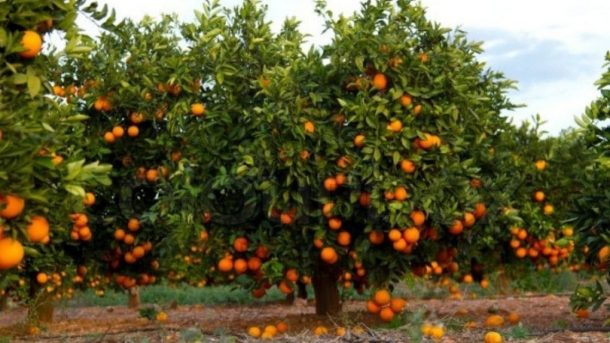
In this system, trees are planted on each corner of a rectangle. The distance between any two rows is more than the distance between any two trees in a row. The wider row spaces permit easy intercultural and mechanical operations.
How trees are planted in square system for orange cultivation?
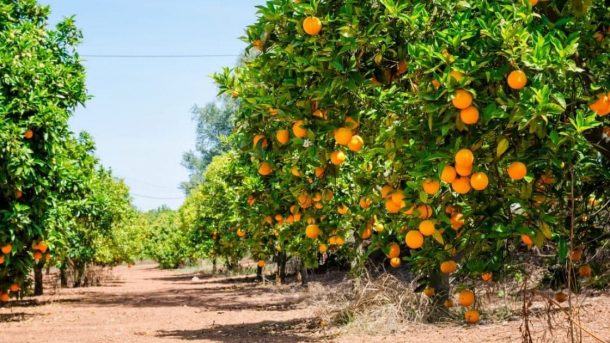
In this system, trees are planted on each comer of a square whatever may be the planting distance. This is the most commonly followed system, easy to layout and permits inter cropping and cultivation in two directions The central place between four trees may be advantageously used to raise short lived filler trees.
What is rest period in pomegranate?
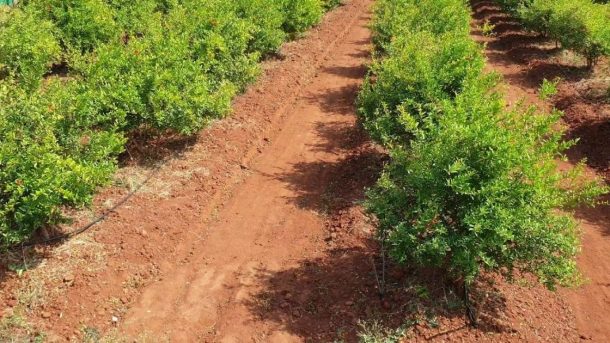
A rest period of three-four months is suggested for healthier plant growth, development and reduction of insect and pathogen inoculums load if any. Sprays of Bordeaux mixture 1% alternated with COC (2.5g/l) are required at 15-20 days interval after winter pruning in December -January. Apply 1/3 dose FYM and minimum irrigation should be given during rest period. Remove the water shoots on a regular basis.
How much distance of spacing in banana helps to get good bunch weight and quality?
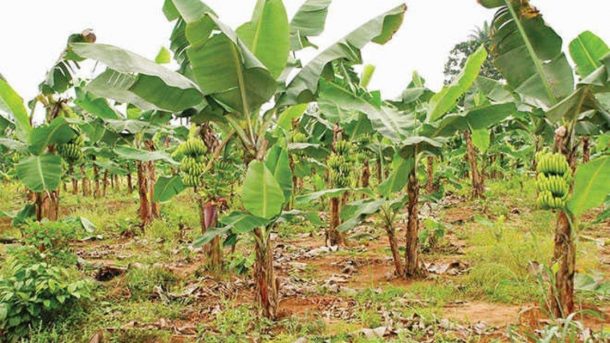
At a spacing of 1.8×1.8 meters, place two plants per hole to double the yield with little or no effect on the size and maturity of the bunch on the crop in Dwarf Cavendish. Double planting of Robusta Bananas also increased profits. Calcium is needed to ensure root, leaf and sucking growth, thus providing high yields.
Why bunch covering is done in banana?
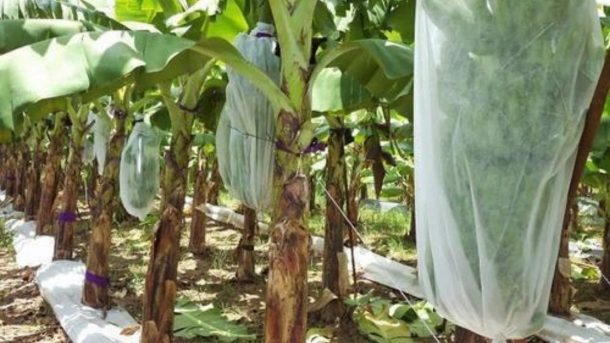
Bagging (bunch covering) is a cultural technique used by planters where export quality bananas are grown. This practice protects bunches against cold, sun scorching, against attack of thrips and scarring beetle. It also improves certain visual qualities of the fruits. Bunch covering with dry leaves is a common practice in India.