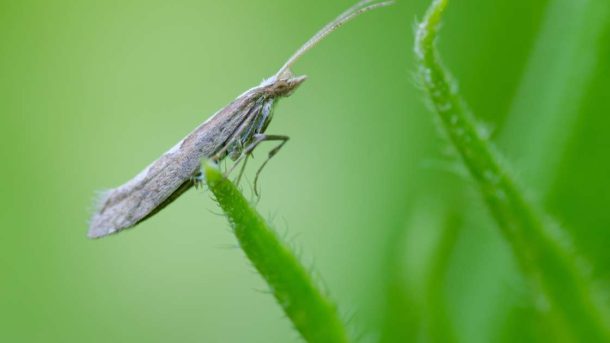
This pest’s infection usually begins 15-20 days after the crop is transplanted. Farmers that have planted mustard or cress (asaliyo) as a trap crop around the field’s perimeter are less susceptible to the insect. By feeding, the larvae create multiple holes in plants, causing significant damage. Spray chlorantraniliprole 18.5 SC @ 3 ml, emamectin benzoate 5 SG @ 3 g, or metaflumizone 22 SC @ 10 ml per 10 lit of water at the start of the treatment.
pest management
How pest management is done in drumstick?
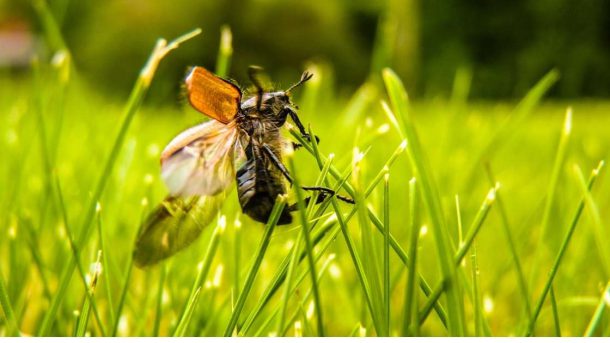
Integrated pest management in drumstick is done by installing a light trap in the field or by spraying Neem seed kernel suspension 5% (500 g) or neem based formulations @ 10 ml (1% EC) to 40 ml (0.15% EC). We can also use bio pesticides such as, Verticillium lacani or Bouveria bassiana, fungal-based powder @ 40 g per 10 litre of water.
Collecting the fallen and infested pods regularly and burying them in the soil helps in controlling pest. Periodically collecting and destroying all the fallen and damaged fruits by dumping in a pit and covering with a thick layer of soil to prevent carry-over of the pod fly is another method. Neem based formulations are sprayed during pod formation and again after 35 days to reduce the infestation of pod fly.
During when , infestation of brinjal shoot & fruit borer remain lower?
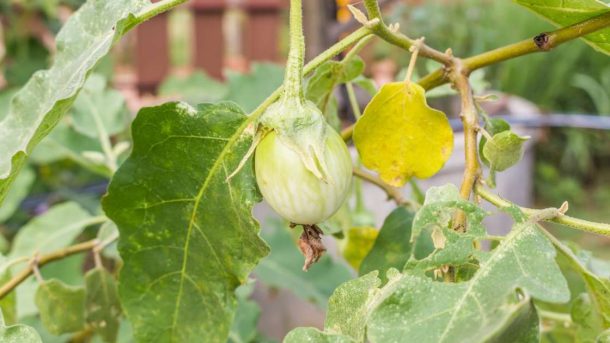
According to one study, the pest’s impact is often less in crops transplanted in September. Some farmers will have transplanted this crop and will be witnessing the pest’s devastation. Spray chlorantraniliprole 18.5 SC 4 ml, emamectin benzoate 5 SG @ 4 g, thiodicarb 75 WP @ 10 g, or beta-cyfluthrin 8.49 percent + imidacloprid 19.81 percent OD @ 4 ml per 10 lit of water if damage is severe.
How red hairy caterpillars are controlled in maize ?
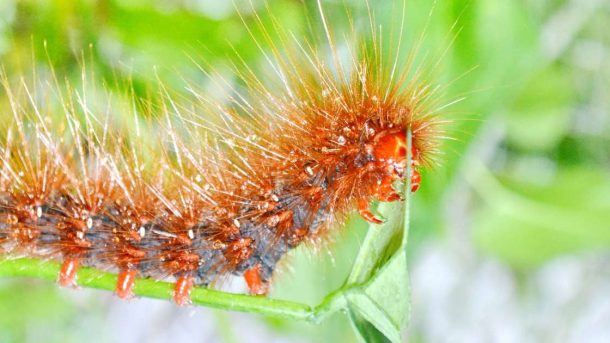
Caterpillars feed and destroy the whole plant if the attack is in the early stages of growth. Control is done by detecting and destroying egg masses and young caterpillar. The field should be ploughed out after the crop is harvested, so as to expose pupae. Thiodan 35 EC @ 27 ml in 18 litres water should be sprayed only as last resort.
How to control pink bollworm in cotton ?
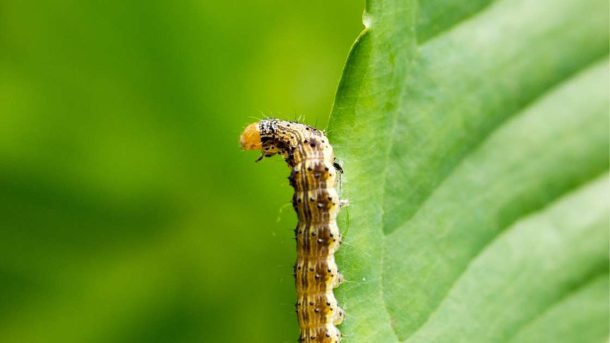
The pink bollworm has developed resistance to first-generation transgenic Bt cotton (Bollgard cotton) that expresses a single Bt gene in portions of India (Cry1Ac). In portions of Gujarat, India, Monsanto has conceded that this cultivar is inefficient against the pink bollworm pest. Insecticides are used to control infestations on vulnerable cotton. Once a crop has been harvested, the field is ploughed under as soon as possible to break the bollworm’s life cycle. The larvae are found in unharvested bolls, thus they are eliminated. To drown out any lingering bugs, the plants are ploughed into the ground and the fields are liberally irrigated. After harvest, some farmers burn the stubble. Bollworms that survive the winter in the field will re-infest the following season. Mating disruption, pesticides, and the release of sterile males that mate with females but do not fertilise their eggs are also used to manage bollworm populations.
How pink bollworm causes damage in cotton ?
The pink bollworm (Pectinophora gossypiella) is a pest in the cotton industry. The adult is a little grey moth with fringed wings that is small and slender. The larva is a dull white caterpillar with eight pairs of legs and prominent pink striping running along its back. The larva grows to be about a half-inch long. The female moth lays her eggs in a cotton boll, and the larvae that hatch cause damage to the plant by feeding. They eat the seeds by chewing through the cotton lint. Cotton is utilised for both fibre and seed oil, therefore the harm is doubled. Other insects and fungus can enter the boll through the protective tissue that has been disrupted.
What measures are included in integrated pest management of tomato?
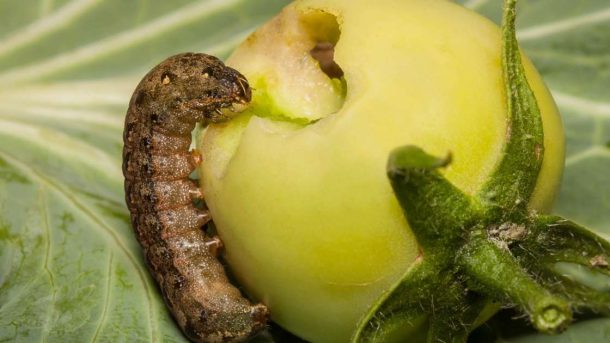
IPM measures of tomato include seed treatment with Pseudomonas fluorescens @ 10g/kg of seeds, nursery application with Trichoderma viride and Pseudomonas fluorescens and application of Neem cake @ 250kg/ha . Selection of good and virus disease free seedlings for planting and roguing out of virus infected plants upto 45 days of transplanting are included in IPM strategies. Marigold is grown as a border crop and as traps Helicoverpa / Spodoptera pheromone are used. Spraying Neem formulations (1%) / Neem seed kernel extract (5%) and use of yellow sticky traps are also inlcuded.
What is IPM (Integrated Pest Management)?
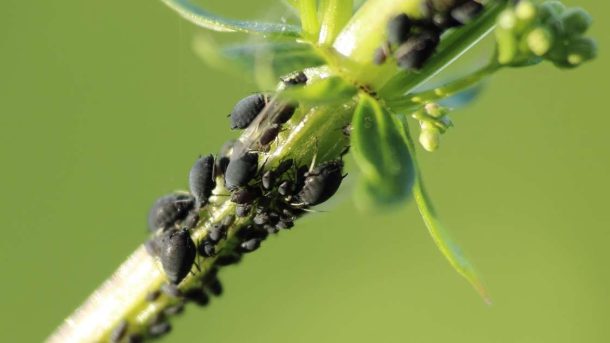
IPM is a sustainable approach for managing pests by combining biological, cultural, physical and chemical tools in a way that minimizes economic, health, and environmental risks. It seeks to use natural predators or parasites to control pests, using selective pesticides for backup only when pests are unable to be controlled by natural means. IPM aims to suppress pest populations below the economic injury level (EIL). Reliance on knowledge, experience, observation and integration of multiple techniques makes IPM appropriate for organic farming. IPM is used in agriculture, horticulture, forestry, human habitations, and general pest control, including structural pest management, turf pest management and ornamental pest management.
How citrus psylla attacks citrus plants?
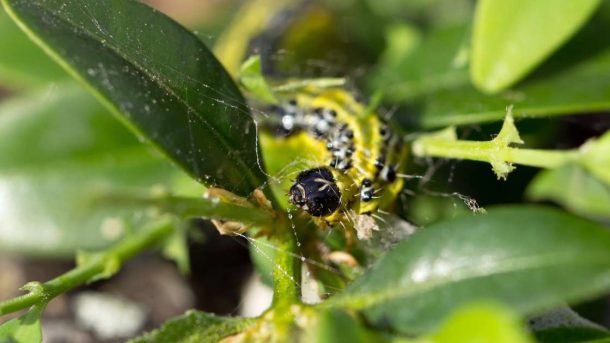
In plants attacked by citrus psylla we can see young brownish nymphs of psylla crawling on the young flush .Several dirty gray colour adults can be seen sitting in line with tails upwards. Voluminous de-sapping by the nymphs results into the drop of flush, flowers and berries. Affected branches dry and die-back sets in. The nymphs also excrete white crystalline powder, which invites fungal infestation. Psylla can be controlled by spraying acetamiprid 0.2 g/litre water twice with 10 days interval during the initial days of flushing.
What are trap crops ?
Pest attacks can be prevented by growing trap crops along with main crop. Trap cropping is the method of growing most favored crop of insect along with main crop so that the insect feed on trap crop and the main crop remains unaffected. Protection is achieved either by preventing the pest from reaching main crops or by concentrating pests on an area where it can be destroyed economically. Principle of trap crop is preference of pest to certain cultivars , plant species or a crop stage. Manipulation technique ranges from using an early or late trap crop of the same cultivar as main crop to planting a completely different plant species. Chemical compounds such as insect pheromones and insect-food supplements are used to enhance the attractiveness of trap crops.