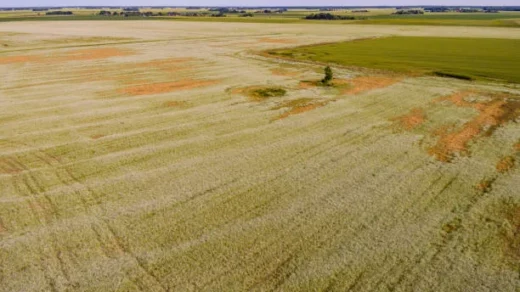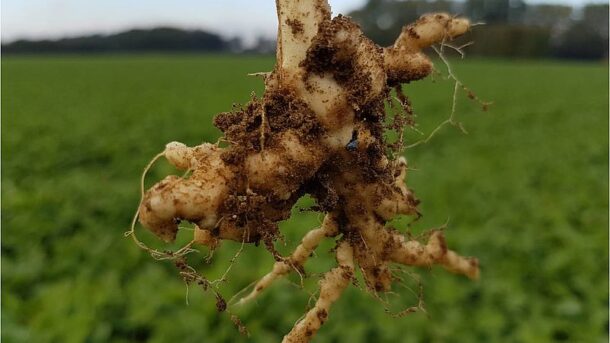
Club root is a soil-borne fungal disease that affects mustard and other brassica crops. The disease is caused by the fungus Plasmodiophora brassicae, which invades the roots of the plant and causes the roots to become swollen and distorted, leading to a condition known as “clubbing.”
Symptoms of club root in mustard crops include stunted growth, wilting, yellowing of the leaves, and a reduction in yields. In severe cases, the roots of the plant can become so distorted that the plant is unable to absorb water and nutrients from the soil, leading to plant death.
To control club root in mustard crops in a suspect or infected field, incorporating hydrated lime (1,500 lb/A) at least 6 weeks before planting, whether pH is neutral or alkaline, gives additional disease control. Chemical controls, such as the use of fungicides, can also be used to control club roots.
It is also important to maintain soil pH levels between 6.0 and 7.0, as club root is more severe in acidic soils. Additionally, avoiding overwatering and improving soil drainage can help reduce the risk of club roots infection.