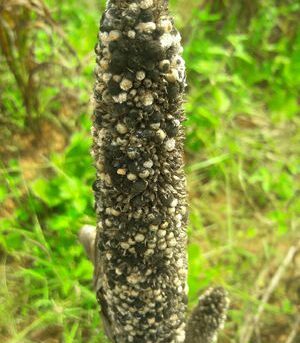
Ergot disease in Pearl Millet is caused by the fungus Claviceps fusiformis, which infects the ovaries of the plant and replaces the seed with fungal structures called sclerotia. The sclerotia contain toxic alkaloids that can cause harm to both humans and animals when consumed.
The first symptom of the disease is exudation of pinkish or light honey-coloured small mucilaginous droplets of sticky fluid called ‘honeydew’ oozing out from infected spikelets.
The disease reduces seed germination and yields, leading to decreased crop productivity. In addition to these direct effects, Ergot disease can also weaken the plant and make it more susceptible to other diseases and pests, further reducing crop health and yield.