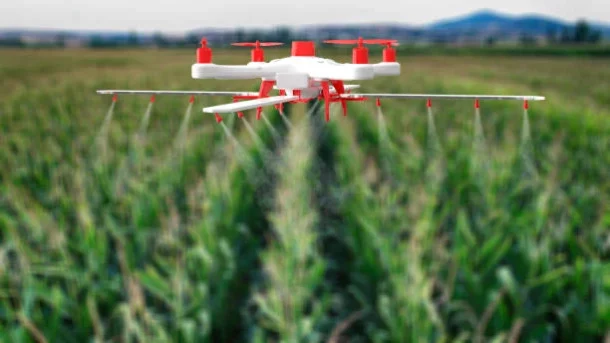
Unmanned aerial vehicles (UAVs), commonly referred to as drones, provide various benefits for applying precision pesticide precisely in agricultural settings. Here are a few applications for drones in this context:
Spraying that is specifically targeted: Drones with spraying systems can apply pesticides to specified areas or even individual plants. Drones can locate and map regions with pest infestations or disease outbreaks using the onboard sensors. This enables targeted spraying only when required, lowering precision pesticide usage and lessening its negative effects on the environment.
Accessibility is improved since drones may reach places that are difficult or inaccessible for conventional ground-based spraying equipment. This includes areas that are challenging for people or machinery to navigate, such as steep terrain, dense foliage, or sizable fields. Drones offer a versatile and effective way to access these locations.
Reduced human exposure: Applying pesticides can be harmful to human health, especially for those who do so manually. Drone use considerably reduces the need for direct human contact with pesticides, lowering the dangers of exposure to dangerous chemicals. This increases worker safety and lowers health issues.
Increased effectiveness and speed: Compared to conventional methods, drones can efficiently and swiftly cover huge areas, making it possible to apply pesticides more quickly. Drones are able to fly autonomously and with advanced flight planning, following predetermined routes to ensure consistent and uniform coverage. Due to the labor and time savings from this efficiency, farmers can quickly treat their crops.