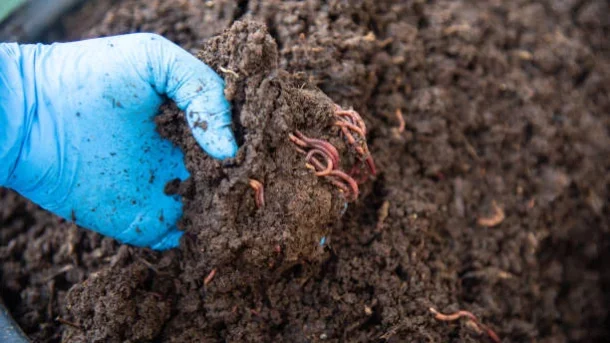
Enhancing soil structure: Because they physically change the soil environment, earthworms are referred to as ecosystem engineers. They make channels and tunnels in the soil as they dig through it, which helps the soil’s structure. In order to improve soil aeration, water infiltration, and root penetration, the burrows provide paths for air, water, and plant roots. Earthworms encourage improved root development and nutrient uptake by plants by loosening compacted soil.
Decomposition of organic matter: Earthworms feed on organic stuff, such as rotting organic waste and dead plant material. The organic stuff is broken down and blended with the soil as it moves through the earthworm digestive system. By speeding up the breakdown and mineralization of organic materials, a process known as vermicomposting, nutrients are released in readily usable forms.
Cycling of nutrients: Earthworms help the soil’s nutrient cycle. Earthworm consume organic material, bacteria, and mineral particles through their feeding activities. These substances are altered and partially broken down when they move through the digestive system of earthworms. Higher nutrient concentrations and better nutrient forms can now be absorbed by plants thanks to the excretions and castings that occur. Earthworm aid in nutrient redistribution, lowering nutrient stratification and enhancing nutrient distribution.
Earthworms play a role in the production of soil aggregates, which are collections of soil particles bound together by microbial and organic materials. The organic matter and mineral particles that earthworms mix together as they migrate through the soil to create stable aggregates. By generating pore spaces for the circulation of air and water, these aggregates strengthen the soil’s structure.