Drones use in agriculture can cut expenses in a variety of ways, including:
Effective data gathering: Drones with cameras, sensors, and other data-gathering equipment may quickly and effectively gather a variety of data kinds, including aerial pictures, multispectral or thermal imaging, and LiDAR data. Drones can quickly cover enormous regions and collect high-resolution data at a fraction of the cost and time of conventional manual data collection methods. This effectiveness lowers the need for labor and related expenses.
Precision mapping and monitoring: Drones make it possible to precisely map and keep an eye on livestock, crops, and fields. Drone-collected aerial imagery and sensor data can give precise information about the health of crops, their growth patterns, soil moisture levels, and pest infestations. Farmers can focus on specific regions by identifying those that need care.
Crop health evaluation: Drones with specific sensors may take multispectral or thermal photos, which offer important information about the state of a crop’s health. Early indications of stress, food deficiency, or disease outbreaks that might not be evident to the naked eye can be found using these photos. Farmers can avoid the need for lengthy scouting, eliminate yield losses, and use fewer chemical inputs by quickly recognizing and resolving these problems.
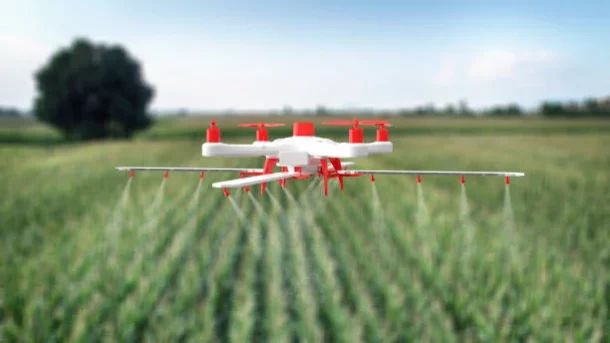
Drones can be fitted with seed spreaders or sprayers to enable the exact application of inputs such as seeds, fertilizer, or pesticides. Drones eliminate waste, minimize chemical use, and maximize resource use by applying inputs just where they are required. This focused strategy aids in lowering input costs and lessens the environmental damage caused by excessive application.