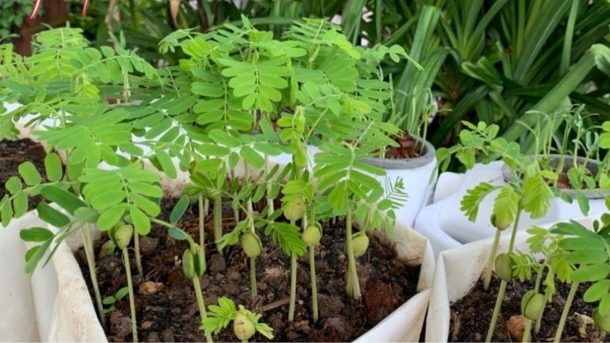
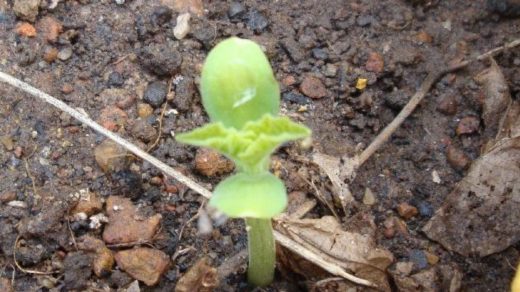
By seed is the least expensive means of propagation and can be used to crop a large number of new plants from a minimum of stock material. Moreover, seed propagation is essential to produce seedlings to be used as rootstocks onto which designated cultivars can be grafted. The major disadvantage of seed propagation is that seeds fail to produce plants true to type and also resulting seedlings take a longer time to produce productive plants than those produced through vegetative propagation. A better understanding of the processes involved in initial growth and seed germination is the most important prerequisite for the increased domestication and cultivation of Tamarind. Seed propagation of Tamarind is the simplest method of propagation which does produce feasible seeds but seeds do not produce true to the type plants. Seed propagation in Tamarind is done by collecting the pods from February to April. Seeds from ripe fruits are wash well with plain water. After this, it is tried for germination within 1 to 2 days. Generally, 1 kg of seeds contains 1800 to 2000 seeds. Seeds are then somewhat sun-dried to retain its viability.
How Seed Propagation is done in tamarind?