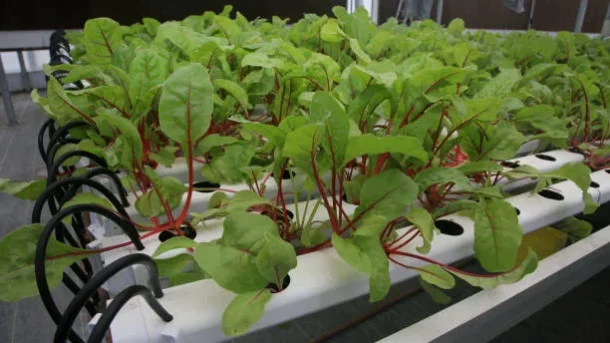
Aquaponics is a sustainable farming technique that integrates hydroponics (soilless plant cultivation) and aquaculture (fish farming) in a mutually beneficial system. In a closed-loop system, the plants serve as a natural filter to clean the fish’s water while the fish’s excrement supplies nutrients to the plants. It is a holistic and environmentally responsible method of food production.
Aquaponics’ main components and advantages include:
Aquaponics uses the nitrogen cycle to recycle nutrients in a closed-loop system. The primary source of nutrients for the plants is fish feces, and when the plants absorb the nutrients, they filter the water and remove dangerous contaminants. Aquaponics is an environmentally sustainable agricultural technique because the closed-loop system decreases nutrient runoff and reduces the need for external fertilizers.
Water efficiency: When compared to conventional agriculture, aquaponics uses a lot less water. The system continuously circulates water, with only a small amount of water being lost to evaporation and transpiration. Due to water conservation and recycling within the system, aquaponics utilizes up to 90% less water than soil-based farming.
Production of fish and plants together is possible with aquaponics, which enables the growth of both in the same system. The plants profit from the nutrient-rich water and grow without soil while the fish serve as a source of protein and earn money. A symbiotic relationship is created when fish and plants are combined in one system, which encourages effective resource use and lowers waste.
Less dependency on outside inputs: Aquaponics reduces the need for artificial fertilizers and pesticides. A natural and organic source of plant nutrients, fish excrement is rich in nutrients. Furthermore, the closed-loop system lessens the possibility of nutrient leaking and runoff, making aquaponic a sustainable and environmentally benign agricultural technique.