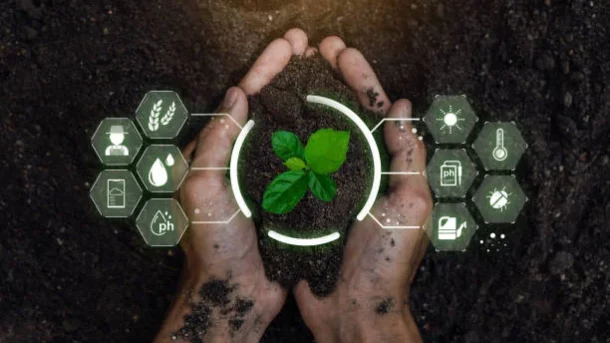
By providing real-time and extremely localised data on numerous factors relating to soil, plants, and environmental conditions, nanosensors play a significant part in precision agriculture. These tiny sensors, which are typically nanoscale in size, have a high sensitivity and precision for detecting and measuring particular features. The following are some crucial functions of nanosensors in precision agriculture.
Nanosensors can be used to monitor soil parameters, such as salinity, pH, moisture content, and nutrient levels. Farmers can optimise irrigation schedules and fertilisation practises based on the particular requirements of various soil locations thanks to the accurate and localised data they can supply.
Real-time monitoring of plant health metrics, such as leaf temperature, chlorophyll content, and nutritional status, is made possible using it. Nanosensors assist farmers in taking prompt action to treat stress or nutrient deficits by spotting early warning indications, enhancing crop health and productivity.
Monitoring particular biomarkers or volatile organic molecules released by infected plants allows nanosensors to identify the presence of pests and illnesses in plants. Early detection enables farmers to execute focused pest control strategies, minimising crop losses and the need for broad-spectrum chemical applications.