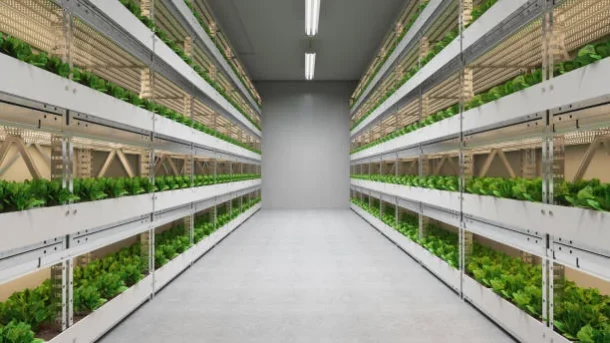
Vertical farming is a technique for growing plants in vertically stacked layers or structures, usually inside in places like warehouses, skyscrapers, or facilities made specifically for vertical farming. It entails using soilless growing media, artificial lighting, climate control, and other controlled environment agriculture (CEA) techniques to provide the best possible growing conditions for plants.
The following are some essential qualities and traits of vertical farming:
To make the most of the vertical space available, plants are cultivated in numerous stacked layers, frequently on shelves or racks. Compared to conventional horizontal farming techniques, this enables a substantially higher crop density.
Indoor farming: Vertical farming systems are frequently installed in climate-controlled indoor spaces that offer total control over variables like temperature, humidity, light intensity, and photoperiod.
Artificial lighting systems, including light-emitting diodes (LEDs), are used in vertical farms to supply the appropriate light spectrum and intensity for photosynthesis because natural sunlight may be scarce in enclosed spaces. These lighting setups can be adjusted to a crop’s individual needs, encouraging optimum growth and development.
Hydroponics or aeroponics: Soilless growth methods like hydroponics or aeroponics are frequently used in vertical farming. While aeroponics involves suspending plant roots in the air and regularly spraying them with a nutrient solution, hydroponics includes growing plants in a nutrient-rich water solution. These techniques allow for accurate fertilizer delivery to the plants while also maximizing resource utilization and water efficiency.