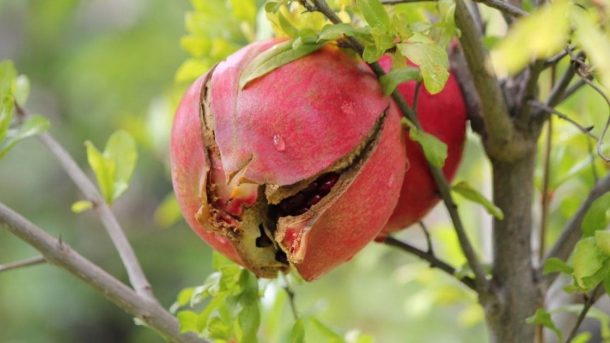
It is major problem in pomegranate under arid and semi-arid regions and about 25-60% fruit cracking has been reported during maturity in different bazar. It also varies with variety, season and climate. The cracked fruits are sweeter with low keeping quality; highly liable to fruit rot and are unfit for transport. In fruit cracking, xylem and phloem tissue loss their ability to divide and enlarge. In summer, after dry spell (April-June) water supply is increased and meristematic tissue quickly resume growth but due to uneven growth rate fruit splitting occurs. while during winter fluctuating moisture and temperature causes cracking. Dry hot wind at the time of fruit ripening is the main cause of cracking during ambe bahar, rapid aril growth, temperature higher than 38°C combined with less than 60% humidity favoured cracking. Nutrients like boron, calcium, copper, zinc, molybdenum, manganese and potash are involved in different physiological activities during fruit growth and development. Deficiencies of nutrients along with imbalanced use of nutrients also cause cracking. In young orchard, fruit cracking is due boron deficiency while in old orchard moisture imbalance and fluctuating temperature are major factor associated with fruit cracking. Fruits split generally when rains come or irrigation is given after a long dry spell. For cracking management apply adequate and regular irrigation during fruiting season. Spray of gibberellic acid @ 20 ppm, calcium chloride 2% and boron 0.2% at fruit enlargement and 1 month before harvest can help in reduce cracking. Cover fruits with bags in hot dry period and maintain sufficient calcium and potassium levels as per soil test report.
Why fruit cracking occurs in Pomegranate?