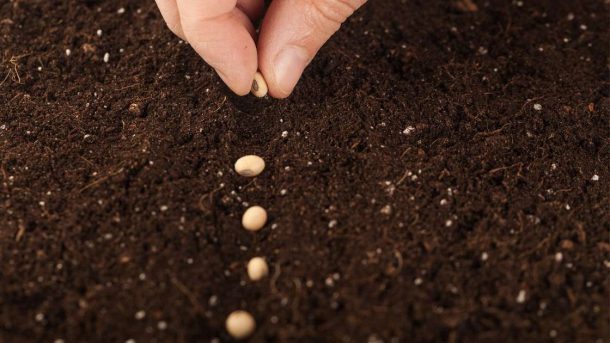
Certified seed is the progeny of foundation seed and its production is supervised and approved by certification agency. The seed of this class is normally produced by the State and National Seeds Corporation and Private Seed Companies on the farms of progressive growers. This is the commercial seed which is available to the farmers. A blue color certificate is issued by seed certification agency for this category of seed. Certified seeds should should satisfy both minimum field and seed standards.
Scientific Farming
What is Fertigation?
Fertigation is application of fertilizers in an optimum amount after combining it with irrigation water. Fertigation can be achieved through fertilizer tank, venturi system, injector pump, Non-Electric Proportional Liquid Dispenser (NEPLD) and automated system. Fertigation helps in frequent supply of nutrients and reduces fluctuation of nutrient concentration in soil. Fertigation facilitates optimum application of fertilizers with efficient utilization. Uniform application of fertilizer throughout the irrigated soil volume can be achieved through fertigation. Nutrients can be applied to the soil when soil or crop conditions would otherwise prohibit entry into the field with conventional equipment.
What is seed treatment?
Seed treatment is the use and application of biological and chemical agents in seed in order control primary soil and seed borne infestation of insects and diseases which causes consequences to crop production and improving crop safety leading to good establishment of healthy and vigorous plants resulting better yields. The benefits of seed treatment include increased and uniform germination , protection of seed or seedling from early season diseases and insect pests, improving crop emergence and its growth etc. Seed treatment using plant growth hormones improves crop performance during growing season. Inoculation of seed using rhizobium increases productivity and nitrogen fixing ability of legume crops. Most significantly, plant population and productivity can be improved with seed treatment.
What is bunchy top disease of banana?
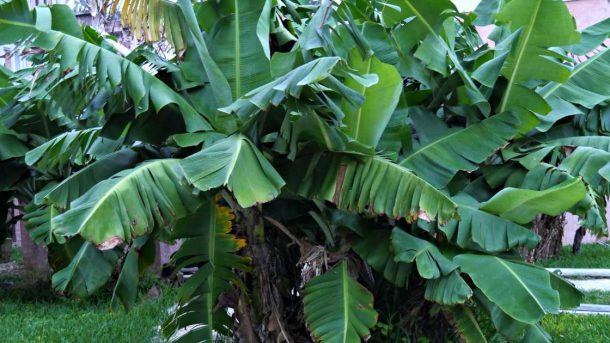
Stunted plant growth in banana plants is an indication of bunchy top disease. Dark broken bands of green tissues on veins, petioles and leaves can be observed. Marginal chlorosis and curling can be observed in leaves with reduced size. Leaves become upright and brittle. Many leaves are crowded at the top. Branches size will very small. If infected earlier no bunch will be produced. The disease is transmitted primarily by infected suckers. Secondary spread is through the aphid vector.
What is the fertilizer requirement for mango?
Mango should be manured with phosphorus twice in a year. Usually fertilizers (N and K) are applied in split doses in the month of June-July, September, October, January-February and March-April. For adult trees (10 years or above)1,000g N, 75g P2O5, 75g K2O and 100 kg FYM per year should be applied. Application of micronutrients such
as Zinc and Boron help in cell elongation process.
What are the advantages of organic manures?
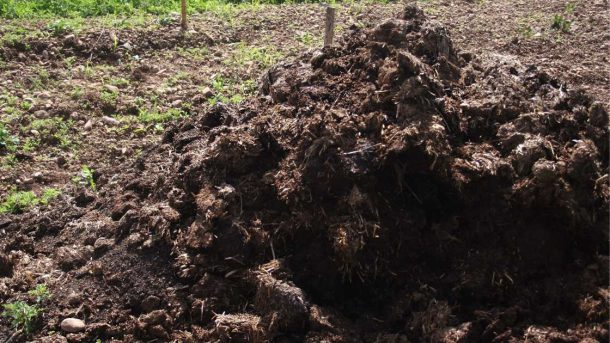
Organic manures helps in increasing organic matter in the soil. It releases plant food in available form for the use of crops. Manures enable soil to hold more water and helps in increasing drainage in clay soil. They provide organic acids that help to dissolve soil nutrients and make them available for the plants. It helps in maintaining C:N ratio in the soil and also increases the fertility and productivity of the soil. Application of organic manure improves biological activity in the soil, that helps in making nutrients that are deep in the soil available to the plants. Organic manures also reduces the loss of moisture from soil in the form of evaporation.
What are the symptoms of nitrogen deficiency?
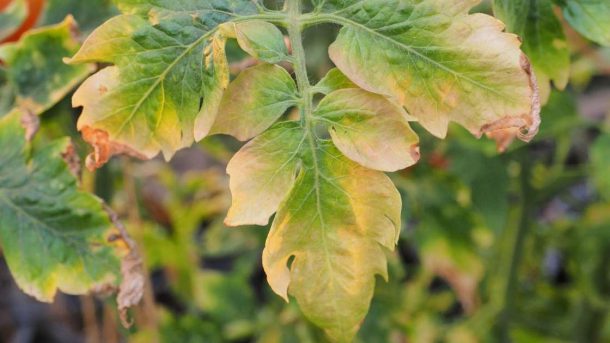
Nitrogen deficiency symptoms include stunted growth, lower protein content reduced deficiency incase of acute deficiency. Other symptoms include appearance of pale-yellow color leaves in the older leaves, starting from the tip due to reduced chlorophyll content. This is followed by death or dropping of older leaves depending on degree of deficiency. Low root/shoot ratio is observed due to increased root growth and stunted shoot growth. Nitrogen deficiency is common in nature. Plants have developed response mechanisms to nitrogen deficiency which include hormonal up regulation of root growth, and closing of aqua pores which results in shoot water stress and stunted shoot growth.
How green lacewings are beneficial?
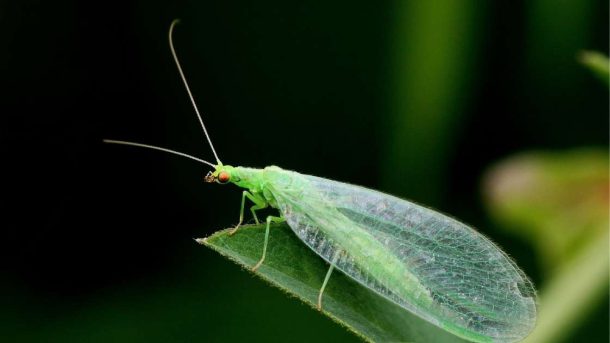
The green lacewings (Chrysoperla sp.) are a common beneficial insect found in the landscape. They are predators that act as bio-control agents by feeding on aphids, but will also control mites and other soft-bodied insects such as caterpillars, leafhoppers, mealybugs and whiteflies. They helps in control of arthropod insects in greenhouses. The larvae of this insect are voracious feeders. A larvae can consume approximately , 200-300 aphids during its three stages of development.
What are biopesticides?
Biopesticides are naturally occurring substances derived from animals, plants, bacteria and certain minerals that helps in controlling pests using non-toxic mechanisms. They have inhibitory effects on crop diseases and insect pests. Biopesticides are considered safer alternatives to chemical pesticides in pest management. They are non-toxic, naturally environmentally friendly and are a key ingredient in sustainable farming The 3 categories of biopesticides include microbial pesticides, plant-incorporated protectants and biochemical pesticides. Different species of fungi , bacteria , insects and other organisms are used as biopesticides .
What are parasitoids?
Parasitoids are among the most widely used biological control agents. Parasitoids lay their eggs on or in the body of an insect host, which is then used as a food for developing larvae. The host is ultimately killed. Developing in or on a host requires the parasitoid to have very specialized methods to attack, feed on and avoid the host’s immune system. This high level of specialization means most parasitoids only attack one or a few closely related species. Parasitoids perform an important ecosystem service by suppressing pest populations. The majority of pests are attacked by at least one parasitoid.. Wasps and flies contain the vast majority of insect parasitoids. There are over 70,000 parasitoid species across the globe.