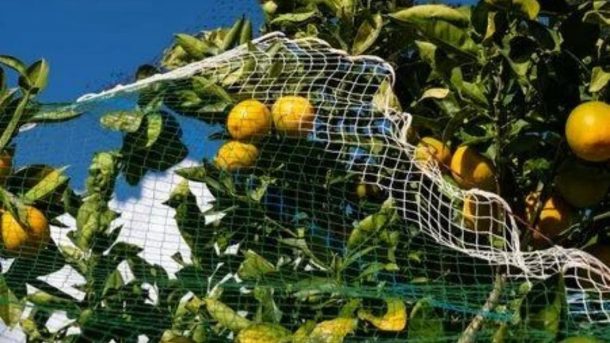
Birds are by far the greatest pests in many fruit trees. Covering the trees with wire cages, plastic netting is perhaps the best method of control. Smaller trees can be wrapped in nets. Use a fine mesh netting to reduce the possibility of birds becoming caught in the net. Individual fruits can also be bagged using butter paper or cloth bags to prevent bird damage, insect and disease attack. Aluminium pie tins suspended by a string or wire above the bushes will twist and turn in the breeze and keep the birds away.
ScientificFarmingWeb
What is fruit thinning in orange cultivation?
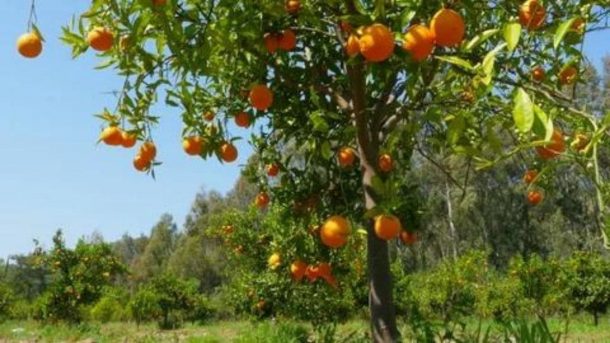
It is usual for a number of young fruits to drop off during the spring and early summer. This natural thinning is often referred to as the “June drop”. With most cultivars, too many fruits will likely still remain on the tree. It is often necessary to remove the excess fruit by hand when it is still very small. Fruit thinning reduces limb breakage; increases fruit size, improves colour and quality of remaining fruit, prevents depletion of the tree and stimulates flower initiation for next year’s crop.
How training is done in orange cultivation?
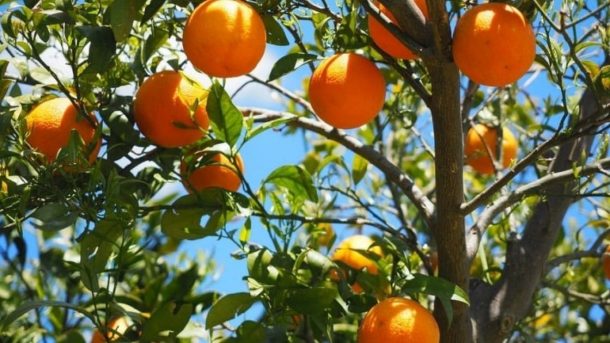
Training is a relatively new practice in which tree growth is directed into a desired shape and form. To be most productive, fruit plants must be trained to a definite system. There are several training systems. Some fruit trees are trained on single trunk, while some others on Kniffin, vertical trellis, overhead arbour, central-leader or an open centre, etc. Improperly trained fruit trees generally have very upright branch angles, which result in serious limb breakage under a heavy fruit load. This significantly reduces the productivity of the tree and may greatly reduce tree life. Proper tree training also opens up the tree canopy to maximize light penetration. For most deciduous tree fruit, flower buds for the current season’s crop are formed the previous summer. Light penetration is essential for flower bud development and optimal fruit set, flavour, and quality. Although a mature tree may be growing in full sun, a very dense canopy may not allow enough light to reach 12 to 18 inches inside the canopy. Opening the tree canopy also permits adequate air movement through the tree, which promotes rapid drying to minimize disease infection and allows thorough pesticide penetration.
How pruning is done in orange cultivation?
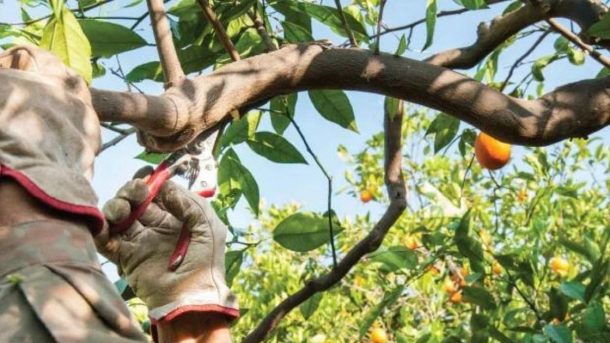
Pruning is judicious removal of plant parts to establish balance between vegetative and productive growth. It has strong influence on fruitfulness of plants. In Deciduous fruits, pruning is important to maintain rhythm of fruiting e.g., no pruning in peach means little or no fruiting; in Ber, annual pruning is essential; in grapes, annual pruning in north India; two pruning’s in Maharashtra and three pruning’s in Tamil Nadu. In Evergreen fruits, pruning is rarely practiced though it is beneficial in some crops like mango and guava. Allowing trees to grow too tall is another mistake. Pruning trees to manageable size keeps them healthy and is necessary for optimal fruit production and longevity of the tree. While pruning, maintain an adequate number of good leaves for quality fruit production. About 30 to 40 good-sized healthy leaves are needed to produce one good-quality fruit. The safest time to prune most trees is after picking the crop in summer to restrict growth. Winter pruning should be restricted to removal of suckers, dead wood and broken or crossing over branches to sufficiently open up the canopy of the tree. Pruning cuts should be at an angle so that moisture does not collect and allow for rot and disease to settle. All pruning cuts should be painted with Bordeaux paste to prevent entry of pathogens.
How weeds are controlled in orange cultivation?
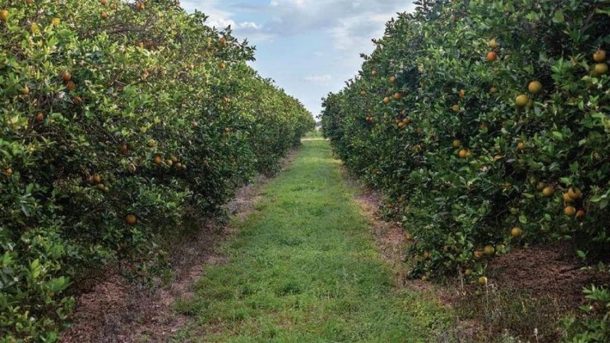
Weeds can become a serious problem around your trees if not dealt with on a regular basis. Good weed control is very important in the immediate vicinity of transplanted trees to reduce competition. Regular hoeing in the tree basins not only helps in reducing weed growth but will also help in improving soil aeration promoting root growth and growth beneficial microorganisms. Hoeing also helps in killing harmful pests and pathogens by exposing them to sun. Composted mulches are also useful for weed control and for retaining soil moisture.
How watering is done in orange cultivation?
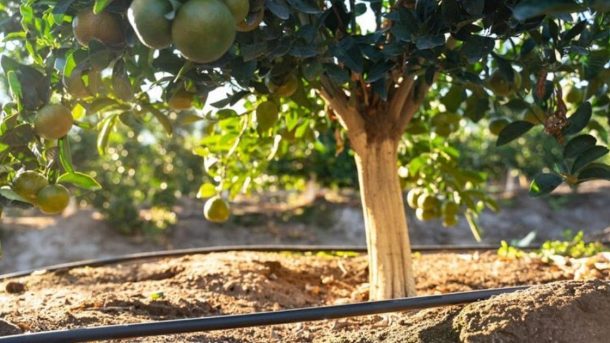
After the planting hole is filled, irrigate immediately to saturate the soil. After soil is settled, ensure that the graft union is still 2 – 3 inches above the soil level. When rainfall is not adequate, irrigate the newly planted trees at least once each week during the first growing season. Earthing up soil around the tree trunks can help prevent spread of diseases like Phytophthora. Some trees like mango, citrus require stress period for flowering. Avoid irrigation before flowering period. Irrigate at 10-15 days intervals when fruits are growing till maturity. Stop irrigation during fruit ripening period. Irrigation at the time of fruit ripening period will reduce sweetness.
What is sod mulch in orange cultivation?
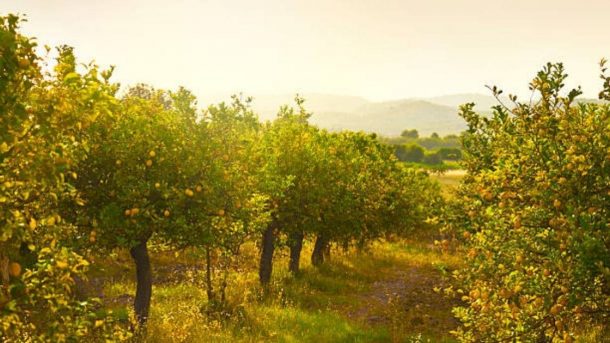
This is similar to sod with the only difference is that the vegetation is cut frequently and the cut material is allowed to remain on the ground. This is slightly better than the sod, as the moisture loss is not great as in sod. In both sod and sod mulch, more nitrogen should be applied to the fruit trees than usual application because the vegetation utilizes more soil nitrogen.
What is sod in orange cultivation?
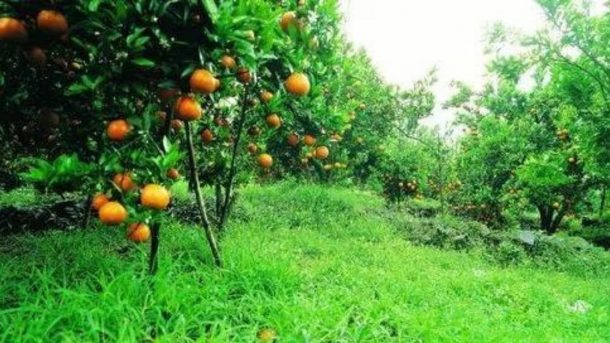
In this method, permanent cover of grass is raised in the orchard and no tillage is given. This type of orchard cultivation is followed in USA and Europe. This may be useful in sloppy lands for preventing soil erosion. But they compete for soil moisture and available nitrogen and require increased quantity of manure and water. They are harmful to shallow rooted trees. Hence sod may be useful with deep rooted trees because soil moisture will be very low on the top layers.
How mulching is done in orange cultivation?
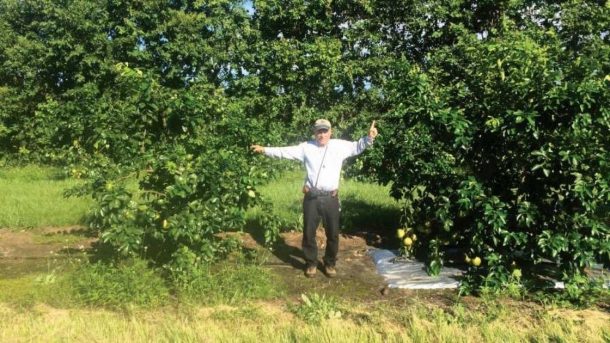
Crop residues like straw, cotton stalks, leaves, saw dust, pine needles, coir dust and other materials like polythene films or certain special kinds of paper are spread in the tree basins and in inter spaces between trees to conserve soil moisture and to control the weed growth. Mulching keeps the soil cool in day; warm at night hours, reduces surface run-off, adds humus to the soil and prevents soil erosion. Fruits are protected and kept clean since they fall on the mulches. It allows the absorption of more rain water and reduces irrigation frequency. However, dry materials used as mulches encourage the risk of fire and consequent damage to trees. Thick mulches may act as places for mice and rodents to live and multiply causing damage to tree trunks and roots by eating the bark and burrowing. The mulching materials should be placed too close to the tree trunk and it should be spread in such a way that they give a good cover to the root system of the trees.
How trees are planted in contour system for orange cultivation?
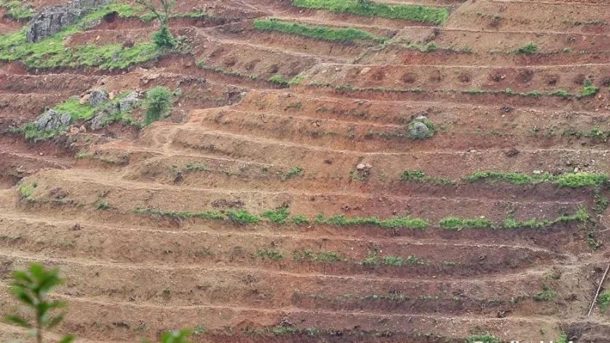
It is generally followed on the hills with undulated topography to minimize land erosion and to conserve soil moisture. In this system, plants are planted along the contour across the slope. The contour line is so designed and graded in such a way that the flow of water in the irrigation channel becomes slow and thus finds time to penetrate into the soil without causing erosion. In terrace system planting is done on flat strip of land formed along the contours. Terraced fields rise in steps one above the other and help to bring more area into productive use and also to prevent soil erosion. The width of the contour terrace varies according to the nature of the slope. The planting distance under the contour system may not be uniform.