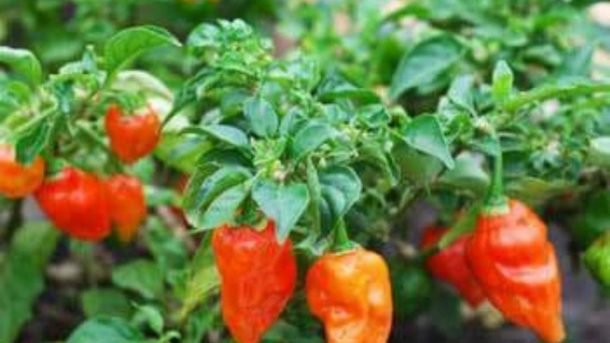
King chilli is the fruit of plant belonging to the Family: Solanaceae. This chilli is one of the hottest on earth and the extreme variations among different cultivars include several colours, sizes and textures of fruits. Particularly, the colour ranges from light green, yellowish green to dark green in young fruits and gradually changes into light red, bright red and even chocolate while the texture varies from crumpled to semi smooth as well as gloomy with fleshy tissue. The fruit is sub-conical to conical in shape and about 2.40–2.85 cm wide at the shoulders and 6.10–9.20cm in length; Fruit surface is Rough, wrinkle with spikes and may weigh 14–18 g.
ScientificFarmingWeb
How Postharvest management is done in king chilli in northeast India?
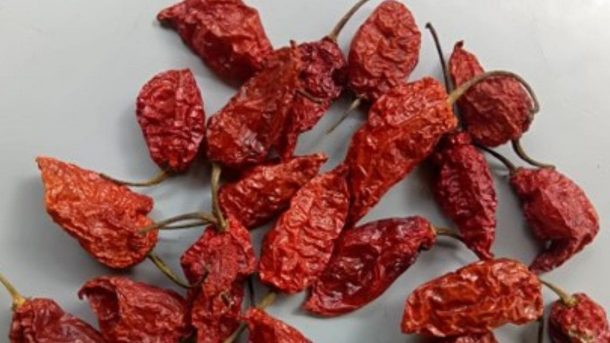
In India, chilli is used in three different forms such as fresh green chilli, red grind and raw red. Ripen chillies are traditionally sun dried and procedure takes 3 to 4 days, depending on the weather conditions and then grinds in local huller mill and stored. Mainly dry king chillies are sold due to their very high level of perishability. The Naga King Chilli has a poor shelf life and deteriorates fast if stored under normal conditions for a long period. However, in cold storage the product may be stored for 8-10 months.
Which containers are suitable for growing muskmelon on terrace?
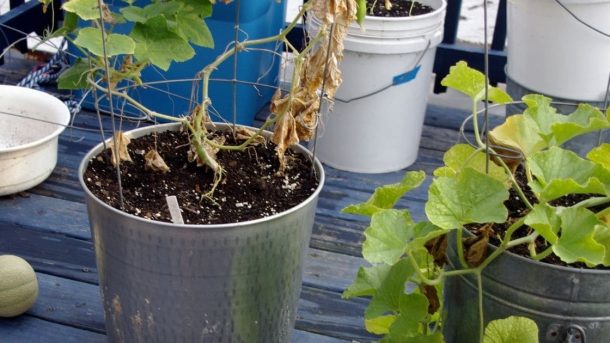
For growing muskmelon in containers or pots choose at least 5 gallons of potting soil. Fill the pot or container with a potting mix, add 10-10-10 tablespoon of fertilizer on the warm soil and mix thoroughly. Saw the seeds of four muskmelons in a container or pot, plant the seed approximately 1 inch deep, keep the seed at equal distances from each other. Now place the container or pot in an area where it can get sunlight throughout the day. Cover the top of the containers or pot with a plastic sheet. This keeps moisture and heat in the soil during the germination of the seed. Warm water container or pot after planting, after drying the top, again water the warm soil. Add much water to this plant so that extra water starts moving out of the container or pot.
The muskmelons that grow in the container or pot require more water, they cannot tolerate dry clay, during the hot and dry seasons.
What is Hara Madhu and it belongs to which variety of crop?
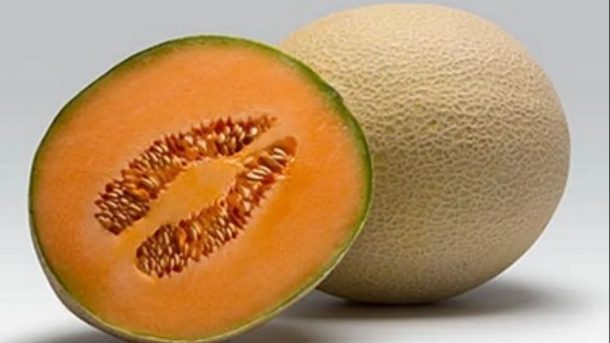
Hara Madhu is a most popular variety of muskmelon that can grow up to 3-5 meters. It is an introduction from the Punjab agricultural university, Ludhiana. The large fruits of this variety are round in shape and have light yellow skin with strips of green and have thick pulp which is very good sweet in taste. The fruit weighs around 1 kg.
How do you harvest muskmelon?
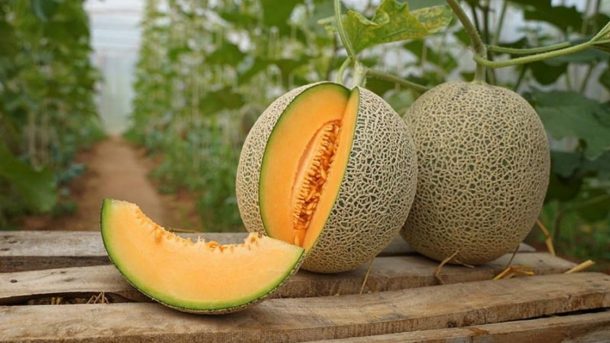
Look for a crack in the stem where it attached to the flower and fruit. This is a sign of ripeness as very well. The blooms flower and fruit should be easy to separate from the ripe vine, but if they fall off by themselves, they are usually over ripe. Harvest muskmelon when ripe vines are dry or dehydrated and are careful not to damage them.
What is the irrigation requirement for muskmelon grown on terrace?
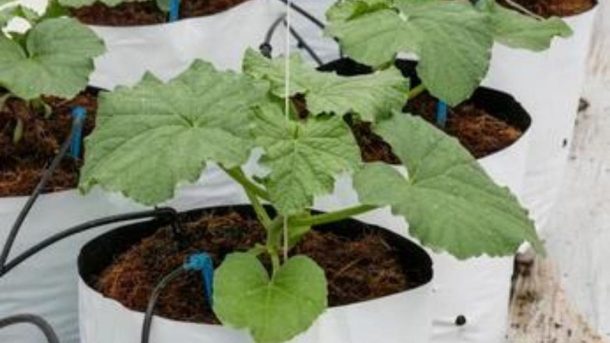
Give water to the plant in depth and several times, about one to two inches of water is required per week. Be careful while giving warm water to a drip hose or soccer hose, so its leaves remain dry. Reduce the war, water gradually when ripening the fruit, so that is tastes good and sweet. When the warm or Luke water is high during the ripening the fruit can split.
How propagation is done in Muskmelon for growing on terrace?
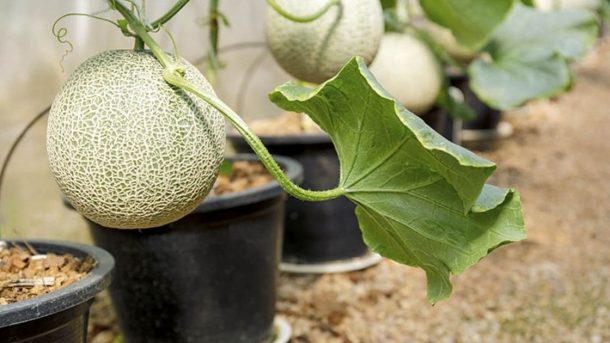
The best way is to sow the seeds directly in the containers or pots or desired location. It is a good idea of planting the muskmelon plants in spring or early summer when the weather warms up sufficiently, 2-4 weeks after the expected last frost date. Sow seeds about an inch deep, cover them with warm soil and water well. Do make sure not to place more than 2 to 3 seeds in one pot or container. They will germinate within 7 to 14 days.
If you are living in a warm and frost-free climate, start sowing seeds in winter or spring. The temperature around or above 15-18°c is favorable for seed germination and propagation. Most of these muskmelon varieties need 70 to 110 warm frosts regrow and fruit well.
When and how harvesting is done in soursop fruit farming?
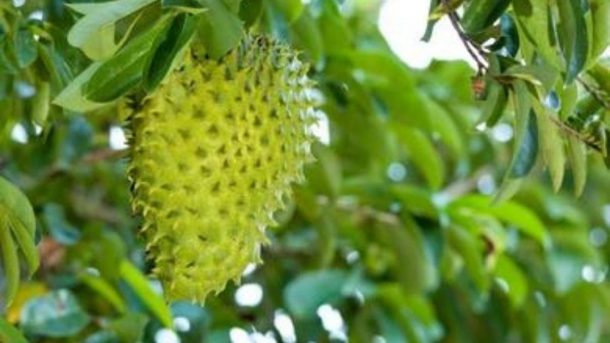
The soursop trees grow rapidly and begins to bear fruit in 3 to 5 years after planting in the field. Harvest the fruits when they are still green but after fully developed. This fruit should be harvested while they are still firm and yellow green in color, Usually, at the time of maturity, the shiny green color of the fruits turns into a dull green color. Fruits may ripen throughout the year, however there are 1 to 3 harvest periods/year.
Which soil is suitable for Soursop fruit farming?
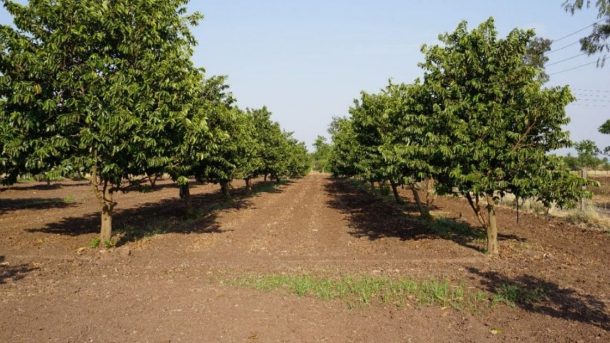
When it comes to growing conditions of this fruit, the soursop fruits can be grown in a wide range of soils. However, it prefers loose, deep loamy soil with ideal pH ranging from 6.0 to 6.5. Commercial growers of this fruit can go for the soil test to find out the suitability and soil fertility. Any nutrient and micronutrient deficiencies can be supplemented while preparing the soil.
What is the climatic requirement for soursop fruit farming?
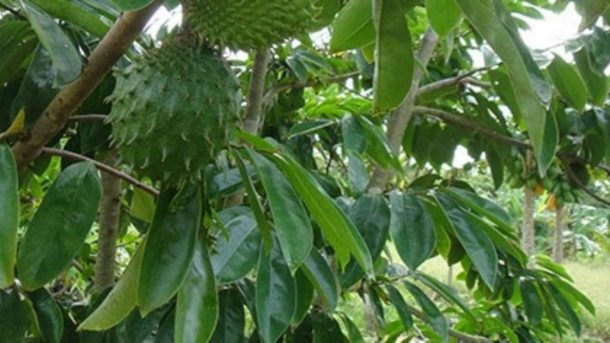
Soursop crop thrives well from sea level up to 300 to 400 meters. The soursop trees are adapted to regions of high humidity and warm winters. The temperature below 5°C may result in damage to tree leaves and small branched and the temperatures below 3°C can be more harmful. In these conditions, the soursop fruits will become dry and not good for any concentrate.