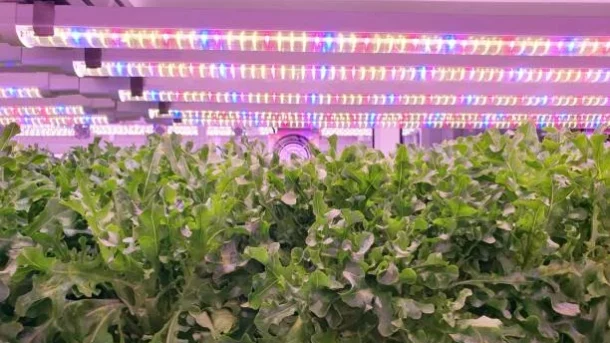
Advanced agriculture

What are the advantages of using smart sensors in livestock farming?

smart sensors

The use of smart sensors in livestock farming has a number of benefits that can enhance farm management, productivity, and animal welfare. Using intelligent sensors in this situation has the following major benefits:

Monitoring the health of animals: Livestock’s vital signs, such as body temperature, heart rate, and breathing rate, can be continually tracked using smart sensors. By enabling for fast intervention and early diagnosis of health risks, this real-time data lowers the likelihood of disease outbreaks. Farmers can give focused care and use less antibiotics or other treatments by carefully monitoring each animal.

Enhanced welfare and behavior monitoring: Intelligent sensors can monitor animal feeding, drinking, and movement habits. Abnormal behavior might be a symptom of distress or health issues, allowing for prompt intervention. 

For the best control of reproduction, sensors can be used to monitor oestrus cycles and spot indicators of heat in cattle. Farmers can increase reproductive effectiveness, identify the ideal insemination timing, and optimize breeding plans using this information. Farmers can maximize breeding success rates and overall production by carefully monitoring the health of their reproductive systems.

Environmental monitoring: In livestock facilities, smart sensors can assess environmental variables including temperature, humidity, and air quality. Using this information, producers can provide the animals with the best possible living circumstances, assuring their comfort and lowering the likelihood of stress-related problems. Improving productivity and growth rates is also facilitated by maintaining healthy environmental conditions.
How can agroforestry systems benefit both crops and the environment?

agroforestry systems

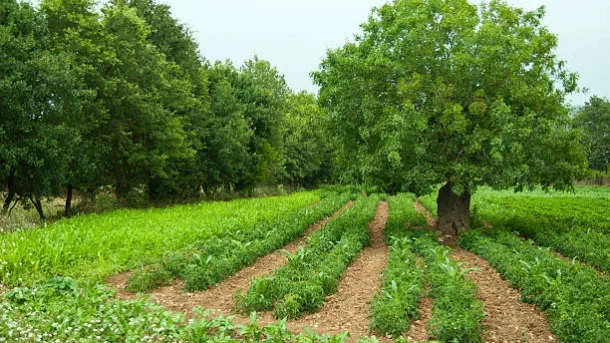
Agroforestry systems, which cultivate trees alongside agricultural crops or livestock, have several advantages for both the environment and crops. The following are some advantages of agroforestry systems:

Increased crop productivity: In agroforestry systems, trees can offer shelter, act as windbreaks, and control the microclimate, all of which promote the growth of crops. Higher yields are produced as a result of the better microenvironment, which increases agricultural productivity and lowers plant stress.

Soil fertility and conservation: Trees’ large root systems help to stabilize the soil, act as windbreaks, and reduce water runoff, all of which help to prevent soil erosion. Their organic content and fallen leaves help to promote soil fertility and the cycling of nutrients, which benefits crop growth.

Increased crop diversity introduced by agroforestry systems can increase resistance against pests, diseases, and extreme weather events. Trees can act as a barrier against climatic changes, minimizing the effects of drought or heavy rainfall on crops.

Trees in agroforestry system assist control the availability and use of water. Their root systems enhance groundwater recharge and water infiltration, lowering the possibility of crop-damaging soil moisture shortages. Additionally, trees have the ability to function as living pumps that can extract water from deeper soil layers and deliver it to crops.

 How does crop rotation improve soil fertility?

crop rotation

Crop rotation is a farming technique that entails planting several crops in an area in a planned order throughout time. Numerous advantages come from this method, including increased soil fertility. Crop rotation improves soil fertility in the following ways:

Cycling of nutrients: varied crops have varied nutrient needs and use nutrients from the soil in different ways. Through crop rotation, nutrients can be transferred across several plant types. Leguminous plants, like beans and peas, can, for instance, fix atmospheric nitrogen through symbiotic partnerships with bacteria that fix nitrogen. Legumes enhance the soil with nitrogen when they are grown in rotation with other crops, which benefits succeeding crops with higher nitrogen requirements.

Control of disease and pests: Crop rotation breaks up the life cycles of pathogens, illnesses, and pests. Numerous pests and diseases are host-specific, meaning they favor or focus on particular crops. Farmers can stop the cycle of pests and diseases that may have accumulated in the soil by rotating their crops. By suppressing soilborne illnesses through allelopathy, competition, or biological interactions, different crop species in rotation can lessen the need for chemical interventions.

Crop rotations disrupts the life cycles of weeds and lowers their population, aiding in weed management. Rotating crops with various growth habits and competitive traits helps reduce weed growth. Weed pressure varies depending on the crop. Crop rotations can also facilitate the application of particular weed control techniques, such as switching between crops.

Enhanced Soil Structure: The root structures and depths of various crops vary. Crop rotation alters root growth patterns and encourages a diversified root system, both of which contribute to improve soil structure. Compacted soil layers can be broken up, soil aeration can be improved, and water penetration can be improved by deep-rooted crops. This enhances the health of the soil overall and its ability to absorb nutrients.

What are the benefits of using biological fertilizers in agriculture?

biological fertilizers

Biological fertilizers, usually referred to as biofertilizers, have a number of advantages in agricultural methods. Some of the main advantages of employing organic fertilizers are as follows:

Increased Nutrient Availability: Biological fertilizers contain helpful microorganisms that increase the availability of nutrients in the soil, such as nitrogen-fixing bacteria, phosphate-solubilizing bacteria, or mycorrhizal fungi. These microbes transform or saturate nutrients so that plants can access them more easily. Therefore, biological fertilizer encourage improved crop nutrient uptake and utilization.

Biological fertilizer aid in the management of nutrients in agriculture in a sustainable way. They lessen the reliance on synthetic fertilizers, which may have detrimental effects on the environment, by utilizing natural processes and biological interactions. Biological fertilizer encourage long-term soil health and fertility while supporting the natural nutrient cycling.

Environmentally Friendly: Biological fertilizers are safer than chemical fertilizers for the environment. They minimize the possibility of nutrient leaching or runoff, which can lead to water contamination, by releasing nutrients gradually and under controlled conditions. Additionally, the risk of environmental pollution is decreased by the absence of dangerous chemicals or heavy metals in biological fertilizer.

Improved Soil Health: By encouraging beneficial microbial activity and soil biodiversity, biological fertilizers enhance soil health. The microorganisms found in biofertilizers help improve soil structure, nutrient cycling, and organic matter breakdown. Because of the improved soil fertility, moisture retention, and general soil health, crops grow and produce more effectively.

How can data-driven decision-making optimize farm management?

data-driven decision-making

By using precise and timely data to inform and guide diverse agricultural operations, data-driven decision-making improves farm management. How data-driven decision-making can improve farm management is as follows:

Optimizing Input Use: Farmers can choose the precise use of fertilizers, irrigation, and other inputs by carefully considering data on soil fertility, nutrient levels, and crop requirements. Farmers may maximize input use with the help of data-driven insights, ensuring that crops get the proper amount of nutrients at the right time. This lessens waste, lowers expenses, and boosts resource efficiency.

Precision Agriculture: Based on data insights, precision agriculture practices entail applying inputs and managing fields at the sub-field level. This is made possible by data-driven decision-making. Farmers can spot changes in crop yields by combining information from sensors, satellite photography, and field monitoring.

Data analysis assists farmers in identifying and reducing hazards in their operations. It is possible to evaluate prospective risks and make defensible decisions by using historical data on weather patterns, pest outbreaks, or market trends. For instance, depending on risk analyses and predictive models, farmers can modify planting schedules, put in place pest monitoring programs, or diversify crop types. This pro-active strategy aids in managing and reducing prospective losses.

Operational Efficiency: By streamlining farm operations and allocating resources more effectively, data-driven decision-making enhances operational efficiency. Farmers can spot bottlenecks, inefficiencies, or opportunities for improvement by examining data on equipment performance, labor productivity, or field logistics. By maximizing the use of manpower and equipment and minimizing downtime or delays, data insights enable better planning and scheduling of farm activities.

 What is the role of big data analytics in modern agriculture?

big data analytics

By utilizing the enormous amount of data generated by farming operations, big data analytics plays a significant role in modern agriculture by gaining insightful information, streamlining decision-making, and increasing overall farm efficiency. Here are a few crucial functions of big data analytics in contemporary agriculture:

Data Gathering and Integration: The agricultural ecosystem’s numerous data types can be gathered, integrated, and managed using big data analytics. Data from sensors, satellites, drones, weather stations, equipment, and farm management systems are included in this. Farmers can acquire a thorough picture of their business operations and take wise decisions by combining and evaluating different data sources.

Forecasting and Predictive Analytics: Big data analytics enables the use of forecasting and predictive modeling methods in agriculture. Analysis of historical data predictive analytics can estimate yields, disease outbreaks, or market trends through the analysis of historical and real-time data, such as weather patterns, soil conditions, crop growth stages, and insect dynamics. These insights support farmers in risk management, planting schedule planning, and resource allocation optimization.

Precision Agriculture with Variable Rate Technology: By employing spatial data and variable rate technology, big data analytics supports precision agriculture methods. Farmers can recognize variability in their fields and tailor the application of inputs, such as fertilizer, water, or pesticides, based on the particular requirements of various locations by analyzing soil maps, satellite photos, and sensor data. This focused strategy reduces the environmental impact while maximizing resource efficiency.

Real-time monitoring and analysis of crops and livestock are made possible by big data analytics.

How does gene editing offer new opportunities for crop improvement?

crop improvement

By permitting precise and targeted alterations of particular genes, gene editing, a potent biotechnology tool, opens up new possibilities for crop improvement. Here are some ways that gene editing helps to improve crops:

Enhanced Trait Development: The precise editing or modifying of particular genes of interest is now possible thanks to gene editing tools like CRISPR-Cas9. The development of crops with desirable features, such as increased yield, disease resistance, stress tolerance, or nutritional quality, is made possible through this focused alteration. Faster trait development is made possible through gene editing, which provides a more effective and precise alternative to conventional breeding techniques.

Speed and Accuracy: Crop genomes may be altered quickly and precisely thanks to gene editing technology. Gene editing permits immediate change of target organisms in contrast to conventional breeding techniques, which include crossover and selection across several generations.

In order to add specific genetic variations or change existing genes without introducing foreign DNA from distant species, gene editing techniques can be used. This makes it possible to retain genetic variation within crop species, allowing for the enhancement of traits while upholding the crop’s genetic purity and familiarity. Different crop varieties can use gene editing without losing their genetic variety.

Reduced Unwanted features: Gene editing offers the possibility of reducing or eliminating unwanted features in crops. Gene editing enables the creation of superior crop improvement types with fewer or no unwanted features by focusing on and altering the genes that are responsible for traits like susceptibility to diseases, pests, or poor post-harvest quality.

 What are the advantages of using genetically modified crops?

genetically modified

There are a number of advantages to using genetically modified (GM) crops, which can help farmers, consumers, and the environment. Some of the main benefits of utilizing genetically modified crops are as follows:

GM crops are frequently developed to express characteristics that improve crop productivity, increasing crop yield. For instance, crops can be altered to withstand pests, illnesses, or environmental challenges like salt or drought. Genetically modified crops can help to boost agricultural productivity and food production by minimizing yield losses brought on by pests or unfavorable growth circumstances.

Improved Crop Quality: Through the introduction of characteristics that increase nutrient value, flavor, or shelf life, genetic manipulation can improve crop quality. For instance, GM crops can be modified to have more vitamins or minerals, hence preventing nutrient shortages.

Disease and Pest Resistance: GM crops can express resistance against particular pathogens or pests. As a result, fewer chemical pesticides or fungicides are required, reducing pesticide use and the related hazards to the environment. GM crops that are resistant to pests can lower crop losses from insect damage and encourage more environmentally friendly pest control methods.

Reduced Environmental Impact: Growing GM crops can have advantageous effects on the environment. Genetically modified (GM) crops can lessen exposure to non-target creatures, reduce chemical runoff into water bodies, and safeguard valuable insects by using less pesticides. Additionally, certain GM crops are made to consume less water or to withstand particular environmental conditions, resulting in more effective water use and less impact on the environment.

 How can nanotechnology enhance crop production and protection?

protection

Numerous approaches to improve crop protection and yield are provided by nanotechnology. The following are some significant ways that nanotechnology can advance these causes:

Enhanced Nutrient distribution: The exact and targeted distribution of nutrients to plants is made possible by nanotechnology. Nutrient utilization efficiency can be increased by using nanoscale nutrient carriers or nanofertilizers that release nutrients gradually and in response to plant needs. In order to promote optimal growth, production and protection, and nutrient uptake, this targeted delivery makes sure that plants receive nutrients in the proper amount and at the proper time.

Controlled Release of Pesticides and Herbicides: Nanotechnology makes it easier to create pesticide and herbicide nanoformulations. These nanoformulations safeguard the active components, increase their solubility, and allow for regulated release. Pesticides or herbicides are progressively released using controlled-release devices, assuring continuous efficacy and minimizing the need for repeated treatments. 

Nanotechnology improves seed treatments to promote improved germination and crop establishment. Seed treatments like biostimulants, growth regulators, or advantageous microbes can be protected and released gradually by being nanoencapsulated. This encourages stronger seedling growth, healthier seed germination, and better crop establishment.

Diagnostic instruments and sensors based on nanotechnology are better at identifying and diagnosing diseases. Rapid and sensitive detection of particular pathogens or disease markers is made possible by nanobiosensors and nanoprobes. These nanoscale tools enable precise and rapid disease identification, enabling quick response and focused disease management techniques.

What is the potential of using nanotechnology in agriculture?

nanotechnology in agriculture

Numerous facets of agriculture could be revolutionized by nanotechnology. The following are some potential uses of nanotechnology in agriculture:

The development of nanoformulations that improve the targeted delivery of agrochemicals like pesticides, herbicides, and fertilizers is made possible by nanotechnology. Active compounds are protected, their solubility is increased, and their entry into plant tissues is facilitated via nanoencapsulation and nanocarrier systems. This targeted delivery minimizes environmental effects, increases effectiveness, and eliminates chemical waste.

Smart Nutrient Delivery: Nanotechnology can help plants receive nutrients in a targeted and regulated manner. Based on the needs of the plant and the surrounding environment, nanoscale nutrient carriers or nanofertilizers can release nutrients in a regulated manner. This supports ideal plant growth and development and increases fertilizer use efficiency and nutrient losses.

Enhanced Crop Protection: Nanotechnology has the promise of creating cutting-edge, environmentally friendly crop protection strategies. Crop protection products with better UV protection, antibacterial activity, or adhesive qualities can be created using nanomaterials, such as nanoparticles or nanocoatings. These nanoparticles are capable of offering efficient defense against pathogens, illnesses, or environmental disturbances.

The diagnosis and monitoring of plant diseases can be improved with the use of diagnostic instruments and sensors based on nanotechnology in agriculture. High sensitivity and specificity can be achieved when using nanobiosensors, nanoprobes, or nanodevices to detect and identify certain infections or disease indicators. This makes it possible to diagnose diseases early, act quickly to treat them, and use more specialized disease management techniques.