Remote sensing and data integration: AI can use remote sensing data to monitor crop health and spot disease outbreaks over wide areas, such as satellite imaging or drone-based multispectral photos. Artificial intelligence (AI) can evaluate complicated interactions and correlations to discover illness risk factors and forecast the prevalence of diseases by combining data from various sources, such as meteorological data, soil conditions, and historical records. The decision-making process for managing and preventing diseases is improved by this data-driven approach.
Disease modeling and prediction: Using environmental factors, crop growth stages, and past disease data, AI can create predictive models that predict disease outbreaks. Artificial intelligence (AI) algorithms can produce precise disease risk assessments and offer early warning systems by evaluating enormous datasets and locating pertinent variables.
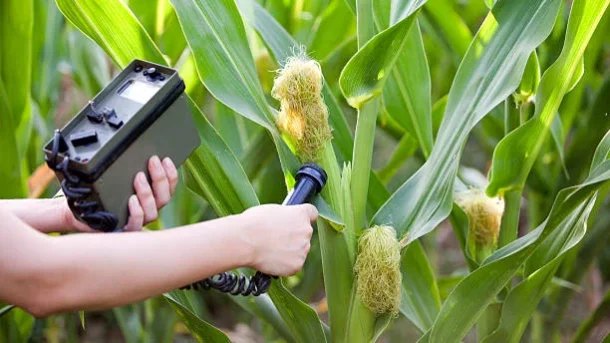
Spectral bands that are particular to nutrients: Some nutrients have distinct absorption or reflectance characteristics that can be found through remote sensing. For instance, whereas the Photochemical Reflectance Index (PRI) might reveal changes in carotenoid pigments linked to nutritional stress, the Red Edge Position (REP) represents the nitrogen status of plants. Remote sensing can shed light on nutritional deficiency by examining these particular spectral bands.
Remote sensings enables the spatial mapping of variability in a field, such as nutrient deficits. Remote sensing techniques can identify fluctuations in nutrient levels and pinpoint particular places with nutritional deficits by gathering data over a vast area. With the help of this knowledge, targeted actions can efficiently fix nutrient imbalances, including variable rate fertilization.