Which scheme focuses on soil health management and promoting the use of organic fertilizers?

soil health

The “Soil Health Card Scheme” (SHC) is a program in India that promotes the use of organic fertilizers and focuses on managing soil health. The Ministry of Agriculture and Farmers Welfare’s Department of Agriculture, Cooperation, and Farmers Welfare administers the Soil Healths Card Scheme.

The Soil Health’s Card Scheme’s main goal is to evaluate the nutritional condition of agricultural soils and offer farmers personalized advice for enhancing soil fertility and health. The program encourages the use of organic fertilizers, the prudent use of chemical fertilizers, and long-term soil management techniques.

The Soil Health’s Card Scheme’s main characteristics and objectives include:

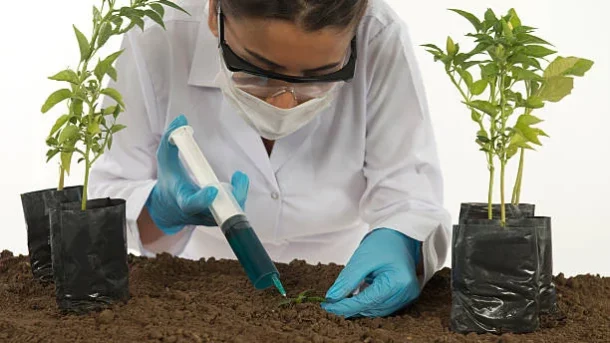
In accordance with the plan, accredited soil testing laboratories gather soil samples from farmers’ fields for analysis. The examination offers details on the soil’s organic carbon content, pH level, nutrient content, and other significant characteristics relating to soil healths.

Customized soil health cards: Farmers are given a Soil Health’s Card that is made specifically for them based on the findings of the soil test and offers advice for the administration of balanced nutrients. The guidelines outline the proper types and amounts of soil amendments, organic and inorganic fertilizers, and other inputs necessary for the best crop development and yield.
Name a government initiative that provides financial support for setting up agro-processing clusters in India.

agro-processing clusters

The “Scheme for Agro-Marine Processing and Development of Agro-Processing Clusters” (SAMPADA) is one government program that offers financial support for the establishment of agro-processing clusters in India. The Government of India’s Ministry of Food Processing Industries (MoFPI) has put into place the comprehensive program known as SAMPADA.

The SAMPADA scheme’s primary goal is to encourage the creation of contemporary infrastructure and agro-processing clusters to support the expansion of India’s food processing industry. Its objectives include lowering post-harvest losses, boosting value addition, raising incomes and opening up new employment opportunities, and ensuring that farmers are paid more.

The SAMPADA program’s main characteristics and advantages include:

Construction of modern infrastructure facilities, such as cold storage, cold chains, food parks, integrated units, and agro-processing clusters, is aided financially by the program. In order to reduce waste and increase value addition, it places a strong emphasis on creating effective, integrated supply chains.

Building capacity and developing skills: SAMPADA encourages training programs and other initiatives to develop the skills of farmers, business owners, and other parties involved in the food processing industry. To assist the expansion of agro-processing industries, it aims to enhance technical knowledge, quality management, and entrepreneurial skills.

Financial assistance: The program provides qualifying entities with financial assistance for establishing agroprocessing clusters and infrastructure facilities in the form of grants, loans, and subsidies. The financial aid covers a variety of topics, including capital investment, technology advancement.

What is the main objective of the Rashtriya Krishi Vikas Yojana (RKVY)?

Rashtriya Krishi Vikas Yojana

The Rashtriya Krishi Vikas Yojana (RKVY)’s principal goal is to support and promote the comprehensive growth and development of India’s agricultural industry. The Ministry of Agriculture and Farmers Welfare’s Department of Agriculture, Cooperation, and Farmers Welfare administers the RKVY, a government program.

The Rashtriya Krishi Vikas Yojana main goals are as follows:

Increasing agricultural productivity: The program’s goal is to increase agricultural output and productivity across a range of industries, including horticulture, cattle, fisheries, and other related endeavors. In order to raise yields and farm incomes, it emphasizes the implementation of contemporary technologies, best agricultural practices, and enhanced inputs.

Building up agricultural infrastructure: RKVY supports the development of irrigation systems, farm equipment, storage facilities, processing facilities, and other crucial infrastructure in order to build up agricultural infrastructure. It strives to improve value addition and agribusiness prospects while increasing the effectiveness of agricultural operations.

Sustainable agriculture is encouraged by the plan, which places a strong emphasis on this. It encourages the adoption of sustainable practices that assist environmental preservation and resource management, such as integrated pest control, conservation agriculture, watershed management, and organic farming.

Which scheme aims to provide irrigation facilities to every field in India?

irrigation facilities

The “Pradhan Mantri Krishi Sinchayee Yojana” (PMKSY) is a program that intends to give irrigation infrastructure to every land in India. The Department of Agriculture, Cooperation, and Farmers Welfare, which falls under the Ministry of Agriculture and Farmers Welfare, is the government agency irrigation facilities responsible for carrying out PMKSY.

The Pradhan Mantri Krishi Sinchayee Yojana’s main goals are to increase the nation’s water use efficiency and guarantee agricultural users have access to water. Its main objectives are to promote sustainable water management techniques in agriculture and increase irrigation facilities coverage.

The PMKSY’s main attributes and objectives are as follows:

Expanded irrigation: PMKSY seeks to quicken the speed of irrigation facilities development in India by providing funding for the construction of new irrigation infrastructure, such as the building of dams, canals, and other structures.

Watershed development: The plan encourages integrated watershed management for the preservation of soil and water. By implementing watershed development projects, it seeks to improve soil moisture retention, groundwater recharge, and rainwater harvesting.

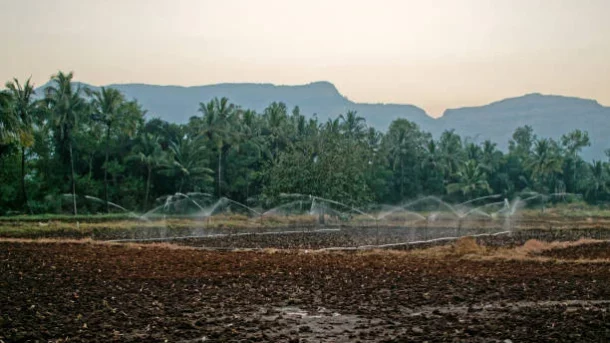
Micro-irrigation: PMKSY encourages the use of methods like drip irrigation and sprinkler irrigation for micro-irrigation. Micro-irrigation systems are installed with financial assistance, assisting in the efficient use of water, lowering water waste, and enhancing agricultural output.

What is the primary goal of the National Mission on Sustainable Agriculture (NMSA) in India?

Sustainable Agriculture

The National Mission on Sustainable Agriculture (NMSA) in India was established with the main objective of promoting sustainable agricultural practices and improving the climate change resilience of farming systems. One of the eight tasks included in the Government of India’s National Action Plan on Climate Change (NAPCC) is NMSA.

The National Mission on Sustainable Agriculture’s main goals are as follows:

NMSA intends to assist farmers in adjusting to the negative effects of climate change on agriculture. It focuses on applying climate-resilient techniques that lessen the susceptibility of agricultural systems to risks associated with the climate, such as drought, floods, heat stress, and altered rainfall patterns.

Water management: To maximize the use of water in agriculture, the mission places a strong emphasis on effective water management techniques. It encourages adoption.

Soil health and conservation: The National Mission on Sustainable Agriculture aims to enhance soil health and advance environmentally friendly methods of soil management. It promotes the use of biofertilizers, organic manures, and conservation farming methods like integrated nutrient management, crop residue management, and zero tillage to increase soil fertility and prevent erosion.

The mission strives to preserve agricultural biodiversity and encourage the cultivation of crop types that are climatically adaptable. It promotes the use of agro-ecological practices, diverse cropping systems, and the preservation of traditional and native crop varieties to increase agricultural resilience and sustainability.

Name a government program that aims to enhance the productivity of small and marginal farmers in India.

small and marginal farmers

The “National Agriculture Market” (e-NAM) initiative is one government program that tries to increase the productivity of small and marginal farmers in India. The Government of India introduced the e-NAM program in 2016 to establish a single national market for agricultural products.

The main goal of the e-NAM program is to make it possible for small and marginal farmers to sell their goods directly to consumers in various states and regions. By encouraging open price discovery and effective market procedures, it aims to do away with middlemen and secure fair pricing for farmers.

The e-NAM program’s main benefits and characteristics are as follows:

The program offers an online platform (e-NAM portal) that links several agricultural produce market committees (APMCs) around the nation. It promotes an open dialogue.

Single license: Under the e-NAM program, farmers may use a single trading license that is accepted at all national e-NAM markets. For farmers, this eliminates the requirement for various licenses and streamlines the selling procedure.

Information that is current: The e-NAM portal offers current data on the cost, demand, and availability of agricultural products in various markets. Farmers can use this data to inform their decisions on how to sell their produce.

Which scheme focuses on promoting organic farming practices in India?

promoting organic farming

The “Paramparagat Krishi Vikas Yojana” (PKVY) is a program that promoting organic farming methods in India. The Department of Agriculture, Cooperation, and Farmers Welfare, which is a division of the Ministry of Agriculture and Farmers Welfare, is responsible for implementing the PKVY program.

The Paramparagat Krishi Vikas Yojana’s primary goal is to support and spread among farmers the use of organic agricultural methods. The program’s objectives include expanding the area under organic farming, improving soil fertility, lowering the use of synthetic inputs, and promoting organic farming and environmentally friendly farming methods.

Key elements and goals of PKVY include:

Expansion of the organic farming area: PKVY encourages farmers to embrace organic methods in order to expand the organic farming area. It promotes farmers to transform non-certified organic farms into organic farms.

Building capacity: The program’s main objective is to give farmers training and capacity-building programs in organic farming methods, composting, the use of bio-fertilizers, the management of organic pests and diseases, and other sustainable practices.

Financial support: To help farmers cover the costs of organic growing, PKVY offers financial aid. It includes help with inputs like vermicompost, organic manure, bio-pesticides, and bio-fertilizers. The program also encourages the development of clusters of organic farms.

What is the main objective of the Pradhan Mantri Fasal Bima Yojana (PMFBY) in India?

Fasal Bima Yojana

The Pradhan Mantri Fasal Bima Yojana (PMFBY) in India’s main goal is to give farmers financial assistance and insurance protection in the case of crop loss or damage brought on by unanticipated weather occurrences, pests, illnesses, or other natural calamities. A crop insurance program run by the Ministry of Agriculture and Farmers Welfare is called PMFBY.

The following are the main objectives of Pradhan Mantri Fasal Bima Yojana:

Risk reduction: PMFBY seeks to lessen the financial risks that farmers suffer as a result of crop loss or damage. By covering their losses during the crop season, it acts as a safety net for farmers.

Enhanced coverage: The program aims to offer farmers all-inclusive insurance protection. It addresses every phase of the agricultural cycle, including pre-sowing and

Premiums that are reasonably priced: PMFBY wants to make crop insurance accessible to farmers. Farmers only pay a small premium under the arrangement, with the government greatly subsidizing the premium rates. The premium amount varies according to the type of crop and the degree of risk involved.

PMFBY concentrates on making sure that insurance claims are settled on schedule. It attempts to quickly compensate farmers for crop losses so they may bounce back and continue farming in succeeding seasons.

Implementation driven by technology: The plan places a strong emphasis on using technology to simplify the insurance process. It encourages the use of satellite imaging, remote sensing, and other cutting-edge methods for a more rapid and precise assessment of crop losses.

Which government scheme aims to provide financial assistance to farmers for the purchase of agricultural machinery?

agricultural machinery

The “Subsidy on Agricultural Machinery” program is the name of a government initiative in India that intends to give farmers financial aid for the purchase of agricultural equipment. The Ministry of Agriculture and Farmers Welfare’s Department of Agriculture, Cooperation, and Farmers Welfare is responsible for carrying out this program.

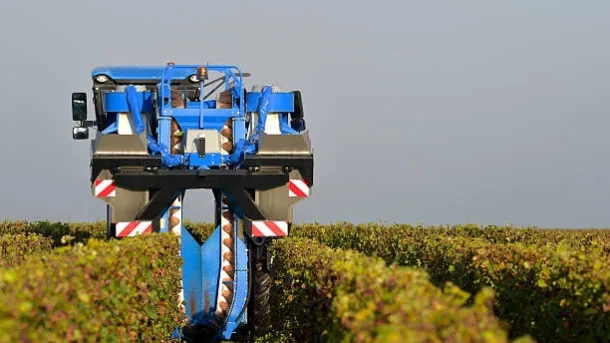
The Subsidy on Agricultural gear Scheme provides farmers with financial aid or subsidies to help them purchase various pieces of agricultural gear and equipment. The goal is to advance mechanization in agriculture, increase production, and raise overall farm operation effectiveness. The program attempts to increase farmers’ access to and affordability of agricultural gear by offering financial help.

According to the terms of this program, qualified farmers can get subsidies that range from 25% to 50% of the cost of machinery or equipment.

Through specific government agencies, agricultural extension offices, or online application portals, farmers can apply for this program. As the federal government just gives guidelines, and the individual state governments carry out the program at the local level, the implementation of the scheme and the distribution of subsidies may differ from state to state.

While the “Subsidy on Agricultural Machinery” is a well-known government program in India, it’s important to keep in mind that there may be other state-specific or regional programs that offer comparable financial help for the purchase of agricultural machinery. Farmers are advised to inquire about specific programs offered in their region with the relevant authorities or their local agricultural department.

What is the purpose of the Green Revolution in agriculture?

Green Revolution

The Green Revolution was a movement in agriculture that aimed to boost output by introducing fresh methods, techniques, and crop varieties. By raising agricultural output, it hoped to ease food shortages and reduce hunger in developing nations.

The Green Revolution’s main goals were:

Increased crop yields: The Green Revolution attempted to considerably boost crop yields by implementing high-yielding cultivars and contemporary agricultural techniques, assuring an adequate food supply for expanding populations.

Hunger relief and the alleviation of poverty were two goals of the Green Revolution, especially in underdeveloped countries where there were frequent food shortages. It aimed to lessen poverty and improve the livelihoods of rural farming people by raising agricultural output.

Technology transfer: The Green Revolution’s entailed the dissemination of agricultural techniques, scientific information, and technologies from industrialized to underdeveloped countries. The purpose of this transfer was to give farmers the skills and equipment they need to increase agricultural yields and sustainably manage their land.

Sustainability and environmental impact: While boosting yields was the main goal of the Green Revolution, it also brought attention to the importance of sustainable farming methods. Agrochemical use’s negative effects on the environment were minimized, and natural resource preservation was encouraged.