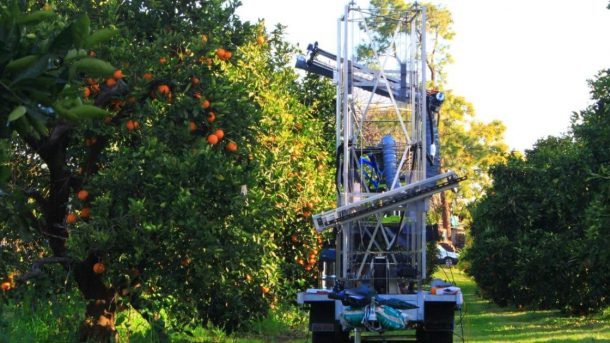
Designers of robots for fields and orchards face a daunting task. Robots have to ‘see’ the paths between the produce and they need to ‘know’ which areas have already been harvested. They need eyes to see the trunk of a tree and to separately identify fruit, flowers and leaves. Their arms need to be able to pluck, prune, spray and pollinate. They have to be strong enough to handle rough terrain, sloping ground and mud. They must also be able to handle fragile fruits and berries which bruise easily. After avoiding all the people, poles, wires, stumps and rocks, robots need to be able to work near other robots without getting in their way. Their economic use poses a number of problems. Some horticultural tasks such as fruit picking last for only a few months of the year. It simply is not profitable to use a robot for such a short period. Robots may have to be multifunctional and be able to pick, count buds, prune, and pollinate to ensure a reasonable return on their cost.
What are the Challenges of using robotics in horticulture?