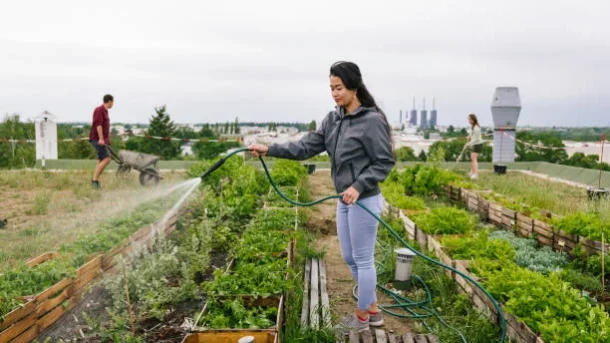
In recent years, urban farming and rooftop gardens have drawn a lot of attention as a way to advance sustainable food production, improve urban green spaces, and increase food security. Here are a few recent changes in this area:
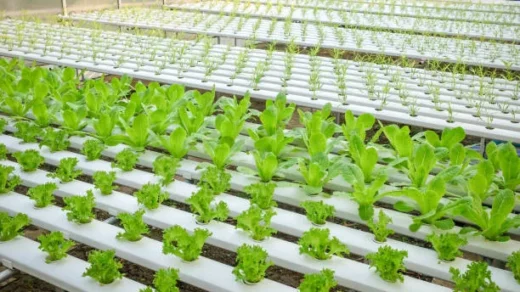
Vertical farming: Using controlled surroundings and artificial lighting, vertical farming entails growing crops in layers that are piled vertically or on surfaces that are inclined vertically. This strategy enables year-round cultivation while maximizing space utilization in urban locations. Utilizing cutting-edge LED lighting, hydroponic or aeroponic systems, and automation technologies to maximize plant growth and resource efficiency are examples of advancements in vertical farming on rooftop gardens.
Aquaponics: In a symbiotic system, aquaponics blends hydroponics (soilless plant cultivation) and aquaculture (fish farming). Fish excrement feeds the plants with nutrients, and the plants filter the water for the fish.
Green Walls and Facades: Green walls, often referred to as vertical gardens or living walls, are covered in vegetation and can be erected on the outsides of buildings or on freestanding structures. They offer numerous advantages like better insulation, increased air quality, and aesthetic appeal. Modular systems, sophisticated irrigation techniques, and the utilization of indigenous and drought-tolerant plant species are examples of advancements in green wall technology.