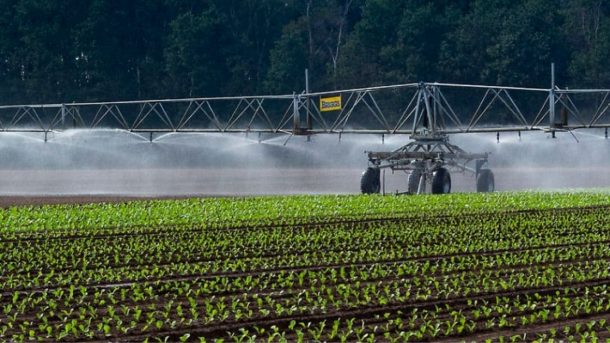
A boom irrigation system is a collection of pipes with nozzles that can actually move over the plants while watering them. An overhead rail or a cart moving down an aisle is used to make arrangement for this system. A trailing hose supplies water and is powered by a battery or electric supply. The nozzles are spaced 12 to 15 inches apart and can deliver water @ 0.1 to 0.8 gallons per minute with an average pressure of 15psi.
ScientificFarmingWeb
What is Rahat system of irrigation?
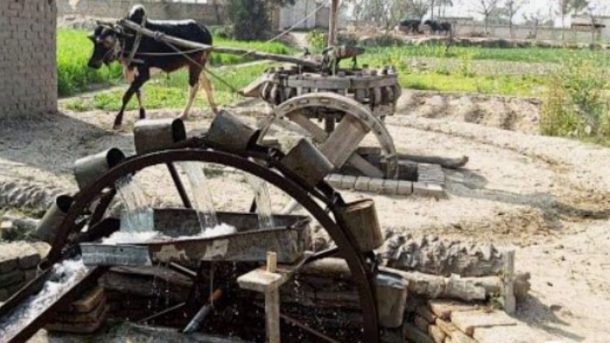
It is a method of irrigation used in the olden times when oxen were involved in getting water to the farmlands. A wheel attached to the well is turned by the oxen or other draught animals to get water out of the well into buckets that could be dumped evenly over the crops to water them. This method was used in Africa and Middle East by their local tribes.
Where is center pivot irrigation used and how many acres does it cover?
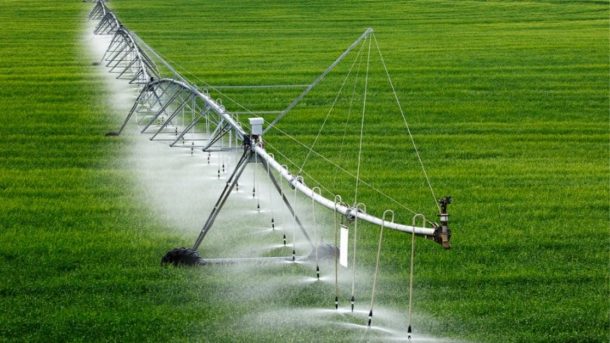
This is also referred to as the water wheel and circle irrigation in which crops are watered by an equipment that rotates on a pivot fixed at the center. As the equipment moves in a circular direction, it is capable of irrigating the land around it through sprinklers. Electric motors are used to propel the center pivots. It belongs to the form of overhead irrigation.
The length of a center pivot is less than 1600 ft, typically around 400m or ¼ mile and can cover a radius of 125 acres of land.
How does surface irrigation work?
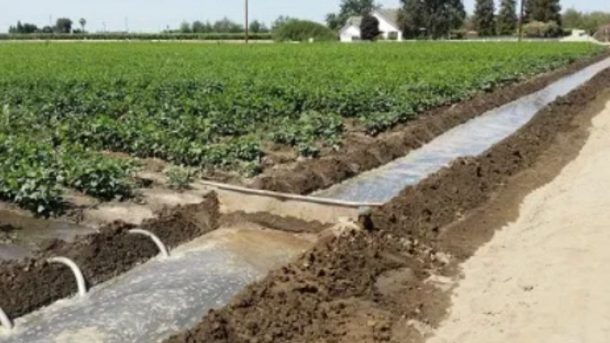
It is considered at the least complex form of irrigation in which water is distributed over the surface of the soil by gravity. There are three different forms of surface irrigation such as basin irrigation, border irrigation and furrow irrigation. Water is made to flow from a higher level along the edge of the field such that it covers the entire farm land. There is no pipeline used in surface irrigation, rather soil in the farm is adjusted to make way for the water flow.
How much pressure is needed for drip irrigation and what should be the spacing of emitters in the system?
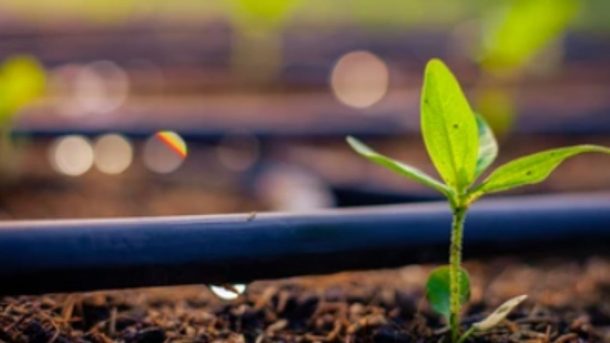
The minimum pressure range on which the drip irrigation systems work 10-30 pounds per square inch. This pressure is an average standard pressure for the design of all drip irrigators. The general rule of thumb is to install emitters under 80% of the leaf canopy with a spacing of 600mm. If the land has permeable soil, then the minimum spacing should be around 300 to 450 mm. Depending of the discharge of water from the pipe’s emitters spacing is decided for each type of soil. 4 liters per hour emitters need a spacing of 60 cm for coarse soil, 1 m for medium soil and 1.3 m for fine soil. Similarly, 2 liters per hour emitters are spaced 30 cm for coarse soil, 60 cm for medium soil and 1 m for fine soil.
What percentage of water is used in irrigation?
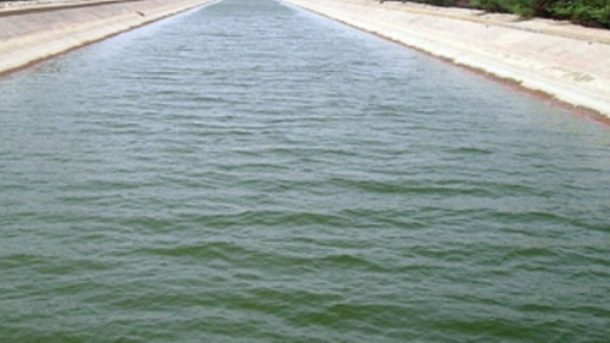
It is observed that irrigation is the most important use water and approximately 70% of the water from world’s fresh water resources is being used in irrigation. Water is allowed to trickle onto the soil surface at very low rate i.e., 2 to 20 liters per hour through small plastic pipes fitted with drippers. This system of irrigating plants, supplies water closes to the root areas and provides the required moisture and nutrients for growth. Since water is supplied in limited quantities, frequency of application is high.
What is furrow irrigation and what is the slope and spacing of the furrow system?
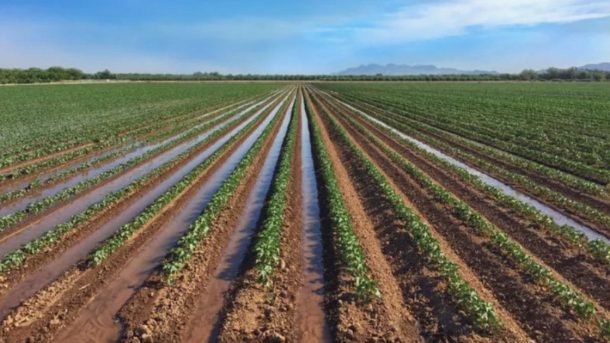
When cropping is done by creating rows and furrows in the farm, then this furrow irrigation system is used, such that water is supplied or made to flow down the furrows and it seeps into the soil horizontally and vertically thereby filling the soil reservoir. This is an economical way of irrigation where the flow of water is controlled manually. The slope for the furrow irrigation should be around and 0.5%. For sandy soil, the recommended spacing of furrows is 30 cm (coarse sand) and 60 cm (fine sand). Similarly for clay soil type, the spacing between furrows should be around 75-150 cm.
What is modern irrigation?
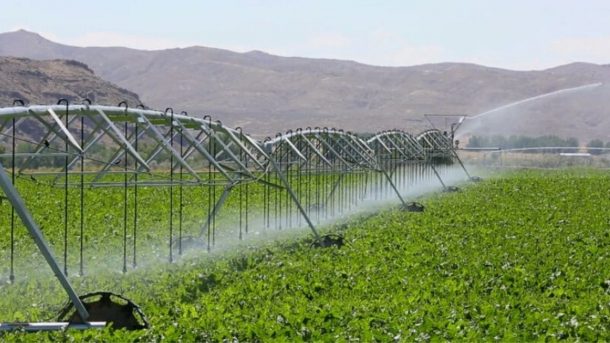
Modern irrigation generally indicates the use of new improved equipment for carrying out irrigation in the farmlands. The traditional techniques of irrigation were not able to irrigate the entire land, especially in the boundaries and depressions. The modern equipment facilitates enhanced use of resources and reduces the human labour for irrigation the fields. Modern irrigation systems are equipped with timers and sensors to predict and deliver the amount of water required by the crops in the fields. Sprinkler irrigation is an example of modern irrigation method.
What is meant by irrigation?
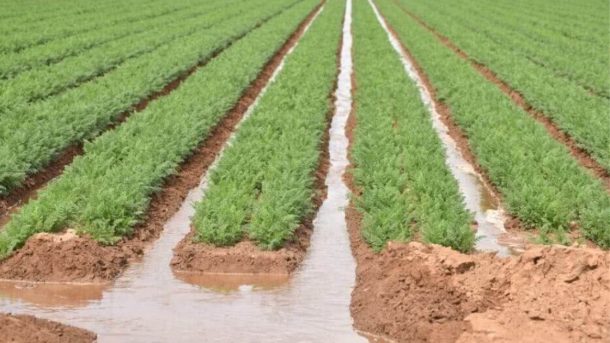
The process of applying a controlled amount of water or required quantity of water to the plants at specified or periodic interval of time is called irrigation. This process is an integral part of agriculture that keeps the farm land moist for the plants to grow and also solves the problem of dry areas which lack proper rainfall.
What is Biofertilizer?
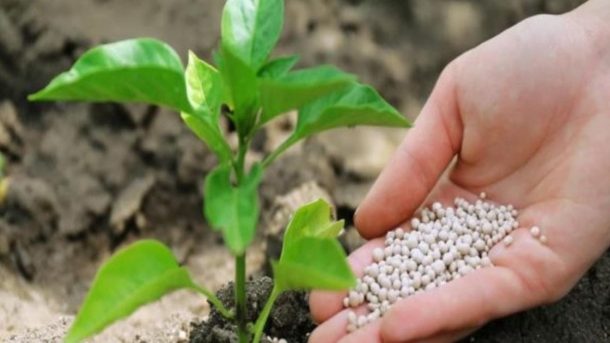
It is consisting of living cells or latent cells of efficient strains of microorganisms that help plants growth obtain nutrients through their interaction in the rhizosphere when seeds are planted through the soil. Biofertilizer directly increase soil fertility by adding nutrients through the synthesis of environmental nitrogen fixers, phosphorus soluble and plant growth promoting substances.