Irrigation

How are smart greenhouse systems improving crop production?

smart greenhouse

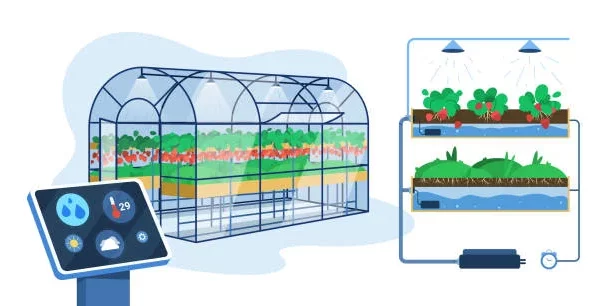
By offering precise environmental control and enhancing plant development conditions, smart greenhouse systems are revolutionising crop production. Here are some ways that crop output is being enhanced through smart greenhouse systems.

Climate Control: Sensors, actuators, and automation technologies are used by smart greenhouse systems to track and manage environmental variables like temperature, humidity, light levels, and CO2 concentration. Independent of the weather outside, gardeners can produce the ideal growth conditions for particular crops with this fine control. It makes it possible to produce all year long, lengthens the growing season, and improves crop quality and productivity.

Irrigation Management: Advanced irrigation technologies are incorporated into smart greenhouse systems to accurately provide water to plants based on their requirements. Automated irrigation systems deliver water in a targeted manner while sensors measure soil moisture levels, minimising water waste and increasing water usage effectiveness. This reduces the possibility of overwatering or underwatering and encourages healthy growth by ensuring that plants receive the proper amount of water.

Nutrient Management: Intelligent nutrient delivery systems are included into smart greenhouse systems to give plants the nutrients they need in a regulated way. These systems keep an eye on the concentrations of nutrients in the soil or nutrient solutions and change the composition and concentration of nutrients as necessary. Plants acquire the right balance of nutrients for optimum development and productivity thanks to this exact nutrition control.

How is remote sensing used for monitoring water resources in agriculture?

remote sensing

By providing useful data on soil moisture, irrigation effectiveness, water stress, and water availability, remote sensing plays a critical role in monitoring water resources in agriculture. Here are some examples of how remote sensing is applied to monitoring agricultural water resources:

Soil Moisture Monitoring: To determine the amount of soil moisture in agricultural fields, remote sensing techniques including passive and active microwave sensing are used. Spatial and temporal data on soil moisture levels by measuring the electromagnetic signals that are reflected or emitted by the soil. By using this knowledge, farmers can plan their irrigation systems and use water more efficiently by knowing when and how much water to apply.

Assessment of Irrigation Efficiency: By measuring crop water use and water stress, remote sensing enables the evaluation of irrigation efficiency. Calculating crop evapotranspiration (ET) rates involves examining the thermal characteristics of plants to determine water usage. Changes in irrigation timing or methods may be necessary if deviations from the norm in ET rates are a sign of water stress or ineffective irrigation tactics.

Water Availability Mapping: By keeping an eye on bodies of surface water, such as lakes, reservoirs, and rivers, remote sensing may gather data on water availability. Water extent, water levels, and changes in water bodies over time can all be measured by satellite-based sensors. This information aids in determining the amount of water available for irrigation needs and efficient use of water resources.

What are the benefits of using controlled environment agriculture?

controlled

Growing crops in an enclosed space where environmental factors like temperature, humidity, light, and CO2 levels are strictly regulated, such as greenhouses or vertical farms, is known as controlled environment agriculture (CEA). The following are some advantages of employing agriculture in a controlled environment:

Crops may be produced year-round under CEA, regardless of seasonal fluctuations and environmental conditions. Farmers can lengthen the growing season, grow crops in areas with difficult climates, and guarantee a steady and dependable supply of fresh produce all year long by managing the environment.

Increased Crop Yields: Crops grow best in the regulated environment of the CEA, which increases crop yields. Temperature, light intensity, humidity, and CO2 levels may all be precisely adjusted to meet the unique requirements of each crop, resulting in a faster and more vigorous rate of growth. Furthermore, the absence of illnesses and pests that are typically associated with open-field agriculture helps to protect crops, further increasing yields.

Water Conservation: CEA systems are made to use very little water. The use of water is reduced using methods like hydroponics and aeroponics, which are frequently utilised in CEA. These methods provide precise amounts of water right to the roots of plants. Additionally, compared to conventional irrigation methods, closed-loop irrigation systems in CEA reduce water loss through evaporation and enable water recycling.

How is data integration improving farm productivity and decision making?

integration

integration data from several sources, including weather stations, soil sensors, crop monitoring systems, machinery sensors, and historical records, enables farmers to do comprehensive data analysis. Farmers can make wise choices about planting, irrigation, fertilisation, and pest control by combining and analysing this data in order to acquire a thorough picture of the circumstances on their farm. Comprehensive data analysis aids in maximising yield potential, minimising waste, and optimising resource allocation.


Data integration offers real-time monitoring of agricultural operations as well as alerts. Farmers can get immediate warnings and messages about crucial aspects like soil moisture, weather, pest infestations, and equipment faults by integrating data from sensors and monitoring systems. This makes it possible to act quickly, reducing yield losses and raising operational effectiveness.


Supply Chain Optimisation: Data integration incorporates information from a wider range of sources than just the farm level. Farmers can acquire insights into market demands, pricing patterns, and logistical factors by combining data from suppliers, distributors, and marketplaces. With better planning, better inventory control, and better stakeholder coordination made possible by this information, the supply chain is eventually optimised, resulting in effective product distribution.


Decision Support Systems: The cornerstone of agricultural decision support systems is data integration. These systems employ cutting-edge algorithms and models to analyse combined data and produce predictions or recommendations. Decision support systems help farmers make data-driven decisions by offering insights and recommendations on the best crop kinds, planting dates, irrigation schedules, and pest control tactics.

How are weather prediction models used in agriculture?

prediction models

Weather prediction models offer information about expected weather patterns, including temperature, precipitation, wind speed, and humidity. This knowledge can be used by farmers to plan and modify planting dates, choose the right crop kinds, and control irrigation and fertilization practices. Farmers can maximize crop growth and reduce hazards by planning activities around anticipated weather conditions.

Irrigation management: By predicting rainfall and calculating crop water needs, weather prediction models assist farmers in optimizing their irrigation practises. Farmers can select the best times and amount to irrigate their fields by considering forecasted precipitation and evapotranspiration rates. By doing this, it is possible to avoid under- or over-irrigation, conserve water, and guarantee that crops receive the right amount of moisture for healthy growth.

Management of Pests and Diseases: Weather has a big impact on population dynamics. Several learning models such as ensemble learning , machine learning and deep learning  were utilized for the prediction of weather conditions and soil nutrient analysis suitable for crops

What are the advantages of using smart irrigation systems?

systems

Livestock management and observation are carried out by autonomous vehicles. For instance, in dairy farms, robotic devices can automate chores like feeding, milking, or waste management. These vehicles can independently drive and communicate with cattle thanks to sensors and computer vision. Autonomous drones or robots can also be used by livestock monitoring systems to monitor animal behaviour, health, or movement in sizable livestock operations.

Sampling and analysing soil is a task that can be accomplished by autonomous vehicles. They have equipment that allows them to take soil samples at predetermined field sites. These samples can then be examined to assess the pH, nutrient levels, or soil fertility. A more organised and effective method of doing soil testing is provided by autonomous soil sampling vehicles, allowing farmers to make knowledgeable decisions.

Weed and pest control: Targeted weed and pest management is carried out by autonomous vehicles. They may have sensors, cameras, or spraying systems that allow them to identify and target specific weeds or pests. These vehicles determine the appropriate locations to apply herbicides or pesticides and do so using computer vision and machine learning algorithms. Vehicles for weed and pest management that operate autonomously use less chemicals, have less of an impact on the environment, and protect crops more precisely.

Field mapping and data collection are carried out by autonomous vehicles, such as drones or ground-based robots. They gather information on crop health, topography, and soil moisture, giving precision farmers useful information. 

 What irrigation methods do you use to ensure proper water supply for your crops?

irrigation methods

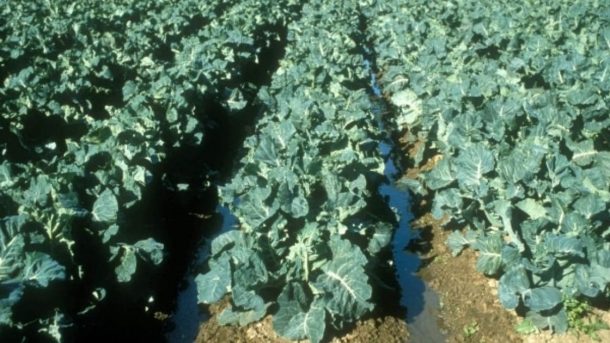
Surface Irrigation: This method involves flooding or furrowing the fields to allow water to flow across the surface and infiltrate into the soil. It is one of the oldest and simplest irrigation methods but can be inefficient due to water loss through evaporation and runoff.

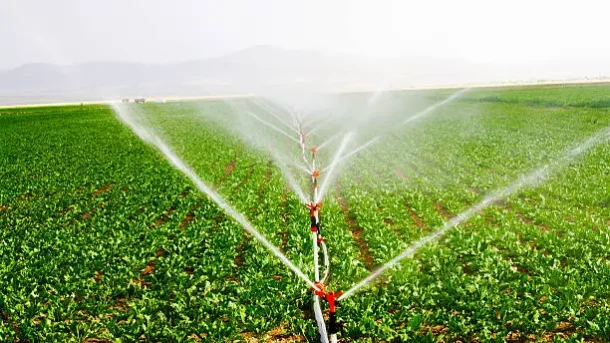
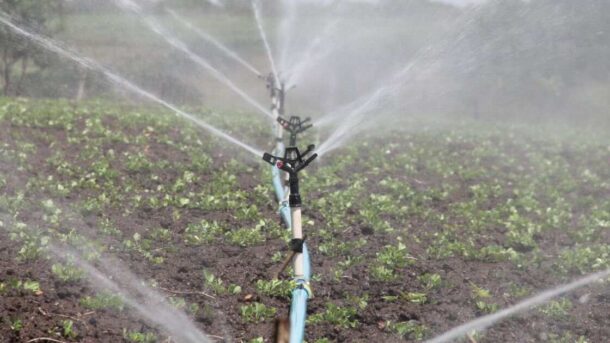
Sprinkler Irrigation: Sprinkler systems distribute water through a network of pipes with sprinkler heads that spray water over the crops. This method can be used for both field and orchard crops, and it provides more uniform water distribution compared to surface irrigation. However, it may be prone to water loss due to evaporation and wind drift.

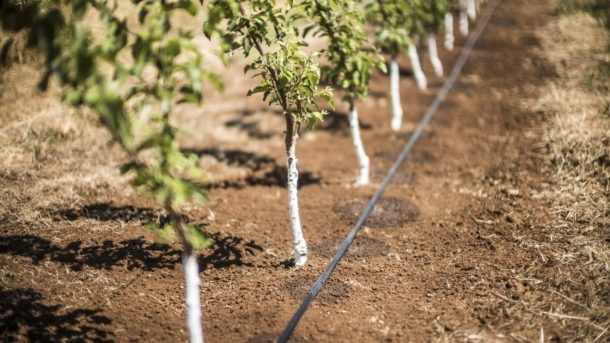
Drip Irrigation: Drip irrigation involves the application of water directly to the plant roots through a network of tubes or pipes with emitters or drippers. This irrigation methods deliver water in a controlled and precise manner, reducing water waste and maximizing water use efficiency. It is particularly useful in arid regions or for water-sensitive crops.

Subsurface Irrigation: Also known as subsurface drip irrigation , this technique involves placing drip lines or tapes below the soil surface to deliver water directly to the plant root zone. Subsurface irrigation helps minimize water loss due to evaporation and reduces weed growth since the surface remains dry.

Center Pivot Irrigation: This method is commonly used in large-scale agriculture. A central pivot system rotates around a pivot point, irrigating a circular area. Sprinklers mounted on the system deliver water as the pivot moves, covering a large area efficiently. It is often used for row crops and can be automated for precise control.

What are the best irrigation methods for my specific crop and growing conditions?

irrigation methods

Irrigation is when people add water to plants, to help them grow when there is not enough rain. Irrigation water can be pumped from rivers, natural lakes or lakes created by dams, from wells or allowed to flow to the fields by or open canals.

There are many different types of irrigation methods. The most common ones are:

  1. Sprinkler Irrigation
  2. Drip irrigation
  3. Surface irrigation
  4. Sub surface irrigation
  5. Manual irrigation

Sprinkler irrigation mimics natural rainfall where water falls on the plants. In sprinkler irrigation, water is moved through pipes to sprinklers scattered around and within the field. 

In drip irrigation, water drips directly to the roots of plants from pipes which have small holes or special emitters spaced along the pipe.

In Surface irrigation, water from a source such as rivers, pipes, dams, canals e.t.c. floods the soil surface. Surface irrigation uses a lot of water compared to other irrigation methods.

What is the irrigation Requirement in High Density Peach Planting?

irrigation

After planting the Peach trees, irrigation should be given immediately. In the rainy season, these peach trees may not require watering. The drip irrigation system is the best method for the effective use of water. Irrigation must be given at some critical stages, in case of a dry spell. Watering is very important at the flowering/budding stage and fruit development stage.

What is the irrigation requirement for Cauliflower Farming?

Cauliflower

Watering should be provided to crop every 4 – 7 days to the early planting and 10 to 15 days for late crop cultivation. At head formation time, there should be enough moisture content in the main field, so irrigation is required at this point in time. When cauliflower is cultivated late in the season, it should be irrigated frequently. Drip irrigation or Sprinkler irrigation can also be considered for utilizing the water source effectively.