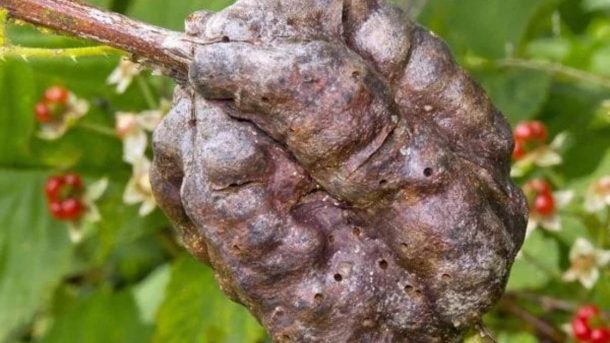
The organisms live in the roots of plants and in the soil, and infection takes place through wounds. Galls stimulated by the presence of bacteria result from hyper-plasia and hypertrophy of cells. Using gall-free nursery stock and gall-resistant root-stocks can avoid the infection
Plant diseases
What is bacterial canker in Plum and how it can be controlled?
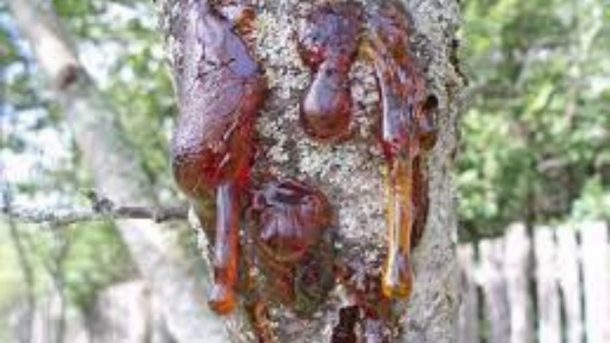
It is the disease occurring in the plum. The oozing of gums on fruits and bark or outer sapwood is common. Cool, wet period of early spring, frosty weather during bloom, and early growth favour the incidence of the bacterial canker. The disease may be controlled by fall and winter spray of copper fungicides such as copper oxychloride (0.3%).
Why mango fruit dropping off occurs?
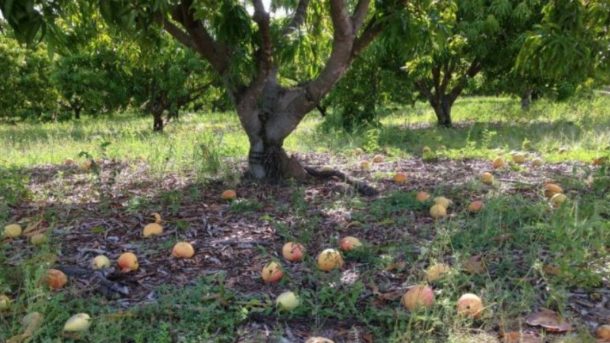
Mango flowers will set much more fruit than the tree can hold and have significant mango fruit drop. Other reasons for mango fruit dropping off include water stress, poor pollination, disease and insect attack.
Why are the leaves on mango tree turning brown?
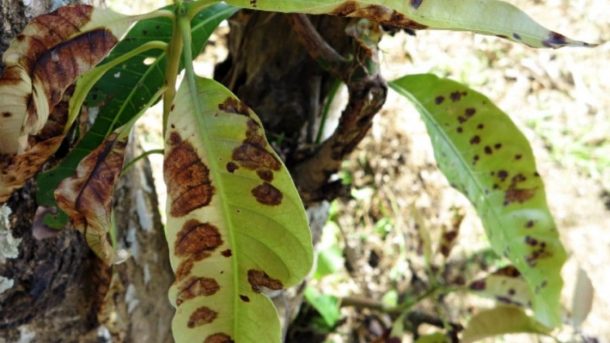
Leaves turn brown for several reasons but the main cause is the disease anthracnose. If mainly the tips of the mango leaves are turning brown, it is probably fertilizer burn or saline irrigation water.
What is the serious disease of Mango and how it can be controlled?
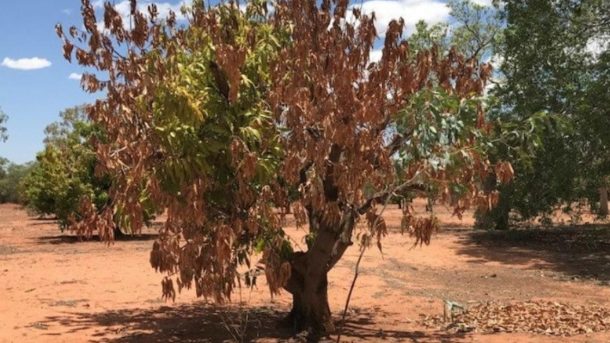
The one of the serious diseases of mango is Die back. The disease on the tree can be noticed at any time of the year but it is most conspicuous during October-November. The disease is characterized by drying of twigs and branches followed by complete defoliation, which gives the mango tree an appearance of scorching by fire. Initially, it is evident outward along the veins of plant leaves. The affected leaf turns brown color and its margins roll upwards. This can be accompanied by the exudation of yellowish-brown gum.
It can be controlled by the pruning of the diseased twigs 2 to 3 inches below the affected portion and spraying Copper Oxychloride (0.3%). On infected trees control the disease. The cut ends of the pruned twigs are pasted with Copper Oxychloride about 0.3%.
How Integrated pest and disease management is followed in Ginger?
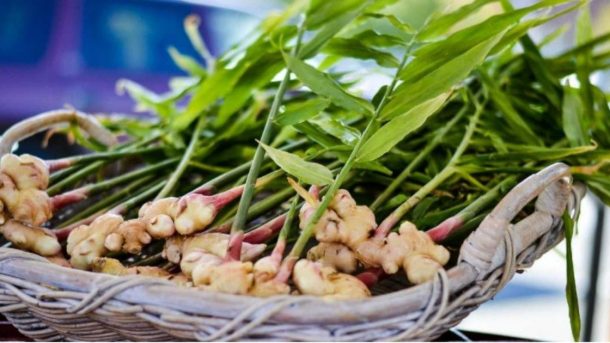
Soil application of Biocontrol agents like T. harzianum and P. flourescence during planting time by 2-5% gives effective control of the diseases. Use good quality rhizome for sowing, disease free seeds from the disease-free area. Before sowing, treat the rhizome in hot water and again in a solution of Bordeaux mixture 1 % for 15 min. Treat rhizome with bio inoculant Pseudomonas fluorescens and Trichoderma harzianum followed by soil application 60 days after planting to reduce rhizome rot. Once the diseases are spotted in the field, take away the affected clumps and drench the soil with Bordeaux mixture 1 % at 15 days interval. Diseased plants must be identified while the crops are in the field. Rhizomes from such plants must not be selected for seed purposes. Mechanical collection and destruction of grubs, larvae, weevils and adult beetle periodically will decrease the incidence of insect pests. If white grub is predominant, apply nimbicidine.
Why are the leaves on the apple tree turning brown?
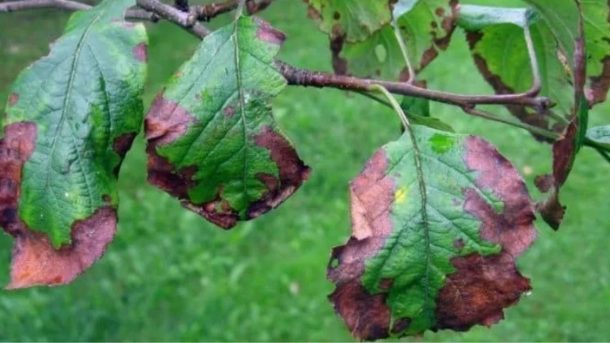
Fire blight disease often attacks open flowers first, which results in brown flowers and stems. Following this the leaves turn brown and then black and remain on the apple tree throughout the dormant season.
Why are the leaves on the apple tree turning Yellow?
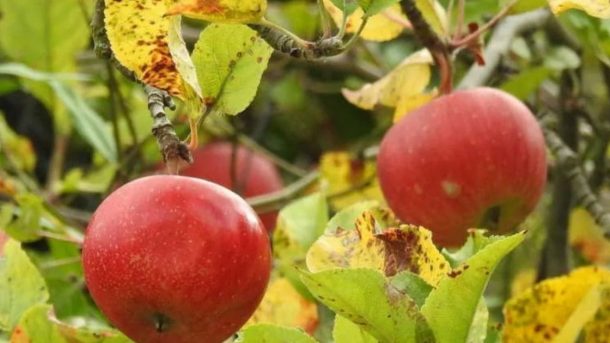
Apple trees normally have glossy, medium green leaves. When leaves turn yellow either the weather has turned cold or the apple tree is suffering from some sort of disease and nutritional deficiencies. Over time, these can result in the yellowing of large numbers of plant leaves, known as chlorosis.
What is crown rot of Apple and what are the symptoms?
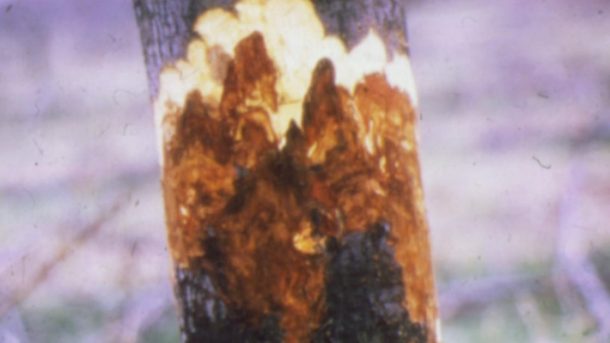
Crown rot disease is caused by the fungus that causes Phytophthora tot but causes decay at the tree roots or crown. Disease symptoms include delayed bud break and bark discoloration and twig die back. Carefully remove some of the soil from the plant roots, taking care not to injure the tree. Scrape away the outer bark to reveal interior wood that is reddish brown and water soaked, confirming that the apple tree is infected with crown rot. There is no cure for crown rot and the apple tree will likely eventually die. Plant apple trees in areas with good drainage, as recommended. Commercially grown apples are subject to a variety of chemical treatments because apples are prone to so many diseases and pests.
How are pests and diseases controlled in organic farms?
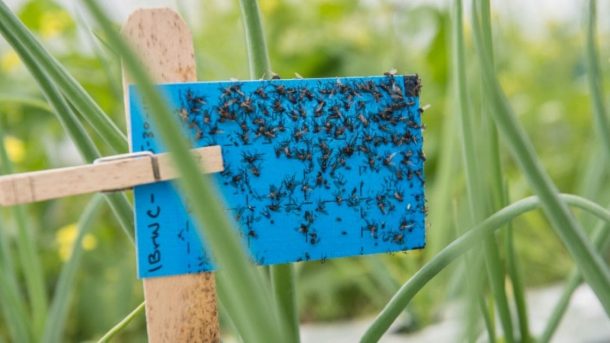
Pests in organic farms are controlled by biological and cultural practices such as crop rotation, diversification, habitat management, the release of beneficial organisms, good sanitation and timely maintenance. Substances like botanicals, non -toxic synthetic pesticides etc listed on the organic farming list of one’s own country can be used in the organic pest management schedule. Similarly, following the above cultural practices can control diseases to a certain extent. Apart from these, there is the need to use disease resistant varieties of seeds and prune the plants whenever necessary. Natural compounds like clay and non-toxic fungicides like copper sulphate are also allowed on organic farms for disease control.