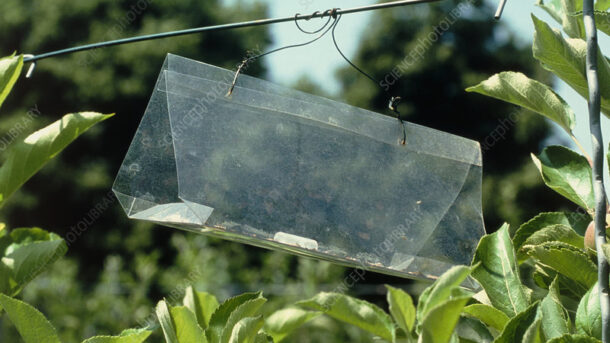
Pheromone traps are a type of trap used in agriculture to monitor and control pest populations. These traps use a synthetic version of a specific pheromone, which is a chemical substance that insects use to communicate with each other. The pheromone used in the trap mimics the natural pheromone of the target pest, attracting the males of the species to the trap.
The traps typically consist of a sticky surface or a container with a liquid attractant. Once the males are attracted to the trap, they become trapped on the sticky surface or in the liquid, preventing them from mating with females and reproducing. The traps can be used to monitor pest populations, as the number of trapped insects can indicate the severity of an infestation.
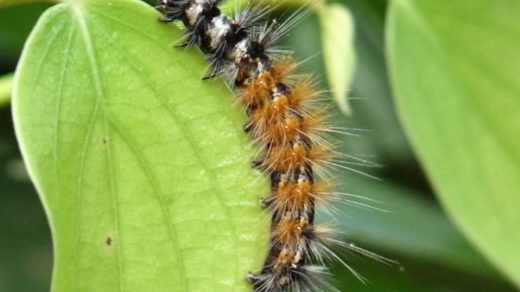
Pheromone traps are most commonly used for monitoring and controlling moths and beetles, including pests such as the codling moth, the diamondback moth, and the gypsy moth. They can be used alone or in conjunction with other pest control methods, such as chemical insecticides or biological control, to reduce pest populations and minimize crop damage.
It is important to keep in mind that pheromone traps are not a standalone solution and may need to be paired with other control methods to effectively manage pests.